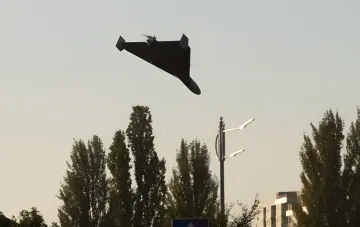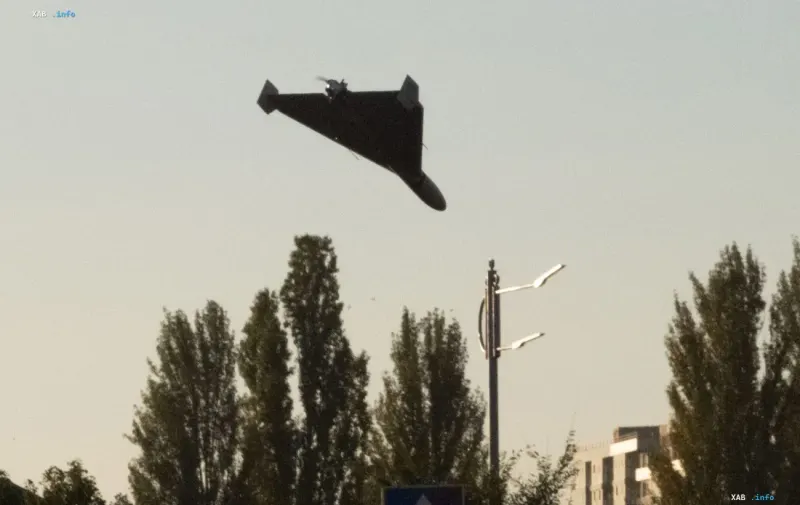
On the morning of September 24, 2026, the airspace of the Republic of Moldova was subjected to a series of violations by unmanned aerial vehicles. According to the country's Ministry of Defense, within a few hours at least four drones crossed the state border, arriving predominantly from the Ukrainian side, specifically from Vinnytsia and Chernivtsi oblasts. The incidents coincided in time with a Russian strike operation on Odesa Oblast, indicating a probable link to UAVs deviating from their designated route. To ensure safety, civilian airspace in northern Moldova was temporarily closed from early morning and reopened only at 07:46.
Chronology of the Violations: From the First Signals to the Closure of the Sky
The first object was detected at 05:21 — a border patrol spotted an unidentified flying vehicle moving from the village of Velyka Koshnitsa in Vinnytsia Oblast, Ukraine, toward the village of Vasile in Soroca District. The UAV soon left Moldovan airspace. In the latter half of the morning, between 06:14 and 06:16, another drone crossed the border from the Chernivtsi Oblast side toward Larga in Briceni District and returned to Ukrainian territory two minutes later. At 06:35, a third object entered Moldovan airspace heading toward Volovitsa in Soroca District, and at 06:45 residents of Florești District observed its flight along the route Gura Căinariului — Lunga — Bahrynești — Gura Cămeșei. The last recorded aircraft flew at 06:58 from the Kodyma side of Vinnytsia Oblast toward Sokoly in the Transnistrian region and disappeared from monitoring systems near the village of Kunych in Camenca District at 07:11.
Explosion-Like Sounds and the Police Response
In parallel with the UAV flights, the Moldovan police received two reports of loud sounds resembling explosions. Around 07:45, a resident of the village of Vadul Răscov in Șoldănești District heard a sharp bang, which, according to preliminary data, may have originated from Camenca on the left bank of the Dniester. A second report came from the vicinity of the village of Cernița in Florești District. At the time of publication, no official confirmation of destruction or casualties had been received from the authorities; however, the incidents were placed under the control of law enforcement agencies.
A Series of Incidents: Moldova in a "Drone Corridor"
The events of September 24 were not the first such episode in the past two weeks. On the night of September 20, residents of two districts of the country reported possible UAVs in the sky. On the morning of September 19, several unidentified drones violating the border were detected in the Ștefan Vodă area. The most alarming was the incident of September 18: around four in the morning, near the village of Colonica, bordering Chișinău, a powerful explosion was heard. The police inspected the surrounding areas; however, as the Moldovan Ministry of Defense acknowledged, the combat drone that fell near the capital, carrying explosives, could not be recorded due to its high speed and low flight altitude. Even earlier, on September 12, part of the country's airspace was closed due to a drone that flew in from the Ukrainian side, which led to the delay of several flights at Chișinău airport.
Contradictory Data
The official reports of the Moldovan Ministry of Defense on the 06:35 incident contain a formulation stating that the object entered the airspace "from the Transnistrian side of Vinnytsia Oblast." This geographical reference raises questions: the Transnistrian region is not part of Vinnytsia Oblast of Ukraine, and Soroca District, which the UAV was heading toward, borders precisely the Ukrainian Vinnytsia Oblast, not Transnistria. Possibly, an editorial inaccuracy or a conflation of two different directions was made in the text. Moreover, although the department reports "at least four" drones, the chronology allows distinguishing up to five separate objects, creating a discrepancy in the exact number of violations. Regarding the September 18 incident, the Ministry of Defense acknowledges that it failed to record the fallen drone, while residents heard a powerful explosion — this leaves open the question of the exact circumstances of that event.
Context: The Vulnerability of Moldovan Air Defense and Geopolitical Risks
Recurring airspace violations sharpen the debate over the readiness of the Moldovan armed forces to counter the drone threat. Experts and media, including the noi.md publication, previously pointed to a shortage of modern radar detection systems and air defense complexes in the country's air defense arsenal. Moldova, not being a NATO member and maintaining a neutral status, is forced to rely on its own limited resources and bilateral agreements. The frequency of incidents — more than five in two weeks — indicates that the country's border regions have in fact found themselves in a risk zone due to ongoing hostilities in neighboring Ukraine. The Chișinău authorities have not yet announced large-scale changes to the air security system; however, each new incident increases public pressure on the government to strengthen protection.