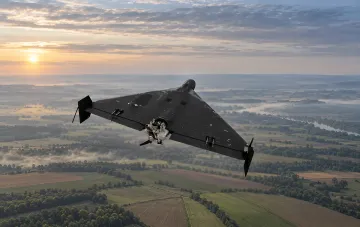
Residents of two districts of Moldova reported probable unmanned aerial vehicles in the country's airspace. This is reported by RBC-Ukraine, citing the press service of the Moldovan police. According to law enforcement, at around 1:50 a.m. a resident of the village of Berezlodji contacted the police in the city of Orhei, reporting that he had spotted a flying object in the sky resembling a drone. Later, at around 2:00 a.m., a resident of the village of Dereneu contacted the police in the city of Calarasi, reporting that he had seen a bright light in the sky, after which an explosion was heard. Law enforcement conducted inspections in the specified areas, however, as a result of the preliminary investigation and inspection of the terrain, including outside the settlements, no debris, impact marks, or fires confirming an explosion on the ground or the fall of any object were found.
Chronology of incidents: a week of tension in the airspace
The nighttime reports from residents of the Orhei and Calarasi districts are already not the first such episode of the current week. On the morning of September 19, several unidentified drones were recorded in the Stefan-Voda area, violating Moldova's airspace. On the night of September 18, a powerful mysterious explosion was heard near the Moldovan village of Colonita, which borders Chisinau: local residents heard a loud sound around four in the morning, after which the police began inspecting the nearby areas. Notably, the Ministry of Defense of Moldova was unable to record a combat unmanned aerial vehicle with explosives that fell near Chisinau due to its high speed and low flight altitude — which, in essence, confirms the fact of the presence of a military-type object in the air, although its origin and affiliation have not been officially established.
Closure of airspace and consequences for air traffic
Earlier, on September 12, Moldova was forced to temporarily close part of its airspace. The restrictions were introduced due to an unidentified drone that flew into the country from the direction of Ukraine. As a result of this incident, several flights had to be delayed at Chisinau airport. Thus, during the period from September 12 to 20, 2026, Moldova has recorded at least a four-day series of incidents involving unidentified flying objects: from the temporary closure of airspace to nighttime explosions and residents' reports of drones flying near settlements.
Contradictory data
There are a number of inconsistencies between the statements of different agencies and the results of the inspections. On the one hand, residents of the village of Dereneu claim that they heard an explosion, and the Ministry of Defense of Moldova previously acknowledged that it was unable to record a combat unmanned aerial vehicle with explosives near Chisinau due to its high speed and low flight altitude. On the other hand, the police, after inspecting the terrain in the Orhei and Calarasi areas, found neither debris nor impact marks nor fires. This creates a contradiction: if the explosion really occurred, why are there no physical traces? Possible explanations include an explosion at a high altitude, the destruction of the object in the air before it fell to the ground, or the fact that the recorded sound was not related to the fall of an object in the inspected zone. None of these assumptions has been officially confirmed.
Context and expert assessment
The series of incidents involving unidentified UAVs in Moldova's airspace throughout September 2026 forms a consistent picture of growing tension. The recurring nature of the events — from the sighting of single objects to powerful explosions near the capital — indicates that this is not a matter of isolated episodes but of a systemic phenomenon. At the same time, the absence of public statements about the affiliation of the objects, the inability of the Ministry of Defense to intercept or even record some of them, and the lack of physical evidence on the ground make both the operational assessment of the threat and the informing of the population difficult. In a situation where the country's airspace has been violated at least three times in one week, the question of the adequacy of Moldova's air defense and airspace monitoring means comes to the fore.