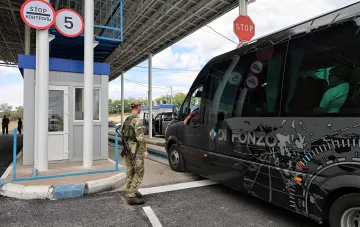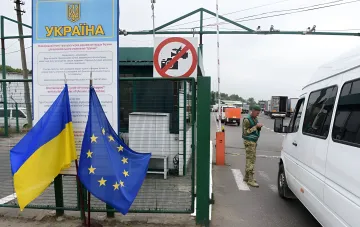
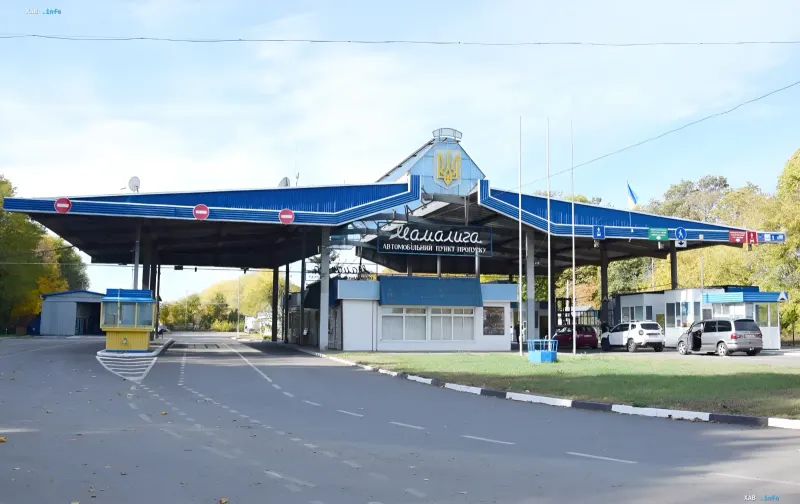
The Border Police of the Republic of Moldova has announced a temporary adjustment to the organization of control activities at three border crossing points with Ukraine. According to RBC-Ukraine, citing the official website of the agency, the decision takes effect on September 12 at 08:00 and is in force for 90 days. According to border officers, the measure was adopted in the context of changing security conditions near the Moldovan-Ukrainian border and is of a preventive nature.
What exactly will change at the border
The Moldovan-Ukrainian border operates under a joint (common) control model: on Ukrainian territory, control activities are carried out by officers of the Border Police and the Customs Service of the Republic of Moldova. It is precisely this practice that will be temporarily adjusted. For security reasons, the personnel of Moldova's control agencies will return to national territory and carry out their duties on the Moldovan side. Thus, the physical presence of Moldovan border officers and customs officers on the Ukrainian section will be suspended for the specified 90-day period.
Reason: personnel safety
The agency directly links the decision to Russian aerial attacks on infrastructure in Ukraine, particularly near the border with Moldova. The official emphasis is placed on protecting the personnel of the control agencies: while the situation in the border zone remains unstable, Moldovan officers will not be present on Ukrainian territory. The temporary and preventive nature of the measure is underscored — it is not a refusal of joint control, but a response to current threats.
Impact on the movement of people and goods
The key point for travelers and logistics is the Border Police's statement that the adjustment "does not affect the functionality of the border crossing points or the cross-border movement of people and vehicles." In other words, the checkpoints themselves continue to operate; only the deployment and jurisdiction of Moldovan personnel are changing. This is important for those who regularly cross the border, including the section where joint control operates under the model known from the "Palanka" checkpoint.
Context: the drone incident of September 8
The decision to move personnel to the Moldovan side was made against the backdrop of the high-profile incident of September 8, when a Russian drone violated Moldovan airspace. Moldova's ambassador to the United States, Vladislav Kulminsky, put forward the version that the drone may have been deliberately flying toward the aircraft of Ukrainian President Volodymyr Zelenskyy. Norwegian Prime Minister Jonas Gahr Støre also stated that President Zelenskyy's aircraft was under threat of a drone attack when departing from Moldova. These statements form the general background of threats that the border agency refers to.
Contradictory data
Here it is important to distinguish two planes of information. On the one hand, the official document of the Moldovan Border Police formulates the measure as a general preventive response to "Russian aerial attacks on infrastructure in Ukraine" near the border — that is, as an organizational decision to protect personnel without reference to any specific incident involving aircraft. On the other hand, the public statements by Kulminsky and the Norwegian prime minister point to a more specific scenario — a possible deliberate drone attack on the Ukrainian president's aircraft on September 8. This version has not been confirmed by an official investigation and is presented as an assessment by individual officials. Thus, the link between the announced adjustment of control and the incident involving President Zelenskyy's aircraft is contextual rather than documented, and both versions should be considered non-identical.
In summary: from September 12 for 90 days, Moldovan border officers and customs officers will carry out control on their own territory, while the throughput of the checkpoints and the movement of people and vehicles, according to the agency, will be preserved. The measure is positioned as temporary and may be reviewed as the situation in the border area stabilizes.