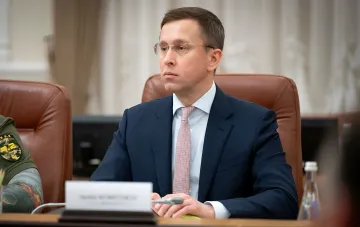
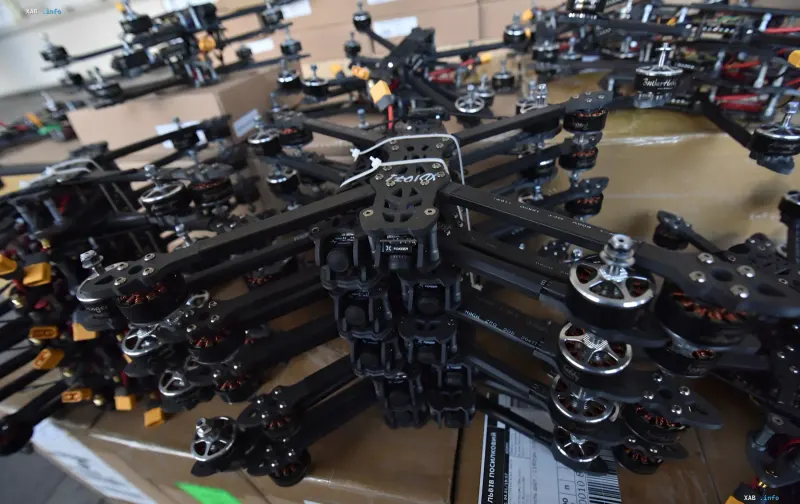
Ukrainian weapons manufacturers that have already transferred equipment to the military under the eBall system have, according to the Ukrainian Council of Weapons Manufacturers, been unable to receive payment for months. This was stated by the Council's Executive Director, Ihor Fedirko, in a comment to RBC-Ukraine. According to him, the outstanding debt to individual enterprises ranges from 24 million to hundreds of millions of hryvnias, and the problem affects all supplies processed through eBall.
A Cash Gap That Hits Small Factories
Fedirko emphasizes that the consequences of the delays are distributed unevenly. For the largest players in the market, a delay on the order of one to two million dollars is an unpleasant but still manageable cash gap. The situation looks very different for small companies: these funds are earmarked for employee salaries, component procurement, and launching the next batches of equipment. According to the Council's head, some enterprises are already experiencing difficulties paying wages, meaning the payment delay is turning from a financial problem into a threat to production continuity.
How Law No. 4908-IX Added a New Round of Approvals
The key factor, in the weapons manufacturers' assessment, was the adoption of Law No. 4908-IX on June 10, 2026, and on June 24 the amendments to Article 28 of the law on the 2026 State Budget came into force. The proportions of the military personal income tax distribution remained the same: 60% goes to the Ministry of Defense, 30% to the State Special Communications Service, and a further 10% is automatically directed directly to military units. However, a new requirement appeared: the uses of the 60% (MoD) and 30% (State Special Communications Service) shares must now be coordinated with the Verkhovna Rada committee on national security, defense, and intelligence. Fedirko clarifies that the committee does not approve each accrual or individual supply, but the general uses of the funds — but since eBall is financed precisely from the Ministry of Defense's share, this use automatically fell under coordination. The automatic 10% for military units was not affected by the requirement.
No Deadlines, and a Complaint to the MoD and the Rada
The weapons manufacturers point to two systemic flaws in the new provision. First, this clause was absent from the first draft of the bill and appeared only during preparation for the second reading. Second, the law sets no deadline within which the committee must issue its approval. As a result, according to Fedirko, the law that was supposed to increase funding for the security and defense sector by 1.56 trillion hryvnias has in fact created an additional round of approvals, due to which some defense companies are now not receiving payment. On the MoD side, this area is handled by the Department of Capability and Defense Technology Development (DCDT) — the former DVTP. Fedirko contacted the MoD, the DCDT, and the relevant parliamentary committee with questions: when the eBall financing documents were submitted for coordination, whether the committee received the full package, and when the manufacturers will finally receive the funds due to them.
Summer Context: Tenders, TTX, and the 'Magical' Appearance of Specifications
The weapons manufacturers' Council has not raised the problem of defense procurement funding for the first time this summer. In mid-August, Ihor Fedirko warned that delays in concluding new contracts due to the MoD's transition to tender procedures could turn into a shortage of weapons at the front within a few months. The cause of the breakdown was then cited as the absence of tactical-technical specifications (TTX) approved by the General Staff, without which the Defense Procurement Agency physically could not announce tenders. At the end of August, the Council clarified that the development of TTX is the responsibility not of the competence centers but of the General Staff itself — and the very day after Fedirko's public statement, 80–85% of the previously missing specifications 'almost magically' appeared, and some of the delayed contracts were signed. Against this backdrop, the eBall delays, in the industry's assessment, look like yet another narrow point in the chain of approvals, where the money should already have been paid out but is getting stuck at the bureaucratic level.