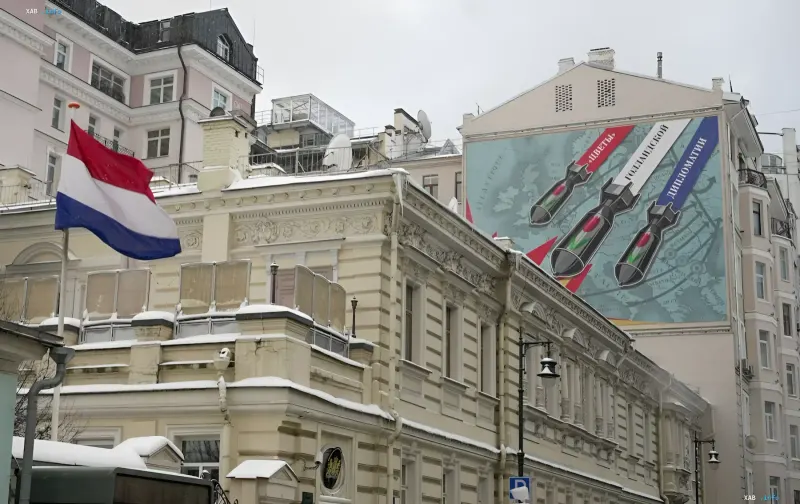
A large-scale mural has appeared on the wall of a residential building in the immediate vicinity of the Dutch embassy in Moscow, immediately attracting the attention of passersby and journalists. The artwork depicts three rockets carrying red tulips over a map of Europe, with the munitions themselves decorated in the colors of the Dutch flag—red, white, and blue. Next to the composition is the inscription 'Flowers of Dutch Diplomacy,' and the background of the mural consists of a stylized map of Europe featuring sea routes and arrows. The semantic message of the work is unambiguous: the author hints that the Netherlands bears responsibility for military aggression, linking Dutch diplomacy with arms supplies.
'Flowers of Dutch Diplomacy'
The visual language of the mural is built on contrast: delicate tulips—a symbol of the Netherlands—are turned into 'warheads' here, while the flag colors on the rocket emphasize their origin. This device transforms a national symbol into an element of military rhetoric and directly points to The Hague's role in the conflict surrounding Ukraine. The exact author of the work has not been established, and no official statements regarding the organization or person who commissioned the painting have yet been received.
Chronology and Origin
The Ministry of Foreign Affairs of the Netherlands clarified an important chronological point: the mural appeared several months ago, rather than in response to recent strikes on the Crimean Bridge. Thus, the Dutch side separated the appearance of the graffiti from the current news agenda related to attacks on infrastructure. This clarification matters because in the public sphere the work could easily have been interpreted as a reaction to specific events of recent weeks.
Context: Destinus and Strikes on the Crimean Bridge
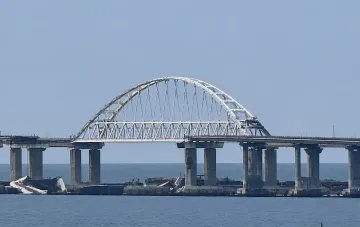
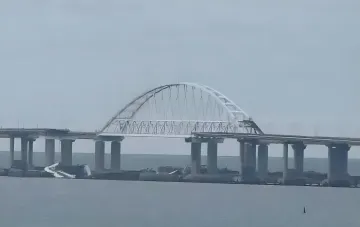
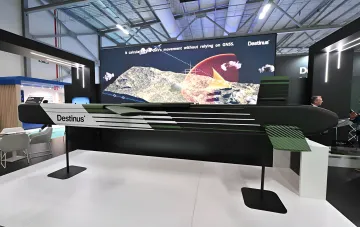
The discussion of the mural unfolds against the backdrop of loud statements by the Dutch startup Destinus, whose headquarters are in the Netherlands and whose founder was born in Russia. Earlier this month, the company told Reuters that its missiles became the only foreign weapons used by Ukraine in a strike on the Crimean Bridge. According to the company, more than 1,750 Ruta missiles have been manufactured in Europe, with monthly production at about 300 units. The Crimean Bridge itself reportedly suffered two attacks on November 16 and 17; Russian authorities confirmed structural damage and opened a criminal case regarding a 'terrorist attack,' while road traffic on the bridge was suspended and part of the railway section continued to operate. Ukrainian President Volodymyr Zelenskyy stated at the time that several types of weapons were used in the strike, including Ruta and Flamingo missiles.
Sides' Reactions and Incident Near the Embassy
The Russian Embassy in the Netherlands called Destinus's statement a 'confession' and asked whether The Hague had openly entered the war on Kyiv's side. The Netherlands rejects such reproaches, emphasizing that arms exports to Ukraine do not make the country a party to the conflict. Dutch Foreign Minister Tom Berendsen noted that Ukraine decides for itself how to use approved Dutch weapons in accordance with international law, and called Russia's claims about the Netherlands' participation in the war an attempt to sow terror and undermine support for Ukraine. Additionally, the Russian embassy demanded explanations from The Hague over an investigation by the NRC newspaper, according to which at least 40 Destinus employees may have been in Ukraine at various times and helped launch strike drones.
Tension around diplomatic missions intensified after a shell landed near the Dutch embassy during a Russian attack on Kyiv two days after Destinus's statement, causing minor damage to the building. Following this, the Dutch government summoned the Russian ambassador, who expressed regret but reiterated that it is dangerous for diplomats to be in Kyiv because, according to him, Moscow is supposedly attacking military targets. Under these conditions, the mural near the Dutch embassy in Moscow has become another visual marker of mutual accusations in which symbols and facts intertwine with the political rhetoric of both sides.