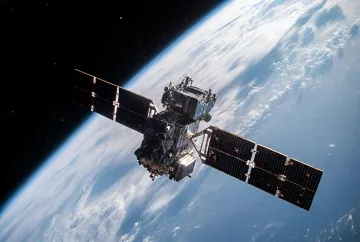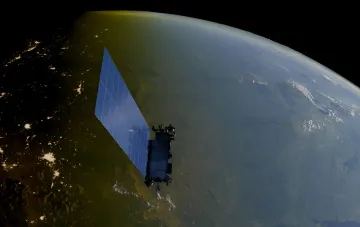
Elon Musk stated that the software of the Starlink satellite communication system has proven unexpectedly well-suited for tasks related to training artificial superintelligence. According to him, the technologies originally developed to manage the transfer of colossal volumes of information between orbital satellites and ground infrastructure demonstrate suitability for working with massive data flows in training advanced AI models. The entrepreneur's statement came against the backdrop of a growing debate in the US on whether and in what form the artificial intelligence industry should be regulated.
What Exactly Musk Said About Starlink and Superintelligence
The core idea of Musk's statement is that Starlink's infrastructure software, created for routing and processing huge arrays of telemetry and user data between satellites and ground stations, possesses characteristics useful for training superintelligence. This refers to the system's ability to efficiently transfer and process large volumes of information—precisely the task facing teams working on training the most powerful models. Thus, Musk is effectively pointing to the cross-application of mature telecommunication technology in the field of advanced AI.
Context: The Debate Over AI Regulation in the US
The statement was not accidental and coincided with an active phase of discussion in American politics regarding the need for stricter oversight of advanced AI system developers. As the Financial Times reported on November 6, Democratic Party representatives intend to push for stricter oversight of companies creating advanced artificial intelligence models. Among the initiatives being discussed are restrictions on the development of the most powerful systems, making Musk's public statements about the potential of his technologies particularly noticeable.
Initiatives in Congress: From Moratorium to Banning Superintelligence
Specifically, Arizona Congresswoman Yassamin Ansari proposed temporarily halting the creation of advanced artificial intelligence models, as well as banning the development of artificial superintelligence. These initiatives reflect lawmakers' growing concern over the pace of technology development and its potential risks. Against this backdrop, Musk's statement that Starlink can become a tool for training superintelligence is perceived as a signal that key industry players continue to advance ambitious research directions in parallel with political debates on restrictions.
Significance of the Statement for the Technological Agenda
Musk's remark highlights the growing intersection of two technological tracks—satellite communications and artificial intelligence—and shows how mature infrastructure can be repurposed to solve tasks not envisioned during its initial creation. For market observers, this is an additional argument that competition for advanced AI models relies increasingly not only on computing power, but also on the ability to efficiently process and transmit huge volumes of data. At the same time, the coincidence of the statement with the regulation debate increases attention to how the technological capabilities of major players align with the emerging legal framework in the US.