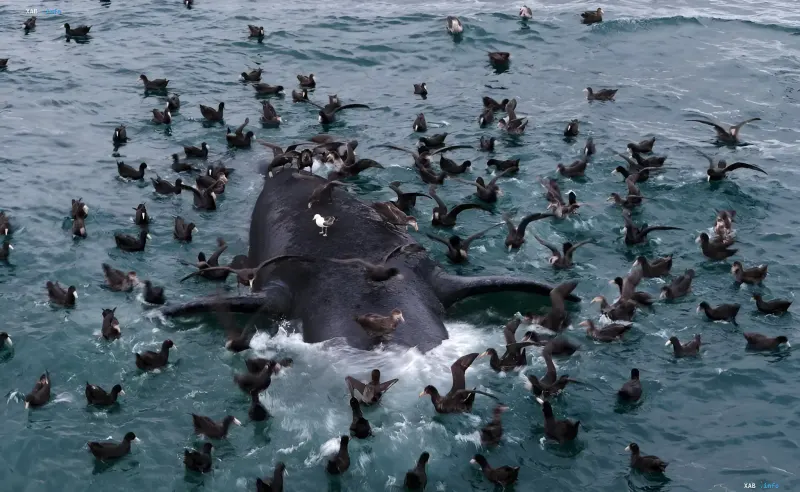
Argentine authorities and the scientific community are facing a troubling and poorly understood phenomenon: an unusually high mortality rate among southern right whale calves along the country's Patagonian coast. A large number of dead carcasses have been washed ashore on the Peninsula Valdes, which historically serves as one of the most critical breeding and nursing grounds for this vulnerable marine mammal species.
Ecological Context and Historical Background
In the 19th and 20th centuries, southern right whales were driven to near extinction by commercial whaling, but following international protection in 1935, their population began a slow recovery. Today, the protected waters around Peninsula Valdes in Chubut province act as a primary nursery for these giants. Nevertheless, the current breeding season has been marred by unprecedented calf mortality, causing deep concern among biologists, environmentalists, and locals witnessing the tragic scenes near Puerto Madryn.
Primary Hypotheses and Gull Attacks
Veterinarian Marcela Uhart, who leads the Southern Right Whale Health Monitoring Program and represents the One Health Institute at the University of California, Davis, is directing a large-scale investigation. Based on 23 years of observation, experts confirm the anomalous nature of current events. The leading scientific hypothesis links the calf deaths to dangerous marine bacteria entering their bodies through wounds inflicted by kelp gulls. These birds aggressively target surfacing whales to feed on their skin and blubber. While adult whales have learned to protect themselves by exposing only their heads, inexperienced calves remain entirely vulnerable to avian attacks.
Contradictory Data
While official scientific bodies and research teams are refraining from publishing final figures until the breeding season ends in late November, local residents and tour guides report hundreds of discovered carcasses. Researchers explain this discrepancy by noting that accurate counting requires systematic work using boats, planes, and drones, along with laboratory tissue analysis. Estimates of the root causes behind microbial activation also differ: some experts point to local environmental factors, while others blame global climate change, including the El Nino phenomenon and rising water temperatures.
Climate Factor and Population Prospects
According to Dr. Uhart, climate change and ocean warming may create an 'perfect storm' that weakens the animals' immune systems and makes bacteria exceptionally aggressive. International threats such as declining food sources, oil spills, and ship strikes add to the overall risk profile. If large-scale calf losses continue, it could deal a severe blow to the recovering population and undermine decades of conservation efforts.