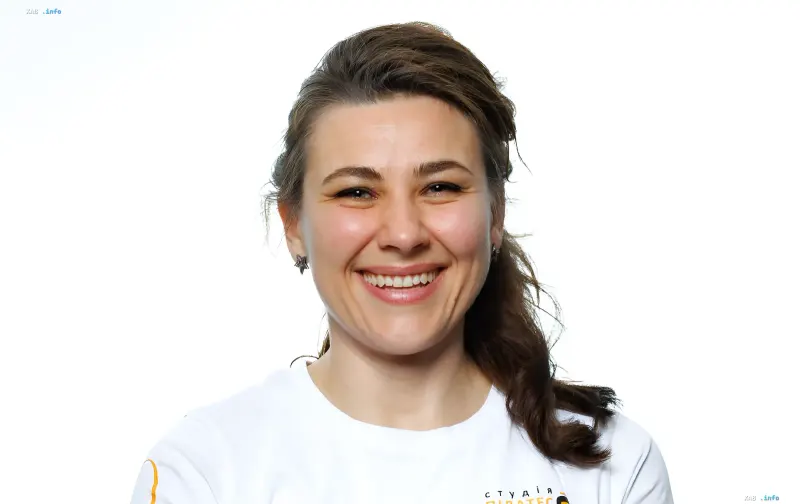
In the world of fitness, where strength training and heavy lifting traditionally dominate, Pilates is still often mistakenly perceived as an exclusively 'female' activity. Stereotypes that it is merely stretching and smooth movements lead many men to underestimate the complexity of this system. However, as practice shows, even athletes with developed musculature can face serious difficulties right from the first session. In an interview with Wave RBC.UA, Pilates instructor Suzanna Revty-Ivaniv, with 17 years of experience, explained why conventional strength does not guarantee success in this discipline and how the perception of training is changing in 2026.
The Illusion of Simplicity and the Reality of Load
The main reason Pilates seems easy from the outside lies in its visual component. For years, advertising and social media have focused on flexibility and aesthetics, while male fitness was associated with exhaustion and lifting heavy weights. 'From the side, smooth movements without heavy weights seem too simple, as male fitness is traditionally measured by kilograms lifted and exhaustion,' notes the expert. In reality, behind the external ease lies complex functional training that requires powerful neuromuscular control and the work of deep stabilizing muscles, which often remain 'asleep' during classic strength loads.
Coordination Shock: Why Muscles Don't Help
Suzanna Revty-Ivaniv draws a vivid analogy: Pilates for an experienced athlete is like skiing for an experienced swimmer. The body enters a completely different coordination system. During exercises, one must simultaneously control the position of the pelvis, balance, breathing, and the isolated work of different muscle groups. Developed musculature is often combined with stiffness and insufficient mobility, which hinders the execution of techniques. Pilates works not with the strength of individual muscles, but with the coordination of the whole body, forcing the nervous system to relearn how to control movement.
Functional Strength and Results After 8-12 Sessions
According to the coach, men can feel the first tangible results after approximately 8-12 regular sessions. This is especially noticeable for those who spend a lot of time in a static position — at a computer or behind the wheel. The effect manifests not in muscle gain, but in the return of freedom of movement: it becomes easier to bend down, tie shoelaces, or reach an item in the trunk without back pain. For those who play sports — running, football, or tennis — Pilates becomes a tool for movement precision, improving balance and coordination.
Paradigm Shift: From 'Female' to Professional
In 2026, the attitude towards Pilates among men is undergoing significant changes. The focus is not only on aesthetics but also on functionality, endurance, and mobility. Experts note that when men see how stars of top football leagues, boxers, and race car drivers use Pilates to improve performance, stereotypes crumble. The system developed by Joseph Pilates was originally created for rehabilitation and preparing male athletes, and returning to these roots allows Pilates to be viewed as a powerful injury prevention tool and a supplement to strength training.