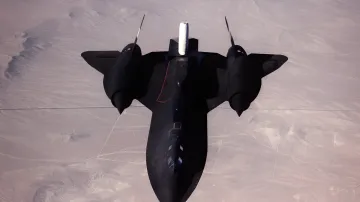
At the Kennedy Space Center in Florida, NASA officially unveiled the cutting-edge crewed experimental aircraft, the X-70 Fractal. As reported by RBC-Ukraine, citing the agency’s press office, the aircraft is designed as a high-performance, adaptive research platform aimed at accelerating the development and testing of advanced aviation technologies under real-world flight conditions. The presentation took place against the backdrop of ongoing work in the U.S. to create a new generation of research aircraft capable of operating beyond limits previously inaccessible to crewed machines.
What is the X-70 Fractal?
The X-70 Fractal is a crewed aircraft focused on studying maneuverability in flight modes that have never been demonstrated in crewed flight before. A key feature of the machine is its advanced flight control technology, which can be rapidly reconfigured for specific experiments. This adaptability distinguishes the Fractal from traditional research aircraft: system configurations can be changed between flights without rebuilding the entire platform.
Payload and modular architecture
The aircraft is capable of carrying approximately 910 kg of experimental payload, both in internal bays and on external hardpoints. Thanks to its modular design and the ability to quickly swap out internal and external equipment, scientists will be able to perform continuous flights, accumulate new data, and quickly transition from one experiment to the next. According to the developers, this transforms the X-70 into a versatile "test stand in the sky," suitable for validating a wide variety of systems.
NASA leadership's stance
"The X-70 Fractal provides NASA with a crewed, high-performance platform for testing advanced control systems, maneuverability, and other cutting-edge technologies in real-world flight conditions," stated NASA Administrator Jared Isaacman. According to him, the combination of modularity and rapid reconfiguration will allow the agency to continuously acquire new knowledge and accelerate the "experiment-data-refinement" cycle.
Specifications and first flight timeline
According to the published data, the X-70 Fractal has a takeoff weight of approximately 4536 kg. The aircraft is designed for a cruise speed of Mach 0.75, can climb to an altitude of up to 13,700 meters, and has a range of about 2,000 kilometers. The first flight of the new aircraft under the NASA banner is expected within the next two years, after which the platform will begin a program of systematic research sorties.