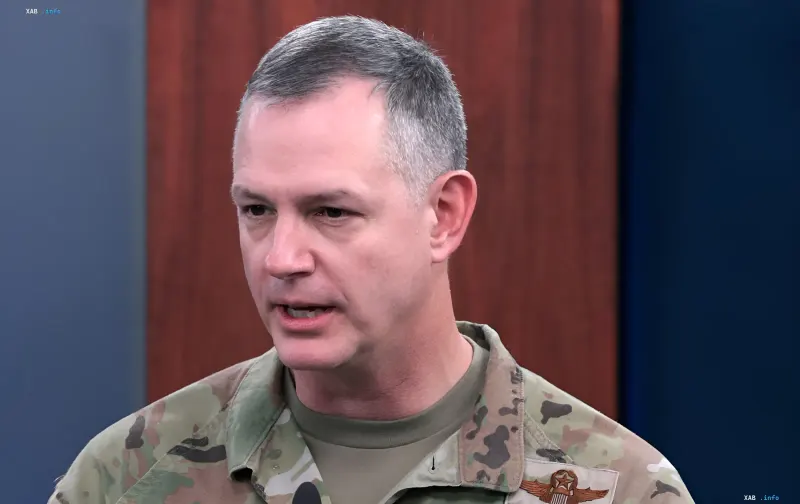
The North Atlantic Alliance has taken practical steps to strengthen security on its eastern flank after Russian munitions breached Polish airspace on November 20. According to NATO spokesperson Allison Garth, member state ambassadors at a North Atlantic Council meeting on November 23 assigned responsibility for the incident to Russia and discussed potential response measures. The Supreme Allied Commander Europe, General Alexus Grynkewich, has already authorized the deployment of an Alliance airborne early warning and control system (AWACS) aircraft, while military command is evaluating the commitment of additional resources for defense and deterrence not only in Poland, but in other regions as well.
Meeting of the North Atlantic Council
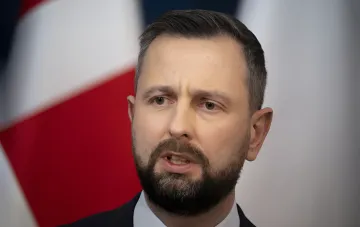
The key agenda item at the extraordinary meeting of the North Atlantic Council—the alliance's primary decision-making body—was the breach of Polish airspace recorded on November 20. Representatives of member states unanimously expressed their full support to Warsaw and discussed further steps to bolster security. As stated earlier by Polish Defense Minister Wladyslaw Kosiniak-Kamysz, specific proposals for protecting the country's eastern border were presented at the meeting at NATO headquarters, the details of which he had previously coordinated with General Grynkewich.
Deployment of early warning aircraft
Among the measures already taken, the NATO spokesperson highlighted the relocation of an airborne early warning and control (AWACS) aircraft authorized by Grynkewich. According to the alliance's military command, the possibility of engaging additional resources for defense and deterrence against Russia is being considered. The reinforcement, according to NATO, will affect not only Poland but also surrounding regions, signaling an expansion in the geography of security measures on the eastern flank.
Warsaw's position: from AWACS to F-35s
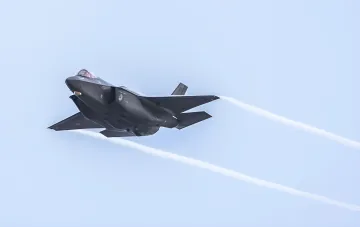
Polish authorities do not view the incident as an accident. Prime Minister Donald Tusk stated that Warsaw considers the "arrival" of the munitions an intentional provocation by Moscow. Defense Minister Wladyslaw Kosiniak-Kamysz, in turn, indicated that to strengthen the defense of the national skies, Poland needs AWACS radar reconnaissance aircraft and F-35 fighters from alliance partners. He emphasized that in the near future, Warsaw will receive "strong support" from allies to strengthen its eastern border.
Circumstances of the incident
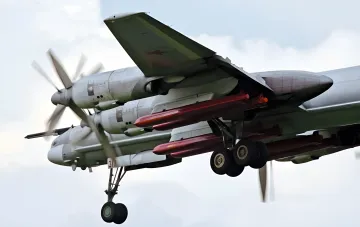
According to available data, on the night of November 20, during one of the most massive attacks on the western part of Ukraine, three Russian objects entered the airspace of southeastern Poland. They fell in two locations in the Subcarpathian Voivodeship and one in the Lublin Voivodeship; Polish prosecutors confirmed that in one case, it was an Kh-101 missile. According to reports, one of the objects exploded 96 kilometers from where NATO military exercises were being held. These circumstances formed the basis of the discussion in the North Atlantic Council and served as a trigger for measures to strengthen the alliance's presence in Europe.