The Polish military has publicly explained why the country’s armed forces did not open fire on Russian objects that violated the republic’s airspace on the night of November 20. According to PAP, this was stated by the operational commander of the Polish Armed Forces, General Ireneusz Nowak. According to him, weapons were not used that night because "all conditions for the use of the weapons system were not met." This explanation came amid a massive Russian attack on Ukraine, during which some of the ammunition fell on Polish territory.
"All conditions for the use of weapons were not met"
General Nowak emphasized that the decision to open fire is made strictly according to established criteria, and in the situation under consideration, these were not fully met. "The weapons were not used that night, because not all conditions for the use of the weapons system were met," the operational commander declared. Thus, the Polish side points not to a technical impossibility of interception, but to the fact that the combination of conditions for the use of air defense was not achieved at that moment.
"Speed index": Kh-101 or Geran-5
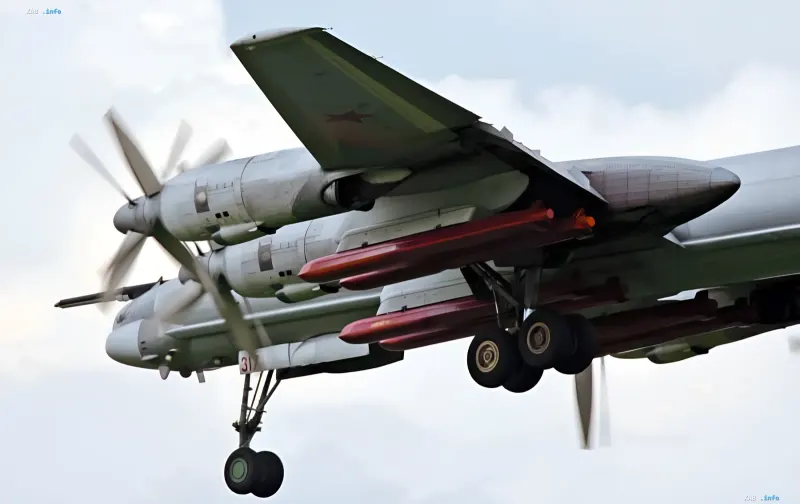
Identifying the type of objects that crossed the border, General Nowak noted that it is difficult to distinguish their nature on a radar image. "We use a concept called the speed index. All three objects were high-speed: their speed exceeded 800 km/h. Therefore, we assume that these were either Kh-101 cruise missiles or Geran-5 jet drones," he clarified. That is, the identification is currently probabilistic in nature and is based on the speed of the targets, rather than on direct visual or radar confirmation of the type.
A few minutes in Polish skies
Defense Minister Wladyslaw Kosiniak-Kamysz spoke about how long the objects were in Polish airspace. According to him, it is a matter of a few minutes: "The distance from the place where we detected the Kh-101 missile to the border is about 50 km. This is approximately three minutes." These data make it possible to assess the depth of target penetration and the time during which the air defense system could have reacted.
Context: night attack, 96 km to exercises and demands for NATO
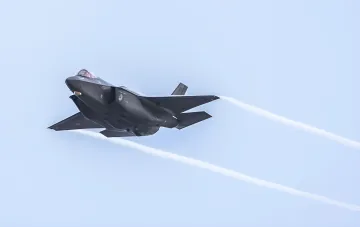
The incident occurred on the night of November 20 during a massive Russian attack on Ukraine: two Russian missiles and a drone fell on Polish territory, with one of the munitions exploding just 96 kilometers from the site of the "Coalition of the Willing" military exercises. Prime Minister Donald Tusk said that Poland does not consider the "arrival" an accident, but regards it as a deliberate provocation by the Russian Federation. It was previously reported that to strengthen the protection of its sky, Poland needs AWACS radar reconnaissance aircraft and F-35 fighters from NATO partners.
The combination of these statements shows that Warsaw is simultaneously explaining the technical side of the incident — why the interception was not carried out — and emphasizing the political assessment of what happened as a targeted action. The question of the sufficiency of air defense assets and support from the alliance, apparently, will remain key in further discussions within NATO.