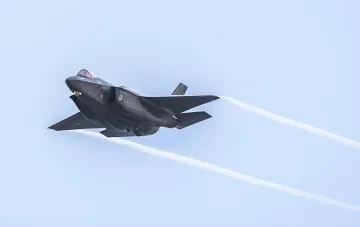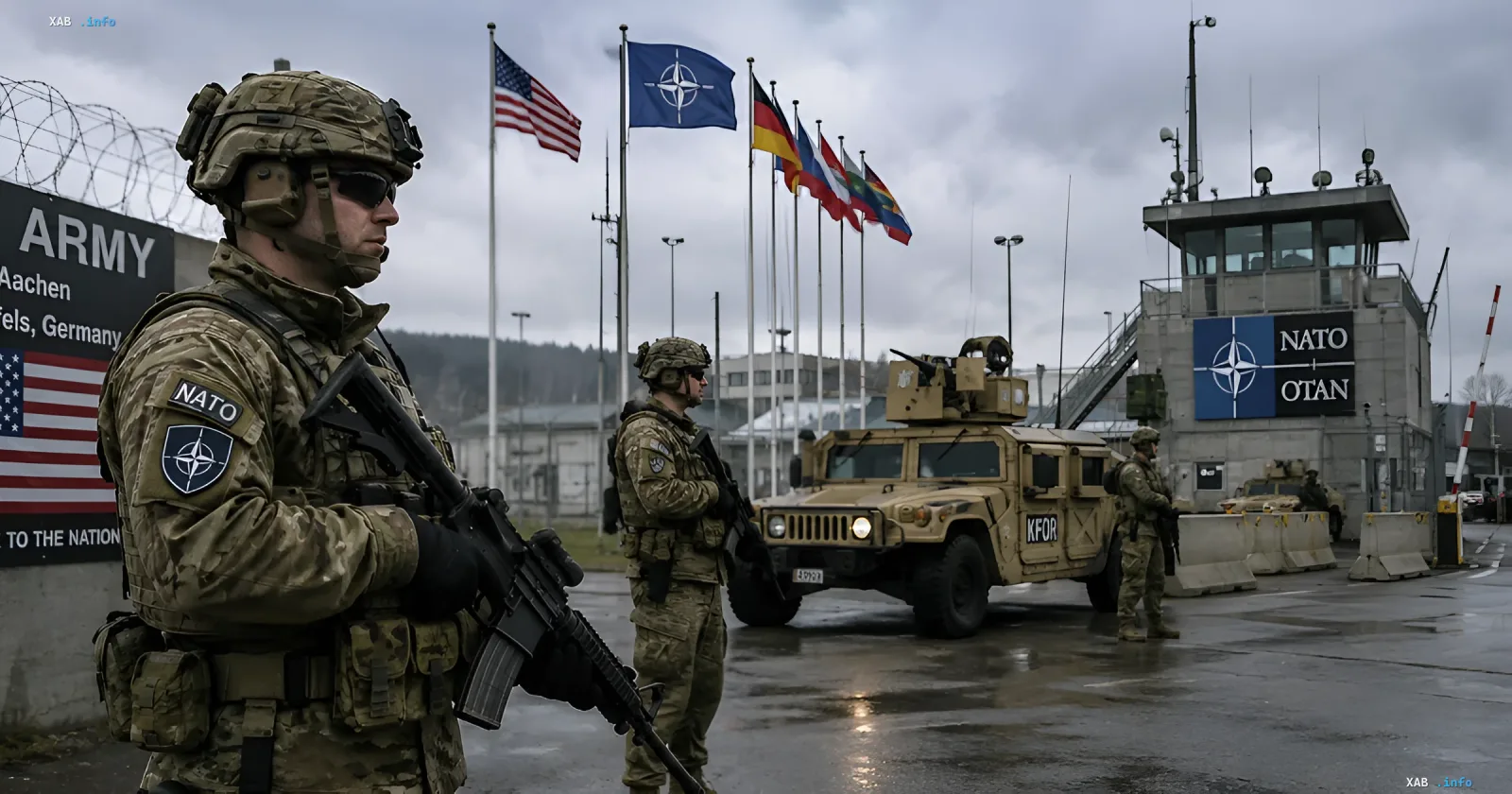
Against the backdrop of rising tensions in Europe and the Middle East, the North Atlantic Alliance has once again drawn attention to issues of collective defense, declaring its readiness to protect US military bases stationed on the territory of European countries. The message, aired on the daily international news podcast VietnamPlus and recorded by a number of European and regional media outlets, underscores that the protection of the US military presence in Europe is regarded by NATO as an integral part of the alliance's obligations. The visual imagery accompanying such statements — armed service members in camouflage bearing NATO patches at bases in Germany, the flags of the United States, Germany, Lithuania and other member states, as well as armored vehicles marked with the alliance's mission designations — vividly illustrates the scale of US–European military cooperation.
The Alliance's Statement: Protecting Bases as an Element of Collective Defense
The essence of NATO's position is that US military facilities in Europe fall under the protection of the alliance's collective security mechanisms. This means that any threats or attacks on such bases are considered in the context of member states' obligations to ensure one another's security. Statements of this kind are typically made during periods when the geopolitical situation requires the alliance to publicly affirm its cohesion and readiness for deterrence. For European capitals hosting US contingents, this serves as an additional signal that the US military presence remains the core of the region's defense architecture.
Military-Industrial Context: Production of US Weapons in Europe
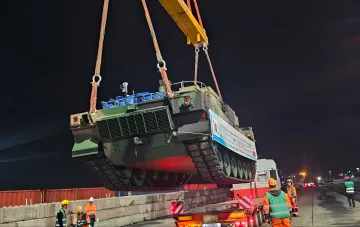
The statement on protecting bases does not exist in a vacuum: it fits within NATO's broader course of strengthening defense production capacity directly in Europe. As NATO Secretary General Mark Rutte previously noted, NATO countries intend to produce US tanks, missiles and man-portable air defense systems (MANPADS) in Europe. This logic implies that European factories will manufacture weapons to US standards, which will reduce dependence on deliveries from the United States and accelerate the replenishment of member states' arsenals. Combined with the rhetoric on protecting US bases, this forms a picture of interdependence: Europe takes on part of the production, while the alliance guarantees the protection of US facilities and contingents.
Geopolitical Backdrop: The Conflict with Iran and the Expansion of the Alliance's Agenda
Additional context is also provided by the Middle Eastern direction. In July 2026, NATO publicly commented on US strikes on Iran, indicating that the alliance is increasingly reacting to the actions of its key ally beyond the European theater. Such comments show that NATO's agenda is expanding beyond classic Euro-Atlantic security to encompass global conflicts in which the United States is involved. In this logic, the statement of readiness to defend US bases in Europe appears as part of a more systemic strategy: the alliance simultaneously supports US actions in the Middle East and underscores the reliability of protection for the US presence in Europe.
Contradictory Data
At the same time, the expert community also voices critical assessments that create a contradictory picture. In particular, analytical materials focused on the Polish direction assert that US bases do not guarantee allied countries unconditional security and that reliance on the US military presence may create "golden illusions" regarding actual protection. On the one hand, NATO and the US emphasize that the protection of bases and collective defense form a reliable foundation for Europe's security. On the other hand, a number of observers believe that the physical presence of US facilities alone does not eliminate vulnerabilities and does not replace full-fledged European defense capabilities. Thus, around the same fact — the US presence and statements about its protection — two different interpretations exist: the alliance's official position on guaranteed collective protection and a skeptical assessment pointing to the limitations of such guarantees.
Conclusions and Prospects
In conclusion, it can be stated that NATO's statement of readiness to defend US bases in Europe is part of a comprehensive alliance strategy that combines public guarantees of collective defense, the development of European defense production, and a response to global conflicts involving the US. For European countries, this is simultaneously a signal of support and a reminder of the need for their own contribution to security. Amid ongoing tensions in Europe and the Middle East, such statements are likely to be heard more and more often, and the debate over the real effectiveness of the US presence and the alliance's collective protection will retain its sharpness.