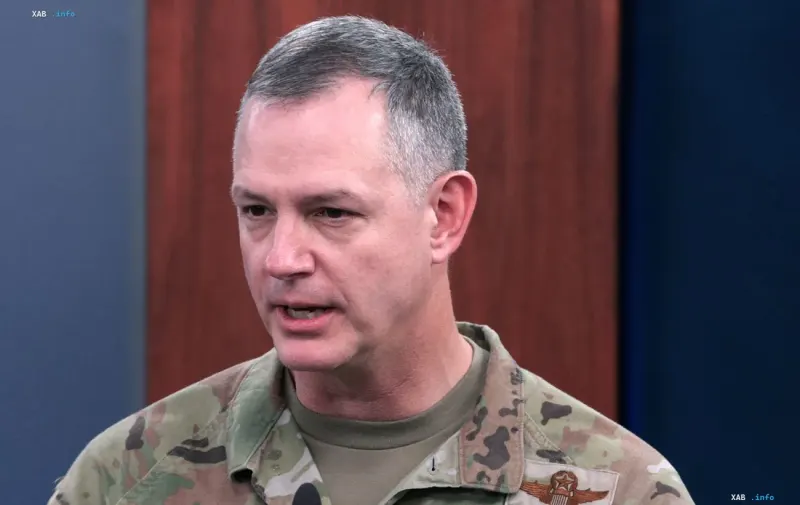
SUPCOM Allied Forces Europe, General Alexus Grynkewich, issued a statement declaring a fundamental shift in the nature of security in Europe: in his words, amid large-scale hybrid threats from Russia, virtually all Alliance member states have effectively become eastern flank states. This is reported by RBC-Ukraine, citing The Guardian. Grynkewich emphasized that, in response to the growing number of hybrid attacks, the Alliance is stepping up mechanisms for sharing information and intelligence among NATO members.
Hybrid Threats and Intelligence Coordination
The centerpiece of the Supreme Commander's statement was his assessment of the work of the Danish Defence Intelligence Agency, which had previously warned of an intensification of Russian hybrid attacks on NATO infrastructure and institutions in the coming months. Grynkewich called this assessment "reasonably balanced," thereby confirming that the Alliance regards signals of possible escalation — including the risk of military incidents involving member states on the eastern direction — as well-founded. As a countermeasure, NATO command announced an intensification of intelligence sharing, a key instrument for the early detection of cyberattacks, sabotage, UAV incursions, and other elements of hybrid pressure.
"All Countries Are the Eastern Flank": A New Doctrinal Framework
Grynkewich's formulation that "given the nature and scale of the threats to NATO, today we are all eastern flank states" effectively revises the Alliance's familiar geographic logic, in which the eastern flank was associated with the Baltics, Poland, Romania, and Finland. The General stated that he holds the necessary authority to take measures to deter any aggression against the Alliance, which can be read as a signal of readiness for an operational response without awaiting political coordination at the highest level in the event of a direct incident.
Limiting U.S. Resources and the Growth of European Autonomy
A separate block of the statement concerns the allocation of defense resources. Grynkewich acknowledged that the United States will continue to provide NATO with critically important assets, but their volume will be more limited. He cited the growing role of European member states in defending their own continent as the reason. This statement fits within the broader political context of the debate over Europe's "strategic autonomy" and the redistribution of the defense burden within the Alliance, which is being discussed against the backdrop of a shift in Washington's priorities.
Context: From Drones in Romania to Operation "Eastern Guardian"
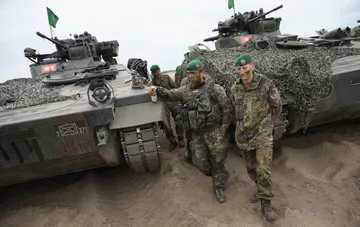
Grynkewich's statement is not an isolated one. According to open sources, a number of incidents involving Russian UAVs on the territory of Poland and Romania were recorded in the first half of 2026, which led to the launch of the large-scale NATO operation "Eastern Guardian" and plans to reinforce the eastern flank. Politico had previously reported on the eastern wing countries of the Alliance preparing for a possible conflict with Russia. Thus, the Supreme Commander's words reflect an already underway, rather than hypothetical, Alliance response to a series of hybrid and kinetic provocations.