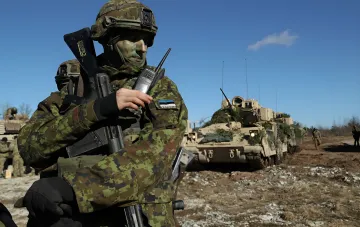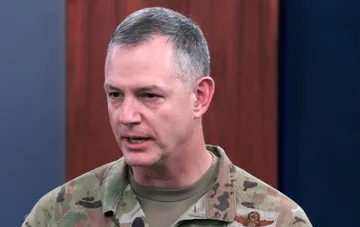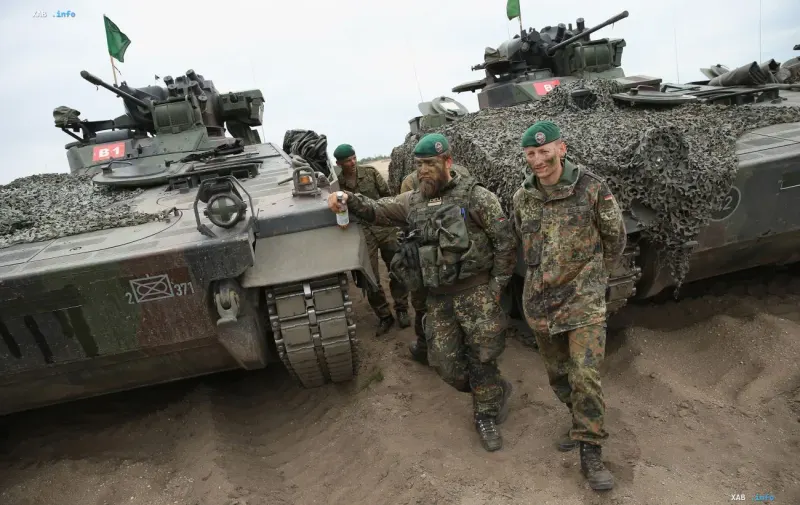
The military leadership of the North Atlantic alliance has publicly confirmed full readiness to repel possible provocations and escalation from Russia on the eastern flank of Europe. This was stated by Admiral Giuseppe Cavo Dragone, Chair of the NATO Military Committee, in an interview cited by RBC-Ukraine referencing Politico. According to him, the Alliance's structure, personnel, and armaments are in a state of combat readiness, and work on increasing the number of forces and improving their operational complexity is continuing in an intensified mode.
"These attempts make us more united"
At the center of Dragone's statement is a direct reaction to what he called "Russia's reckless behavior over the past weeks and months." The Admiral emphasized that Moscow's actions aim to undermine trust between allies and weaken the unity of the bloc. "I want to state clearly: these attempts do not divide us. They make us far more united and resolute," said the Chair of the NATO Military Committee. He added that the Alliance has already developed detailed defense plans for any scenario of events on the eastern flank, and in the event of an attack, the command knows exactly the order of actions. According to Latvian media, these are operational plan complexes of approximately 4,000 pages, prepared for a possible escalation.
Context: growing anxiety in Europe
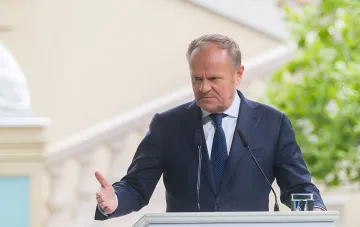
The military commander's statements came against the backdrop of growing concern in European capitals. Polish Prime Minister Donald Tusk had previously warned that Russia could send unmanned aerial vehicles or missiles to the territory of NATO countries in the coming months to test the Alliance's reaction. In recent weeks, a sustained increase in the number of violations of the airspace of European states has been recorded, as well as attempts at sabotage against the backdrop of the ongoing full-scale war by the Russian Federation against Ukraine. Earlier in June 2026, NATO had already announced plans to strengthen the eastern flank following an incident with the fall of a drone on the territory of Romania.
Hybrid attacks and operations "under a foreign flag"
A separate vector of pressure, pointed out by European capitals, remains hybrid attacks by Russian special services on infrastructure supporting Ukraine. Poland emphasized that the Kremlin's main goal remains the destabilization of the operation of railways, bridges, and border areas. Lithuania, in turn, reported receiving intelligence on possible preparation by Russia of operations "under a foreign flag" — so-called false-flag scenarios intended to test NATO's readiness to respond and create a pretext for escalation. The totality of these factors, according to the assessment of the Alliance's military leadership, requires maintaining the maximum level of combat readiness in the eastern direction.
What this means for allies
The public confirmation of readiness by Dragone is both defensive and deterrent in nature: it is aimed simultaneously at reassuring the public in eastern flank countries and demonstrating to Moscow the ineffectiveness of attempts to split the Alliance. For allies, this means the continuation of the cycle of building up forward groupings, modernization of air defense systems, and expansion of logistics chains in the eastern direction. In conditions where, according to European politicians, the window for provocations opens in the coming months, NATO, judging by the statements of its military leadership, is choosing a strategy of open demonstration of readiness without resorting to direct confrontation.