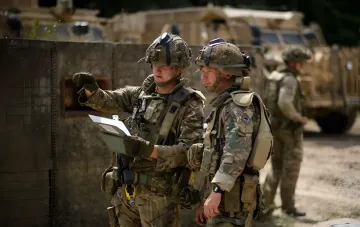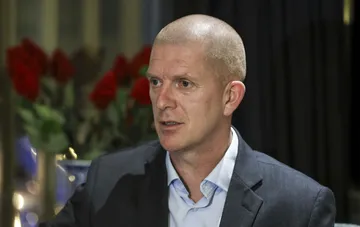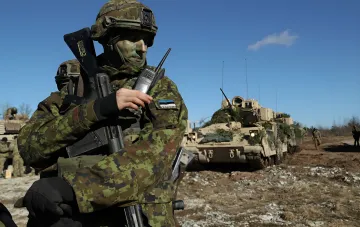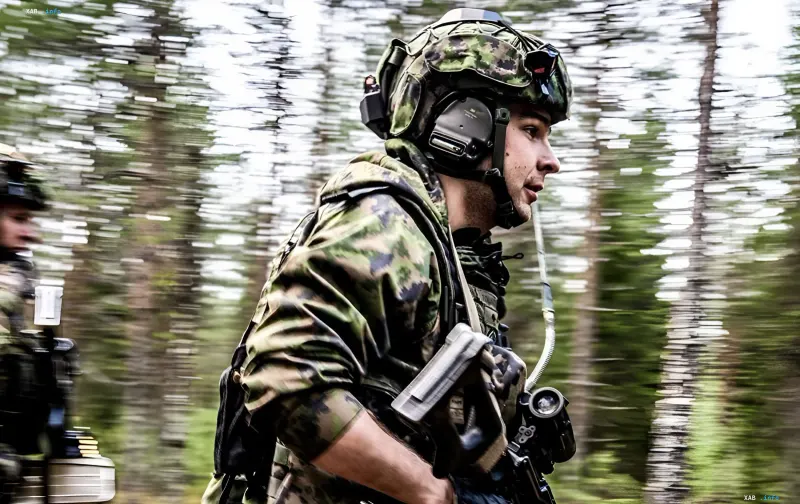
Commander of the Finnish Army Lieutenant General Pasi Valhimäki stated that Helsinki is actively studying Ukraine's experience in deterring the Russian offensive and intends to apply the lessons learned in the event of a possible invasion. According to him, Finland is considering building anti-tank barriers modeled on Ukraine's to strengthen NATO's eastern flank. This was reported by RBC-Ukraine, citing Bloomberg data.
The Ukrainian Shield as a Model for NATO's Eastern Flank
Finland shares a 1,340-kilometer border with Russia, which is roughly half of NATO's entire land border with the Russian Federation. This is why Helsinki is closely monitoring how the Ukrainian military has built an extensive system of defensive lines and anti-tank barriers over five years of war. According to Valhimäki's assessment, neither side of the conflict has yet found an effective way to overcome these fortifications and return to large-scale offensive maneuvers. This fact, in the opinion of the Finnish command, makes the Ukrainian defense model virtually a benchmark for alliance countries directly bordering Russia.
Northern Climate as the Main Engineering Challenge
However, General Valhimäki emphasizes that transferring the Ukrainian experience to Finnish territory comes with serious natural limitations. Harsh northern weather conditions, multi-year ground freezing, and seasonal temperature fluctuations can quickly disable dug trenches and installed barriers. "Conditions in Finland are tougher. If we build fortifications and dig anti-tank ditches or install barriers of the same depth as in Ukraine, how long will it take before the environment turns them into artificial ponds?" the commander explained. Thus, Finnish engineers will need to adapt the design of defensive lines to the specifics of the arctic and subarctic climate, which will require additional resources and time.
Restoration of the Russian Arsenal Amid a Protracted War
Valhimäki also drew attention to the fact that Russia, despite the fifth year of a full-scale war against Ukraine, is gradually restoring its military potential. According to his data, T-90 tanks, BMP-3 infantry fighting vehicles, and 2S19 self-propelled howitzers are already arriving at storage bases. This process, assessed by the Finnish command, indicates that Moscow is maintaining and building up its combat readiness even under conditions of prolonged hostilities. Finland is unable to stop this rearmament, so it is focusing on strengthening its own defense capabilities and creating conditions under which potential aggression becomes impractical.
Deterrence Strategy: A Barrier That Will Not Be Overcome
Helsinki's main task, according to Valhimäki, is to convince the Russian military leadership that an attack will not succeed. "Everything we are doing now is aimed at creating such a barrier that will not allow Russia to advance further — whether it is an attack on the alliance or directly on Finland," the general stated. Thus, the Finnish defense doctrine is built on the principle of proactive deterrence: not so much on readiness to repel an invasion, but on forming a firm understanding in a potential adversary that the cost of aggression far outweighs any possible benefit. In this context, studying Ukraine's experience with anti-tank barriers becomes not just an academic interest, but a key element of national security strategy.
Broader Context: Europe Prepares for the Worst-Case Scenario
Valhimäki's statements fit into a broader trend of strengthening European defense capabilities. Recently, mass civilian training programs have been launched in three European countries as part of preparations for a potential conflict with Russia. Simultaneously, a warning was issued in the UK that the country has just over 1,000 days left to prepare for a war with Russia. Taken together, these signals indicate that European capitals are increasingly viewing the scenario of a direct clash not as hypothetical, but as a working planning option.