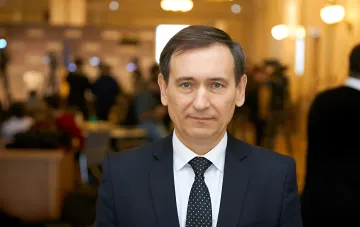
Heikki Autto, Chairman of the Defence Committee of the Finnish Parliament, has made a public statement in support of building anti-tank barriers along the land border with Russia. According to him, the combat experience in Ukraine clearly demonstrates that such defensive structures must be built in peacetime, not in the heat of conflict. "If you let the enemy capture 50 kilometers of territory right at the start of hostilities, pushing them back later will be extremely difficult," Autto emphasized, citing lessons learned from the Ukrainian experience. The statement came against the background of Russia's ongoing military campaign against Ukraine and growing concern in the Baltic states regarding the security of NATO's eastern flank.
Departure from Traditional Doctrine
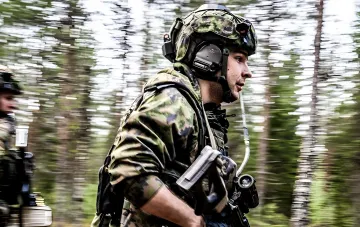
Autto's speech represents a noticeable shift in Finnish military doctrine. The traditional strategy of the Finnish army, developed over decades, assumes that in the event of an invasion, the military might cede part of the border territory, lure the enemy deep into the country, and then launch a counterattack from more advantageous positions. This approach, known in military planning as "defense in depth," allowed Finland to effectively resist superior enemy forces throughout its history. However, as Autto himself noted, strengthening the border in peacetime is fundamentally different from "traditional Finnish military thinking" and signifies a transition to a tougher model of defensive strategy.
Opposition Support
The idea of building anti-tank barriers was also supported by Mika Kari, a member of the defense committee from the opposition Social Democratic Party. His position is important because it shows that the issue of border strengthening is not exclusively the prerogative of the ruling coalition, but finds resonance across a wide political spectrum. At the same time, Kari made a significant caveat: although Finland accounts for about half of NATO's total border with Russia, the issue of border strengthening should be viewed within the framework of the defense of the entire alliance, rather than as an exclusively internal problem for Helsinki. This indicates that Finnish politicians strive to fit their defense plans into the broader context of collective security.
Context: The Fence is Already Built
Statements about the need for anti-tank barriers came against the backdrop of already implemented steps to strengthen the border. In the autumn of 2023, Finland closed all crossing points on the land border with Russia — a decision that was a response to the escalation of the conflict in Ukraine and rising tensions in relations between the two countries. By September 2026, the construction of a 200-kilometer fence along the border was reportedly completed. The total cost of this project amounted to 356 million euros. Thus, the anti-tank barriers discussed in parliament are seen as the next, deeper level of defensive infrastructure on top of the already erected physical barrier.
Significance for Regional Security
The discussion of anti-tank barriers in the Finnish parliament is taking place under conditions where the Baltic states and Scandinavia are consistently building up their military potential. Finland, which joined NATO in April 2023, is undergoing a fundamental restructuring of its defense policy: from a neutral model with an emphasis on deterrence through "defense in depth" to active integration into the alliance's collective defense system. The decision to build barriers in peacetime, if adopted, will be a symbolic and practical confirmation that Helsinki views the Russian border as a potential line of combat contact and is preparing infrastructure for its defense in advance.