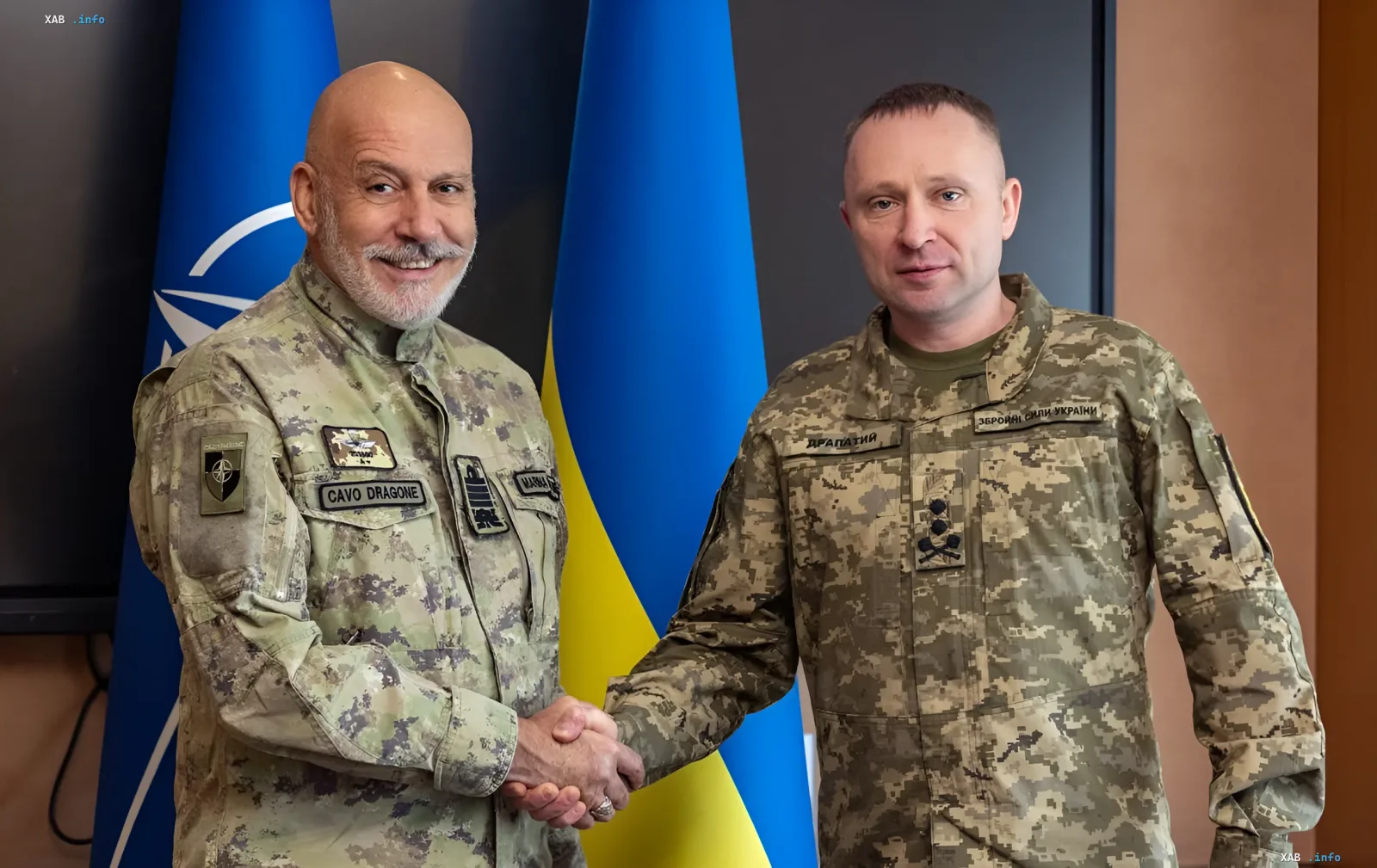
The NATO Military Committee has arrived in the Ukrainian capital in full composition for the first time in eight years. Representatives of 32 member states intend to thoroughly discuss the current critical situation on the frontline and develop new mechanisms for long-term and uninterrupted support of the Ukrainian army.
Historic Visit and Personal Agreements
According to an official video message by the Chairman of the NATO Military Committee, Admiral Cavo Dragone, this visit fulfills a personal promise he previously made to the Commander-in-Chief of the Armed Forces of Ukraine, Mykhailo Drapatyi. The Admiral particularly emphasized his warm partnership with the Ukrainian general, calling him a good friend. The current arrival of high-ranking military officials logically continues the large-scale June visit of the North Atlantic Council to Ukraine, confirming the unchanging strategic course of the Alliance.
Frontline Situation and Operational Needs
During the official program, a series of closed-door meetings are scheduled between representatives of 32 NATO countries and Mykhailo Drapatyi along with key figures of the Ukrainian military command. The core topic of negotiations will be the real situation on the battlefield. European and North American military leaders intend to receive first-hand, comprehensive, and fresh assessments of combat operations to quickly adjust the scope and nomenclature of requested military assistance.
Hybrid Warfare and Firm Alliance Response
Admiral Dragone paid special attention to countering external destructive actions, noting attempts by certain forces to undermine support for Ukraine through cyberattacks, sabotage, subversion, and regular airspace violations of European countries. The Chairman of the Military Committee made a harsh statement regarding the organizers of such provocations, stressing the absolute futility of hybrid pressure. According to him, the unity and determination of NATO states are stronger today than ever before in the organization's history.
Security Context and Threats from Moscow
It is worth noting that this visit takes place against the backdrop of escalating hybrid activity by Russia, which systematically attempts to test the readiness limits of the North Atlantic Alliance to respond to multi-vector challenges. Previously, Lithuanian and Danish intelligence services repeatedly warned about the risks of false-flag operations and new waves of cyberattacks. Under these conditions, NATO Secretary General Mark Rutte has repeatedly called on European allies to prepare for a long-term campaign against hybrid threats.