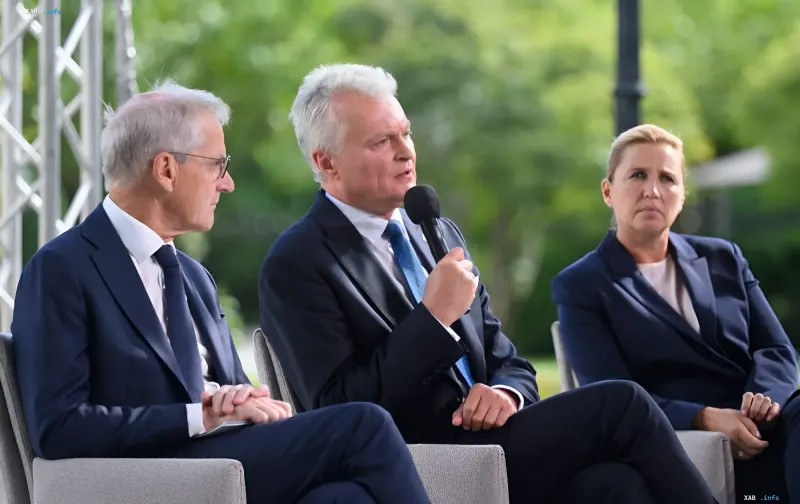
At the Ukraine – Nordic-Baltic Eight summit held in Kyiv, Lithuanian President Gitanas Nausėda stated that his country, which will assume the presidency of the Council of the European Union on 1 January 2027, intends to use all available tools to accelerate the process of opening the remaining negotiation clusters on Ukraine's accession to the EU. According to the head of the Lithuanian state, two of the six clusters have been opened so far, and "there is not that much time left" to complete this procedure.
Vilnius's plans for the period of the EU Council presidency
Nausėda emphasized that Lithuania views the upcoming EU Council presidency as a key window of opportunity for advancing Ukraine's European integration. Vilnius, he said, will actively lobby for the opening of the remaining four clusters, striving to reduce bureaucratic barriers and ensure political will among member states. The Lithuanian president stressed that his country "will always be by" Kyiv's side and will continue to provide support based on Ukraine's merits in the context of European integration.
Kyiv's commitments and the reform agenda
At the same time, Nausėda did not shy away from the question of Ukraine's own commitments. He pointed out directly that Kyiv needs to fulfil the obligations it has undertaken within the negotiation process. "It is important to demonstrate to all EU member states that this is indeed progress in implementing reforms in the country, that there is a shared understanding of reforms among the political elite and society," the Lithuanian president stated. He noted that not all EU member states approach enlargement with the same enthusiasm as Lithuania, and convincing sceptics requires concrete, visible results of the reform process.
The factor of time and geopolitical dynamics
Particular emphasis was placed by Nausėda on the limited time available. "We need to act as soon as possible, because time is running out, and right now it is a very valuable resource," he stressed. This rhetoric is consistent with the broader logic of accelerating the negotiation track, which a number of EU member states are promoting against the backdrop of ongoing geopolitical challenges in the region. The Lithuanian side, thus, positions itself as one of the most active proponents of EU enlargement to the east.
Context: status of the negotiation clusters
To date, Ukraine has opened two of the six negotiation clusters on its path to joining the European Union. The first cluster — "Foundations" — was opened in June 2026. The remaining four clusters cover key areas: from the judiciary and human rights to economic competitiveness and foreign policy. Opening each new cluster requires Ukraine to meet the corresponding criteria and obtain confirmation from the European Commission and the EU Council, making the process multi-level and dependent on the consensus of all 27 member states.