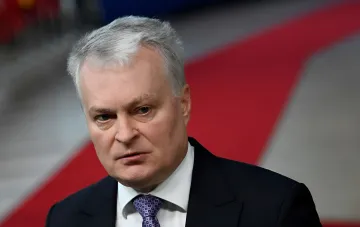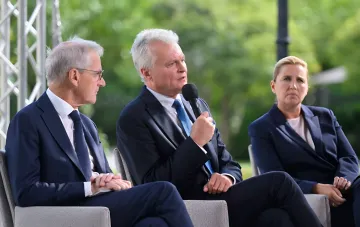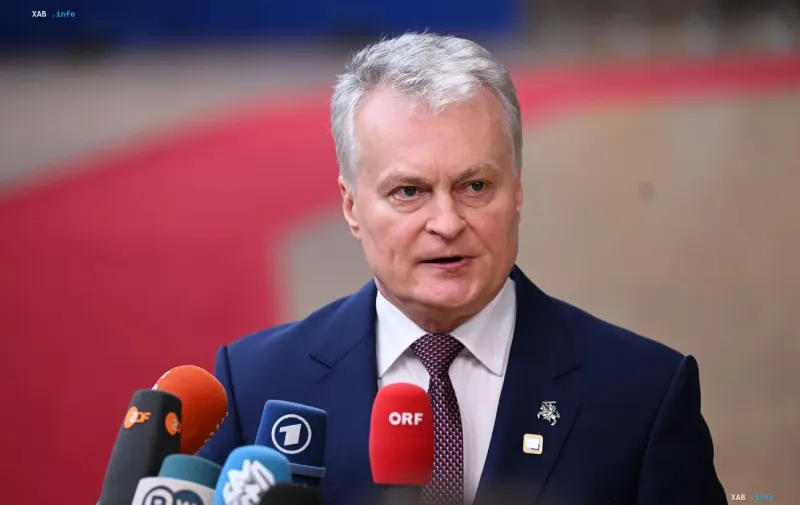
At a session of the UN General Assembly, the President of Lithuania, Gitanas Nauseda, delivered a sharp statement on the course of the Russian-Ukrainian war. According to him, Moscow has in fact already suffered a defeat, but the Russian leadership is unwilling to acknowledge this publicly. The speech came against the backdrop of heightened rhetoric around the security of the Baltic states and new threats directed at Vilnius by Russian officials.
Statement at the UN Podium
“Formally, this is not yet called a defeat, but in essence, Russia has already lost this war,” Nauseda said, speaking at the UN General Assembly, as reported by RBC-Ukraine citing the broadcast of his address. The head of Lithuania emphasized that there is a gap between the formal status of the conflict and its actual substance: on paper the war continues, but in essence, in his assessment, the outcome has already been decided in favor of Ukraine.
Fear of Accountability and “the People's Revenge”
Explaining why the Kremlin does not register its own defeat, Nauseda cited two motives. The first is the fear of international legal accountability, which Russian leaders may be called to face after the end of hostilities. The second is the fear of their own people, who, in the words of the Lithuanian president, may show “revenge” toward those who led the country to defeat. “As the inevitable approaches, the stakes rise, and the Kremlin regime is increasingly cornered,” he added.
Baltic Context: Threats and Evacuation Plans
The statement was made in a tense regional environment. Lithuania, like the other Baltic states, is seen as a potential target of possible Russian aggression: this is indicated both by drone incidents and, according to reports, by intelligence data. Under these conditions, Vilnius has prepared a plan to evacuate the population to Poland in the event of an attack. Earlier, Deputy Chairman of the Russian Security Council Dmitry Medvedev threatened Lithuania that if any weapons, including nuclear ones, were deployed on its territory, the country would “disappear from the map of the world, becoming radioactive ash.” Vilnius officially responded to these threats.
Contradictory Data
Here it is important to distinguish two levels. On the one hand, the fact of Nauseda's speech and the content of his quotes are confirmed by several independent outlets that broadcast the General Assembly session. On the other hand, the assessment that “Russia has already lost the war” is the political position of one state, not a widely recognized or legally established fact: the Russian side, conversely, continues to insist on the continuation of the conflict and does not acknowledge any defeat. Thus, in the public sphere, opposing narratives coexist — of “factual defeat” and of “the continuation of the special military operation” — and readers should treat Nauseda's words as an assessment, not as an established fact.
Reaction and Further Context
The President of Lithuania's speech fits into a broader discourse on the post-war order and accountability for aggression. For the Baltic states, which directly border the conflict zone and are part of the collective security system, the public fixation of Moscow's “defeat” has practical significance: it justifies and strengthens defensive measures and the preparation of civilian protocols, including evacuation plans. At the same time, nuclear threats against Lithuania by Russian officials make the rhetorical confrontation even sharper and require a clear and measured response from Vilnius and its allies.