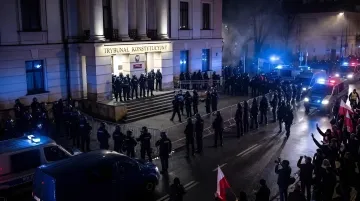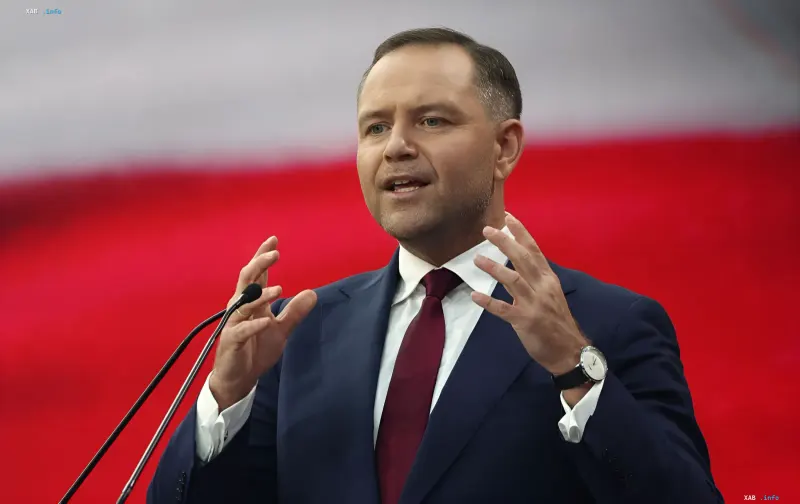
Polish President Karol Navrocki stated that on the night of October 31 in Warsaw, there was a "violation of public order of the Republic of Poland and a violent seizure of a constitutional state body." According to him, this refers to the Constitutional Tribunal, the building of which, he claims, was blocked by security forces sent by the government. Navrocki demanded the restoration of law and order and the withdrawal of security personnel from the tribunal's territory, and also called emergency consultations for October 31 with representatives of parliamentary forces aimed at stabilizing the political situation and restoring constitutional order.
'Violent Seizure' Versus 'Restoration of Legality'
The characterization of the events by the parties differs fundamentally. The president and his supporters call the events a "violent seizure" and a "coup d'état": the head of the tribunal, Bogdan Święczkowski, who stated he was not allowed into the building, characterized what was happening precisely as a coup. The government, conversely, uses the phrasing of "restoring legality." Minister of Justice and Prosecutor General Waldemar Żurek stated that the president and his entourage had left the building, which is now occupied by judges, and that the situation is stabilizing; he called Navrocki's behavior "scandalous" and expressed hope that the prosecutor's office would respond to it. Minister of Interior Marcin Kierwiński, in turn, praised the police for preventing escalation.
Two Camps of Judges: Who Is Legitimate
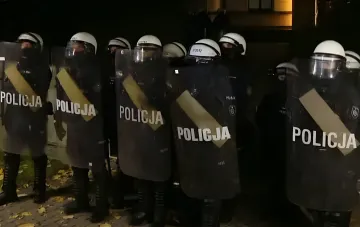
The core of the conflict rests on the fact that Poland has effectively developed two camps of judges in the Constitutional Tribunal, each of which considers the other illegitimate. The majority of current judges were appointed during the tenure of the Law and Justice (PiS) party. Donald Tusk's government, which came to power in late 2023, believes that PiS turned the tribunal into a politically dependent body and appointed some judges with violations, therefore not recognizing the tribunal's decisions and gradually changing its composition. The current Sejm elected new judges, but President Navrocki, supported by PiS, refused to swear in three of the six elected, and tribunal head Święczkowski barred them from work. It was the judges of the new composition who, on the evening of October 30, suspended Święczkowski and his deputy, after which the court building was blocked by police.
Reactions of Participants and Figures of the Night
Navrocki announced that he held consultations with First President of the Supreme Court Zbigniew Kapiński, who, according to the president, also considers illegal the actions of individuals "usurping power" in the tribunal. The president also stated that he helped deputy tribunal head Bartłomiej Sochański, whom he considers legitimate, enter the building. Following the president's statement, Sochański left his office: he said he was informed that the president was no longer in the building and called it deception. PiS deputies claim that the head of the Presidential Chancellery, Zbigniew Bogucki, who according to their data entered the building together with Navrocki, may be detained inside.
Stakes: Whoever Controls the Tribunal Influences Reforms
Whether Donald Tusk's government can implement its reforms depends on who controls the Constitutional Tribunal: it is this court that decides whether adopted laws comply with the constitution. At night, Navrocki, by his own account, forced his way to the court building, near which clashes between protesters and police continued. Thus, the nighttime events turned into an open institutional crisis in which the president, government, judges, and parliamentary forces hold mutually exclusive positions, and the resolution of the conflict has been postponed to emergency consultations on October 31.