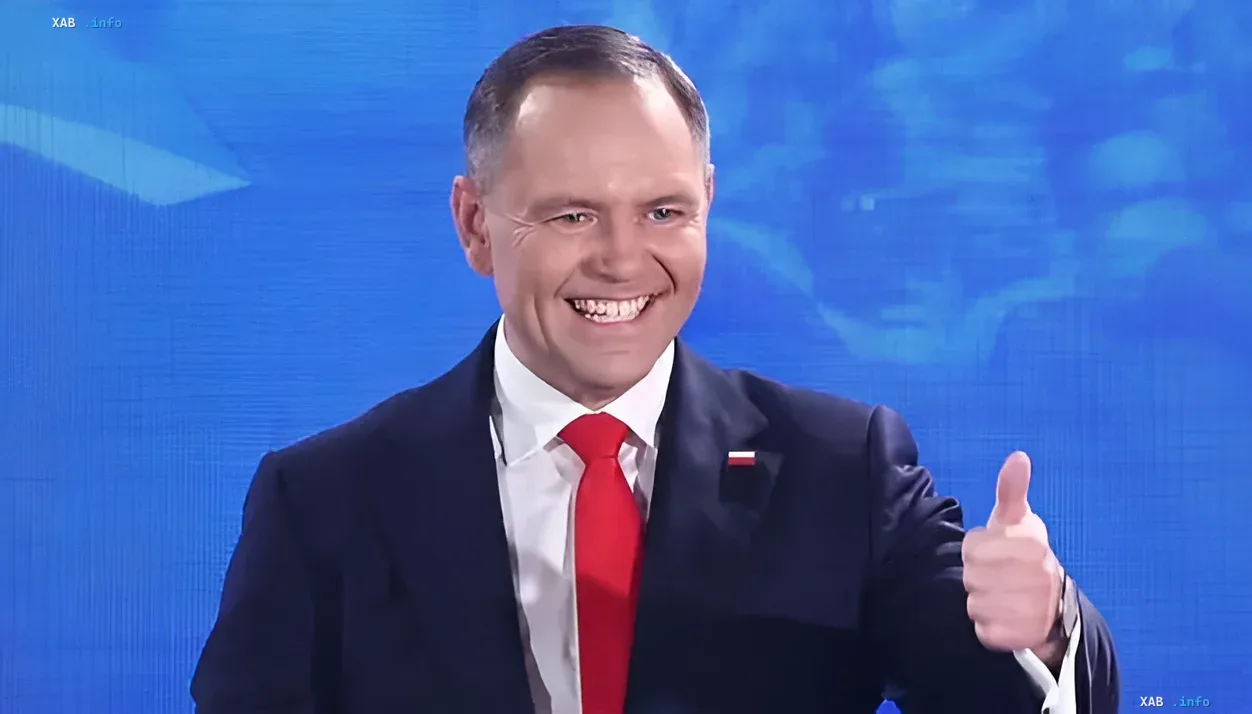
Warsaw, August 7, 2026. Against the backdrop of a tense international situation, Polish President Karol Nawrocki, during his first annual report to supporters of the Law and Justice party (PiS), articulated an unprecedentedly harsh formulation of the country's foreign policy course. In his speech, he clearly separated Poland's military and ideological interests, stating that Warsaw is ready to help Kyiv in "beating the Muscovites," but will absolutely not tolerate the presence of OUN symbolism on Polish soil.
The Doctrine of "Pragmatic Hatred": How Nawrocki sees Ukraine's role
The President's speech, held in Warsaw on August 6–7, 2026, became a landmark moment for understanding the position of Polish conservatives. Nawrocki, a historian by education and former head of the Institute of National Remembrance, used his characteristic sharp vocabulary. He stated: "Let them kill the 'Soviets' where they attacked them; it does not hurt us Poles. In this matter, they can always count on our help, because where the Muscovite is beaten, Poland provides assistance".
These words confirm that Poland's strategic interest lies in weakening Russia through the Ukrainian conflict. Warsaw views the war as a tool of geopolitical security: as long as Russian military resources are destroyed on Ukrainian territory, the direct threat to Poland's borders is reduced. Nawrocki emphasized that even without direct participation in hostilities, Poland will provide large-scale military-technical and logistical support, as this serves national security interests.
Ideological Quarantine: Ban on "Bandera flags"
However, military support has clear ideological boundaries. Nawrocki unequivocally warned: "But a strategic interest of Poland is also that Bandera flags do not fly in Warsaw and throughout Poland". By this, he means the red-and-black symbolism of the Organization of Ukrainian Nationalists (OUN), which in Poland is associated with the Volhynian Tragedy of 1943.
This position is not new, but coming from the incumbent President, it sounds like a final verdict. As early as the summer of 2025, shortly after his election, Nawrocki initiated a proposal to equate "Bandera symbolism" with Nazi and communist symbols. The occasion was a scandal in Warsaw, where a corresponding flag was unfurled in the crowd at a concert by a Belarusian rapper. Now this position is enshrined at the highest level: Poland is ready to be an ally in the war against Russia, but will not become a platform for Ukrainian nationalism.
Contradictory data
Although the President's quote is confirmed as authentic, there are nuances in the interpretation of his words. On the one hand, Polish right-wing forces traditionally take a hard line on issues of historical memory and view the OUN as a hostile force. On the other hand, Ukrainian national circles may perceive Nawrocki's statement as an attempt to break alliance relations or as pressure on Kyiv. However, Nawrocki himself emphasizes that the issue is specifically about internal order in Poland, not about ceasing military aid. Thus, the contradiction lies in how Kyiv will react to such tough conditions: will it perceive this as support with reservations or as a threat.
Conclusion: Pragmatism vs. Ideology
Karol Nawrocki's speech was a clear signal that Poland is building its policy on pragmatism. Military aid to Ukraine is a tool to weaken Russia, not support for Ukrainian nationalism. Warsaw is ready to help Kyiv as long as it serves Poland's security interests, but will not allow its territory to be used for propaganda of symbolism associated with historical tragedies. This position may become the basis for new diplomatic frictions, but for now, it reflects the official doctrine of Polish right-wing conservatives.