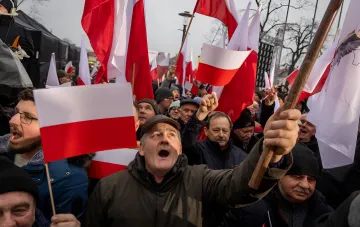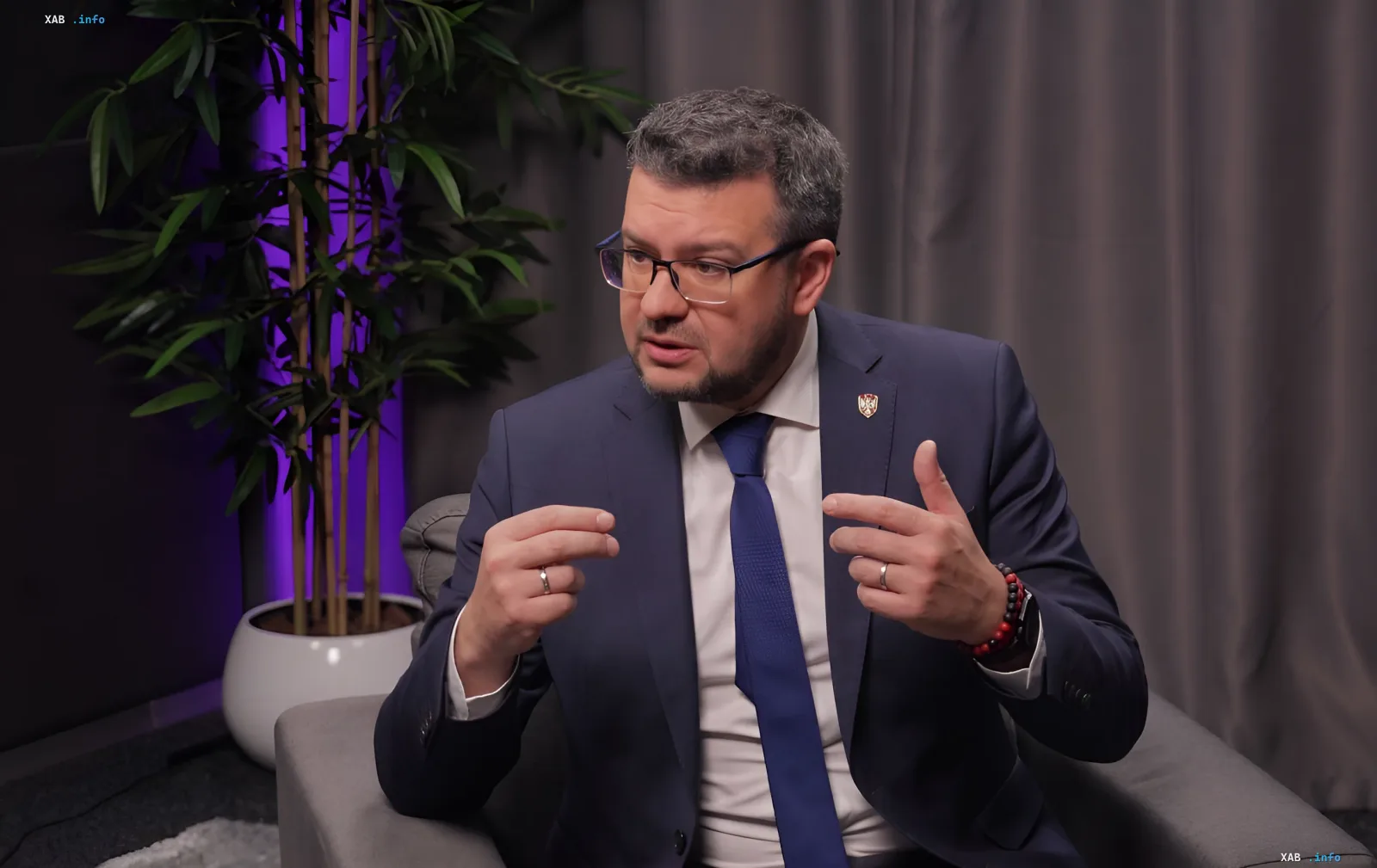
Head of the Ukrainian Institute of National Memory, historian, and active serviceman of the Armed Forces of Ukraine Oleksandr Alfiorov gave an extensive interview as part of the «Do Not Interrupt!» project, touching upon key topics of state-building, historical memory, and geopolitical relations with Poland. According to him, there can be no «good or bad» relations between Kyiv and Warsaw in the traditional domestic sense, as both states are sovereign players strictly defending their own national interests. The historian emphasizes that overcoming historical complexes allows for building a pragmatic and equal dialogue between neighbors.
The War of Historical Myths and the Inevitable Collapse of Empires
Commenting on Winston Churchill's famous statement that a dispute between the past and the present deprives states of the future, Alfiorov noted the relevance of this thought in the era of modern populism. Populist leaders actively exploit historical narratives, turning academic science into a tool for political manipulation. In contrast, professional historians rely on long-term objective trends. In particular, the expert is confident in the inevitable collapse of the Russian Federation, as the geopolitical vector of all empires leads to their ruin, while Ukraine has every chance to survive thanks to the progressive character of its people.
Decommunization, De-imperialization, and the Language Issue
Answering a question about the timeliness of decommunization and decolonization processes in the midst of a full-scale war, the head of the UINM stated that delaying these processes poses a direct threat to national security. As a historical example, he cited the rapid reforms of Pavlo Skoropadsky's government in 1918, when state institutions and document flow were fully Ukrainized in a matter of months. Alfiorov also clarified his position on the term «decolonization», noting that Ukraine was not a classical colony, but suffered from imperial oppression, making it more accurate to speak of large-scale de-imperialization of public space.
Ideological Gaps in the Capital and Memory of Heroes
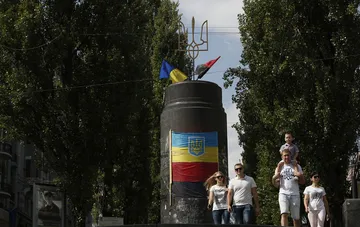
Special attention in the interview was paid to the sacral and ideological content of the Ukrainian capital. According to Alfiorov, Kyiv still experiences a serious deficit of monuments to prominent statesmen who form a full-fledged historical pantheon. The historian questioned whether society is ready to immortalize the memory of Hetman Ivan Mazepa, Symon Petliura, or Pavlo Skoropadsky, given that symbols of totalitarianism stood in the center of Kyiv for years. In addition, he pointed out a glaring omission: the capital of a warring country still lacks a full-scale memorial honoring fallen defenders of Ukraine.
Contradictory Data
In public discourse, acute discussions often arise regarding how timely the renaming of streets, the demolition of imperial monuments, and the revision of cultural heritage are during martial law. Some representatives of local self-government and conservative circles previously argued that such initiatives divide society and are «not timely». At the same time, historians and statesmen, including the leadership of the Ukrainian Institute of National Memory, insist that refusing to cleanse public space from markers of hostile ideology preserves mental dependence on the former metropolis and undermines the foundations of national identity.
Concluding the discussion, Oleksandr Alfiorov emphasized that the maturation of the Ukrainian nation directly depends on the ability to objectively evaluate its own past without looking back at foreign myths. Only through systematic institutional cleansing, recognition of historical mistakes, and honest honoring of true heroes will Ukraine be able to form a solid foundation for future victories and sustainable development in the European arena.