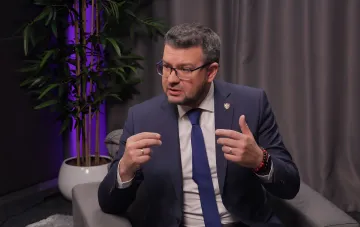
The popular concept of "decolonization," which has actively entered Ukraine's socio-political lexicon in recent years, is scientifically incorrect for describing Ukrainian history. This conclusion is reached by the Head of the Ukrainian Institute of National Memory (UINP), historian, and Armed Forces reserve major Oleksandr Alferov. According to him, borrowing this term from the experiences of the collapse of Western colonial empires in Africa and Asia in the mid-20th century distorts the real historical status of Ukrainian lands and their role in the Eastern European space.
Ukraine's Agency and Historical Context
As the historian notes, Ukraine has never fit the classical definition of a colony similar to the overseas territories of European powers. Instead, Ukrainian lands served for centuries as a cultural donor and co-creator of both European and Eastern European spaces. The head of the UINP emphasizes that Ukrainians made a fundamental contribution to the formation of the institutions of the Russian Empire, transferring the education system, religious structures, and foundations of urban architecture to it, acting as a full-fledged historical subject rather than a passive object of foreign expansion.
Elites and the Futility of the Colonial Narrative
Additional proof against Ukraine's colonial status is the governance structure in past epochs. Even while under the rule of the Russian Empire, Ukrainian lands had separate class representation—the Little Russian nobility, similar to the elites of the Kingdom of Poland, Finland, or Georgia. Furthermore, modern Russian statehood largely relies on the heritage of Kievan Rus as a medieval Ukrainian state, making the imposition of a purely colonial narrative scientifically untenable and diminishing the nation's own agency.
Contradictory Data
Despite the argued position of historians regarding the scientific inaccuracy of the term, the official legal framework of Ukraine, adopted on July 27, 2023, continues to operate. At that time, the law "On the Condemnation and Prohibition of Propaganda of Russian Imperial Policy in Ukraine and the Decolonization of Toponymy" came into force, fixing the concept of "decolonization" at the state and regulatory levels, which creates a certain dissonance between academic discussions and legal practice.
The Need to Transition to the Term "De-imperialization"
Instead of the established but controversial term, the head of the UINP insists on introducing the concept of "de-imperialization." According to the expert, it is this definition that can accurately reflect the processes of cleansing public space from imperial influence without diminishing the historical significance and independence of the Ukrainian people. This approach allows for the competent construction of state memory policy based on real historical facts and avoiding methodic clichés imposed from the outside.