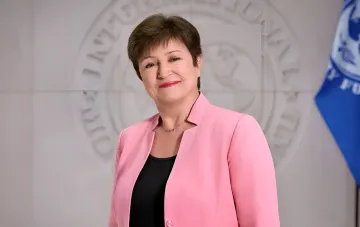
The National Bank of Ukraine has ended its weekly 'quiet period' — a timeframe during which the regulator's officials are prohibited from commenting on monetary policy. Emerging from this communication lull, the NBU announced a new decision on the key interest rate. According to the official release, the National Bank's Board of Directors decided to raise the policy rate to 16% (from 15.5% — ed.), "taking into account persistent fundamental price pressure, secondary effects of supply shocks, and the strengthening of medium-term inflationary risks." The hike was a direct response to the acceleration of consumer prices and the growing risks associated with the war and the state of the energy infrastructure.
Reasons for the decision: accelerating inflation and fundamental pressure
The key trigger was the acceleration of inflation: in August 2026, consumer inflation rose to 8.1% year-on-year, exceeding the regulator's own July forecast. According to NBU data, price dynamics were influenced by more expensive fuel amid the escalation in the Middle East and the rise in administrative tariffs, driven by Russian attacks on infrastructure. At the same time, the regulator notes persistent fundamental price pressure: businesses' production costs for electricity, logistics, and labor remain high, while consumer demand and wages continue to grow steadily, further fueling inflationary expectations.
External factors and security risks
The regulator singles out a separate block of external and security-related factors. The ongoing war, intensified attacks on energy and logistics, and the risk of insufficient international financing exert additional pressure on prices. It is precisely within this configuration of risks that the rate hike is intended to support the attractiveness of hryvnia-denominated assets, the stability of the currency market, and the manageability of inflationary expectations. According to NBU forecasts, this will help bring inflation back onto a trajectory of sustainable decline to 5% by 2027. The regulator emphasizes, however, that the current tightening of monetary policy will not have a noticeable restraining effect on business lending.
How the 'quiet period' works in NBU practice
It is worth recalling that the National Bank adheres to the practice of a weekly 'quiet period' in its monetary policy communications. The restriction period begins on the last Thursday before the Board of Directors' meeting on monetary policy and ends at 14:00 on the day of the meeting — simultaneously with the publication of the official decision on the NBU's website. During this week, members of the Board, participants in the Monetary Policy Committee, and other regulator staff have no right to discuss monetary policy topics with media representatives, banks, experts, or investors — neither on record nor off record. The media, in turn, may not publish pre-prepared interviews and comments containing statements about monetary policy. As the NBU notes, the 'quiet period' is a standard global practice for central banks employing inflation targeting, and its main purpose is to prevent public speculation around a future decision that could harm the expectations of financial market participants and provoke excessive volatility.
Outlook: monetary policy flexibility and the role of the rate
The NBU states its readiness to continue responding flexibly to changing risks: in the event of intensified price pressure, rates may be raised further, while a deterioration in the security situation and a cooling of demand may become grounds for easing policy. The outcomes of the Monetary Policy Committee's discussion will be published on September 28, 2026, and the next Board of Directors meeting is scheduled for October 29, 2026. In a broader context, the regulator reminds that Russia's full-scale invasion significantly weakened the channels of monetary transmission and distorted economic conditions, making the traditional use of the policy rate as the main instrument impossible. However, the economy's adaptation to wartime conditions and NBU measures contributed to restoring the effectiveness and predictability of the rate's impact on market rates, which became a prerequisite for transitioning to a flexible inflation targeting regime. At the current stage, the policy rate remains an important instrument that, in combination with other measures, helps achieve price stability, protect hryvnia savings from inflationary erosion, and ensure a stable situation in the currency market.