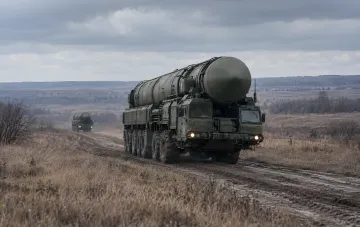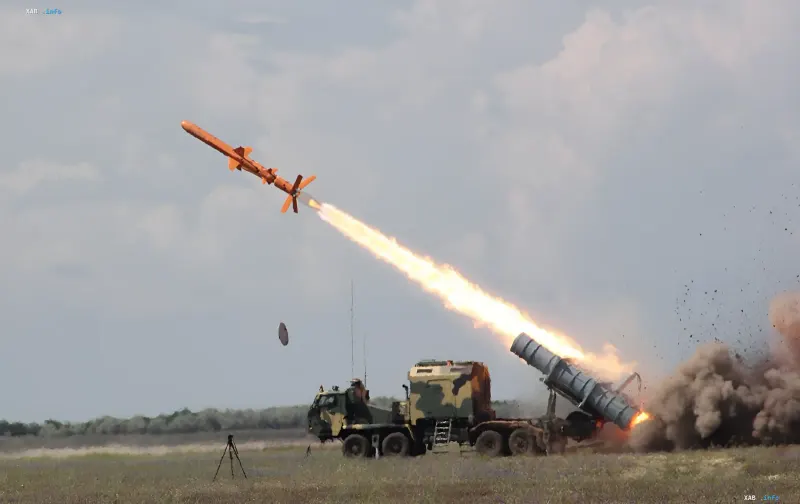
In recent months, a "strange and rather toxic discussion" has been unfolding in the Ukrainian public space, according to aviation expert Anatoliy Khrapchynsky, where society is being "pulled to opposite corners of the ring": either you are for the classic state defense-industrial complex with its flagships like the Neptune anti-ship missile system, or for private defense companies and their projects, specifically the FP line. According to Khrapchynsky, this framing of the question — "either state or private" — is a strategic deadlock that creates a dangerous illusion that in a country waging a war for survival, there are "extra" missiles or "extra" engineering teams. The expert emphasizes that comparing Neptune and private team products on a "which is better" basis is akin to arguing about what is more needed in surgery: a scalpel or a clamp.
Different Floors of the Defense Architecture
State design bureaus, according to Khrapchynsky, rely on decades of fundamental school, deep expertise in complex ballistics, gas dynamics, and heavy missile engineering. He calls the development and scaling of Neptune an unalternative priority for destroying heavily protected strategic objects. Private companies and FP-level projects, conversely, provide what the "heavy state machine" often lacks: high iteration speed, flexibility, the use of non-standard component bases, and the ability to quickly scale cheaper destruction means. Stopping private projects for the sake of state ones means losing massiveness and the pace of innovation, while restricting state projects for the sake of private ones deprives the country of heavy high-tech potential that "takes years to build from scratch." As the expert puts it, they "do not compete for the same niche, but cover different floors of our defense architecture."
The Private Sector Bears All Development Risk
One of the main triggers in disputes surrounding defense production, Khrapchynsky notes, is usually money: critics claim that private actors are "pulling budgets away" from state giants or vice versa. Here the expert cites a key fact that, according to him, critics "either do not know or consciously remain silent about": private defense companies in Ukraine are not funded by the state for research and development (R&D). Not a single kopeck from the budget for R&D goes to the private sector. All blueprints, bench tests, prototypes burned at training grounds, expensive equipment, and engineers' salaries at the creation stage are, Khrapchynsky argues, one hundred percent financial risk of the founders themselves, private investors, or donors. The state, as he formulates it, comes with money only when the product is already flying, has passed tests, proved its effectiveness, and is ordered as a ready serial product. Thus, private business, in the expert's estimation, essentially "gives the state the most expensive and risky development stage," saving the budget significant funds and time.
Combined Strikes: How the "Single Orchestra" Works
Even with unlimited resources, betting on any single separate solution would be a fatal mistake, Khrapchynsky emphasizes: the enemy adapts to any mono-weapon within weeks, studying the thermal footprint, flight profile, speed, and frequencies of a specific product and building layered defense against it. The interdependence of various means is most clearly visible, he says, in the example of modern combined attacks. First, the first echelon goes into the sky — mass long-range drones and cheaper private products that force the enemy to turn on radars, expose the positions of air defense systems, and expend expensive ammunition. At the moment when enemy air defense is overloaded or reloading, the second echelon enters through open "windows" — high-speed cruise and jet solutions like the FP line, which knock out launchers, radars, and warehouses themselves. And already through the cleared corridor, with minimal risk of interception, the heavy Neptune enters, capable of guaranteed destruction of a concrete bunker or command post. Without the first waves, heavy state missiles would be forced to "blindly smash through a fully combat-ready air defense system," while without heavy weaponry, lighter means cannot guarantee the destruction of fortified targets.
Industrial Cooperation as the Only Way to Scale
Khrapchynsky's final conclusion boils down to the fact that to increase the number of combined attacks manifold, Ukraine critically needs not a survival competition between the state and private sectors, but deep industrial cooperation and technology exchange between manufacturers. Scaling weapons production, in his conviction, is possible only through joint production chains, rather than through artificial opposition between "ours" and "theirs" in the defense industry. The discussion of "who is better" in wartime conditions, according to the expert, distracts attention and resources from the only productive task — building a system where each element, from a cheap drone to a strategic missile, performs its function in a single combat cycle.