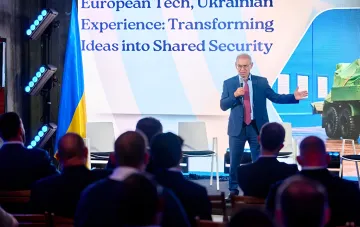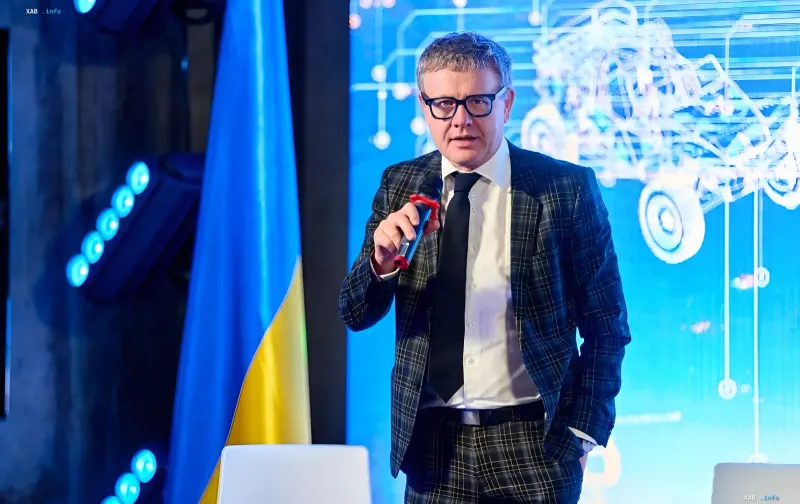
At the German-Ukrainian defense industry conference titled "Ukraine – Germany: Cooperation in the Defense Industry," Rainer Perau, Head of the German-Ukrainian Chamber of Commerce and Industry (AHK), characterized the current state of the German military and political establishment in a comment to RBC-Ukraine. According to him, a tangible sense of urgency is clearly felt in the German army and politics: the Bundeswehr is actively modernizing, and its leadership, judging by public statements from leading officers and generals, demonstrates a deep understanding of what is happening on the Ukrainian battlefield. Perau emphasized that this transformation is not spontaneous—it is fueled by the systematic work of military attaches accredited to the German Embassy in Kyiv, whose direct task is to monitor the operational situation and transmit information to the Bundeswehr headquarters in Berlin.
From Slow Reforms of 2014–2022 to Full-Scale War Mode
Answering questions about the dynamics of change, Perau drew a comparative parallel between two periods of Ukrainian statehood. He recalled that ahead of the conference, Ukrainian Deputy Minister of Defense Hanna Gvozdiar spoke, describing the state of the country during 2014–2022 in her report. According to Perau's assessment, during that period Ukraine acted significantly slower than it does today under full-scale attack. It is precisely this contrast, he said, that has become a vivid lesson for the German side: the difference between peacetime and wartime manifests itself not only in the speed of decision-making, but also in the very architecture of institutions forced to operate under constant pressure. Perau noted that the discussion in Germany has changed significantly over recent years, and right now, against the backdrop of the Ukrainian experience, a new quality of threat awareness is forming in German society and elites.
What the KSE Study Shows Regarding Europe's Preparedness
Responding to a question about which countries are best prepared for a possible Russian invasion, Perau referred to a study by the Kyiv School of Economics (KSE), which reflects the level of preparation of European states. According to his interpretation of the data, Germany is performing quite well compared to countries like France, Italy, and the United Kingdom. However, Perau emphasized, the absolute leaders in terms of readiness are the Northern European countries: Denmark, Sweden, Norway, and, in particular, Finland. He separately noted that given the size of these states, it is the Northern European countries that demonstrate leading indicators—their experience in mobilization, defense investments, and integration into collective security systems, in his opinion, deserves the attention of all Europe as a reference for countries with larger economies and territories.
"Sonderstab Ukraine" and the Speed of Decisions in Berlin
The context for Perau's statements is information previously published by the Financial Times: a small team called "Sonderstab Ukraine" (Ukraine Special Staff) is operating within the German Ministry of Defense. According to the publication, this exact structure is behind the annual military aid to Kyiv amounting to 11.5 billion euros and, in certain cases, is capable of concluding arms supply agreements in just two weeks. Such a mechanism essentially breaks the traditional bureaucratic inertia of German defense procurement and allows Berlin to respond to Kyiv's requests at a speed comparable to the demands of frontline logistics. Perau, representing the interests of the business community, sees this as a signal that the German defense industry and political leadership are building channels of interaction previously unthinkable in the scale and pace necessary to support a state at war.
Thus, the AHK head's statements mark a turning point: the German military machine, which just a few years ago operated in peacetime mode, is switching to the logic of rapid response, and Ukrainian combat experience is becoming not just an object of study, but a practical standard against which decisions in Berlin are calibrated. For the Ukrainian defense-industrial complex, this means that the window for deepening industrial cooperation with Germany remains open, but requires both sides to match the speed of the new level of urgency.