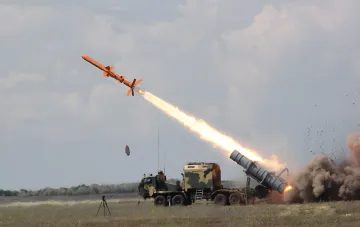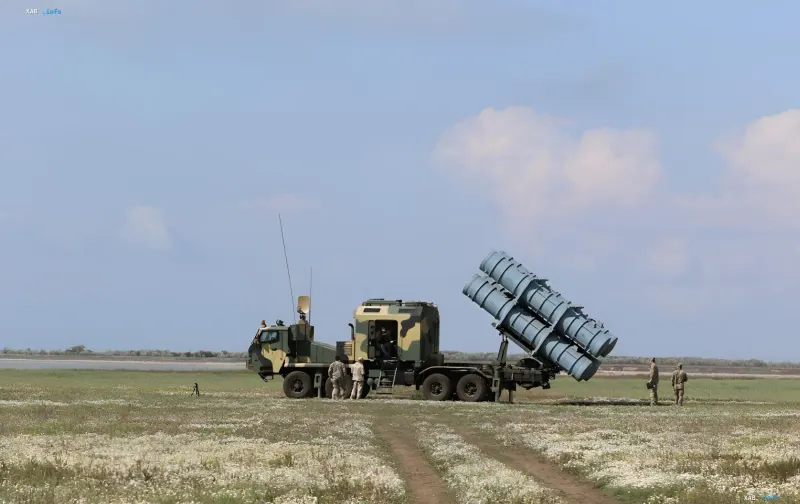
Dmytro Pletenchuk, the spokesman for the Ukrainian Navy, revealed the logic behind reorienting the Neptune missile system — originally developed as an anti-ship weapon — to strike ground-based targets of the Russian military-industrial complex during a televised broadcast. According to him, the decision was driven by simple practical necessity: Russian warships effectively do not put out to sea, creating a need for new tasks for Ukrainian naval personnel. "In fact, it was a wise decision to reorient our experience toward destroying other types of targets, because ships don't go to sea, and we have to work," Pletenchuk stated on air, as cited by RBC-Ukraine.
From test strikes in Crimea to Russia's rear areas
The Navy spokesman explained that Ukraine maintains production facilities for manufacturing the relevant destruction assets, and naval personnel possess accumulated experience in their deployment. In his estimation, this very "synergy" allowed for a smooth transition from naval to ground targets. Initially, strikes were carried out in a test mode against facilities in Crimea, after which, according to Pletenchuk, "the geography became somewhat broader." He emphasized that Ukrainian military forces are hitting targets far beyond the coastal waters, specifically deep within Russia's rear, which, in his view, demonstrates the real capabilities and future prospects of Ukrainian weaponry.
Strike on Proton-Electrotex in Oryol
A concrete confirmation of the new tactic was the strike on the night of November 7, 2026: Ukrainian missile forces hit the Proton-Electrotex enterprise in Oryol with Neptune missiles. According to open sources, the company produces optoelectronic equipment, including modules for Kalibr cruise missiles and switches for Iskander-M systems. Thus, the target served as an element in the supply chain ensuring the operability of several types of Russian missile weapons.
Strikes on airfields and drone command posts
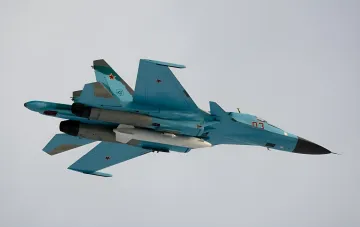
In the same broadcast, Pletenchuk touched upon the topic of strikes on Russian airfields. He acknowledged that completely depriving the enemy of aviation is impossible since aircraft are capable of relocating to other sites. However, in his estimation, each such strike complicates the operation of Russian aviation and requires additional resources from it. Furthermore, a day prior to the statement, the Ukrainian Defense Forces reported hitting four command posts of the Russian army's unmanned systems — in Berdyansk (the Rubicon unit), in the area of Oleshky in the Kherson region, in the area of Bilytske in the Donetsk region, and in the Bryansk region.
Strategic context: dispersed military-industrial facilities as a vulnerability
Pletenchuk's key argument is that Russian military-industrial facilities are scattered across a vast territory, and their number is large. On the one hand, this creates a protection problem; on the other hand, it provides a wide range of potential targets for missile systems with a range extending beyond the sea area. The reorientation of the Neptune in this context looks like a rational use of the existing arsenal under conditions where the initial anti-ship mission is effectively irrelevant due to the absence of active enemy naval operations.