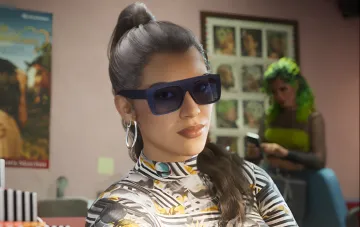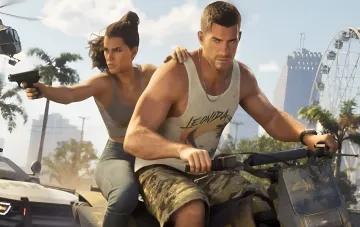
Amidst the ongoing cycle of leaks surrounding Grand Theft Auto VI, an anonymous hacking group named CyberLeek published a series of gameplay videos and an accompanying manifesto with demands for Rockstar Games on the X platform. The perpetrators pledged to release their entire remaining archive of materials if the developers fail to fulfill the condition of "rectifying the damage caused" and issuing a public apology to the community. The incident once again brings to the forefront the issue of how publishers protect unfinished projects from insider and external attacks.
What Exactly Leaked
According to industry publications, the published fragments demonstrate early testing stages: in the videos, the main character of GTA VI — Jason — plays basketball and participates in street fights in the streets of Vice City. Footage featuring a male character in a Hawaiian shirt with sunglasses and a female character in a brown jacket with braids has been deemed authentic by observers. This means the leak concerns real assets and scenes from early development, rather than fan reconstructions or leaked marketing materials.
Manifesto, Cryptocurrency Fundraising, and the "Secret Project"
In addition to threats, CyberLeek launched a cryptocurrency fundraiser, which, according to the hackers themselves, is intended to finance a "secret project." As stated, the obtained resources are planned to be used to build a defensive infrastructure against future legal and cyberattacks by corporations. In the manifesto, the group openly criticizes the industry's business model: "Publishers sell licenses and call it 'acquisition'. They release unfinished games and call it 'continuous updates'. They block access to content on discs and call it 'additional content' (DLC). They suspend game support but keep the money. Every year, gamers get less of their money's worth," note the hackers.
Rockstar Games' Reaction and Industry Positions
Rockstar Games, as in previous incidents, promptly moved to block the content: the company began mass filing copyright infringement complaints (DMCA) against the published videos. Simultaneously, the public movement Stop Killing Games, which fights against the shutdown of servers for purchased games, took a public stance. Its representatives distanced themselves from CyberLeek's actions, calling them destructive: in their opinion, blackmail and threats only harm the reputation of the gaming community and hinder the legal fight for consumer rights. Thus, even part of the community traditionally critical of publishers did not support the extortionists' methods.
Contradictory Data
Here, it is important to distinguish between the confirmed and the unconfirmed. The fact of publishing new gameplay videos and the attempt to blackmail developers has been verified by industry media and analysts. However, the claims by the anonymous hackers themselves about possessing a "fully playable build" of GTA VI and access to source code come exclusively from the hackers and are not confirmed by independent sources. Industry publications verify only the existence of short gameplay footage and early development test assets. Therefore, claims of control over a working build of the game should be viewed as an element of pressure and hype, rather than a proven fact.
Context: Sales and Stakes
According to preliminary data, GTA VI has already sold nearly 4.5 million copies, making the project one of the most anticipated and commercially significant releases in recent years. This is why leaks of early content pose not only reputational but also financial risks for Rockstar Games and parent company Take-Two: premature publication of gameplay could distort the marketing strategy and shift product perception before the official release. In this situation, the combination of DMCA strikes, legal mechanisms, and public statements appears to be a standard but forced tool of protection for the publisher.