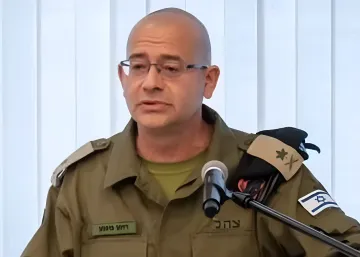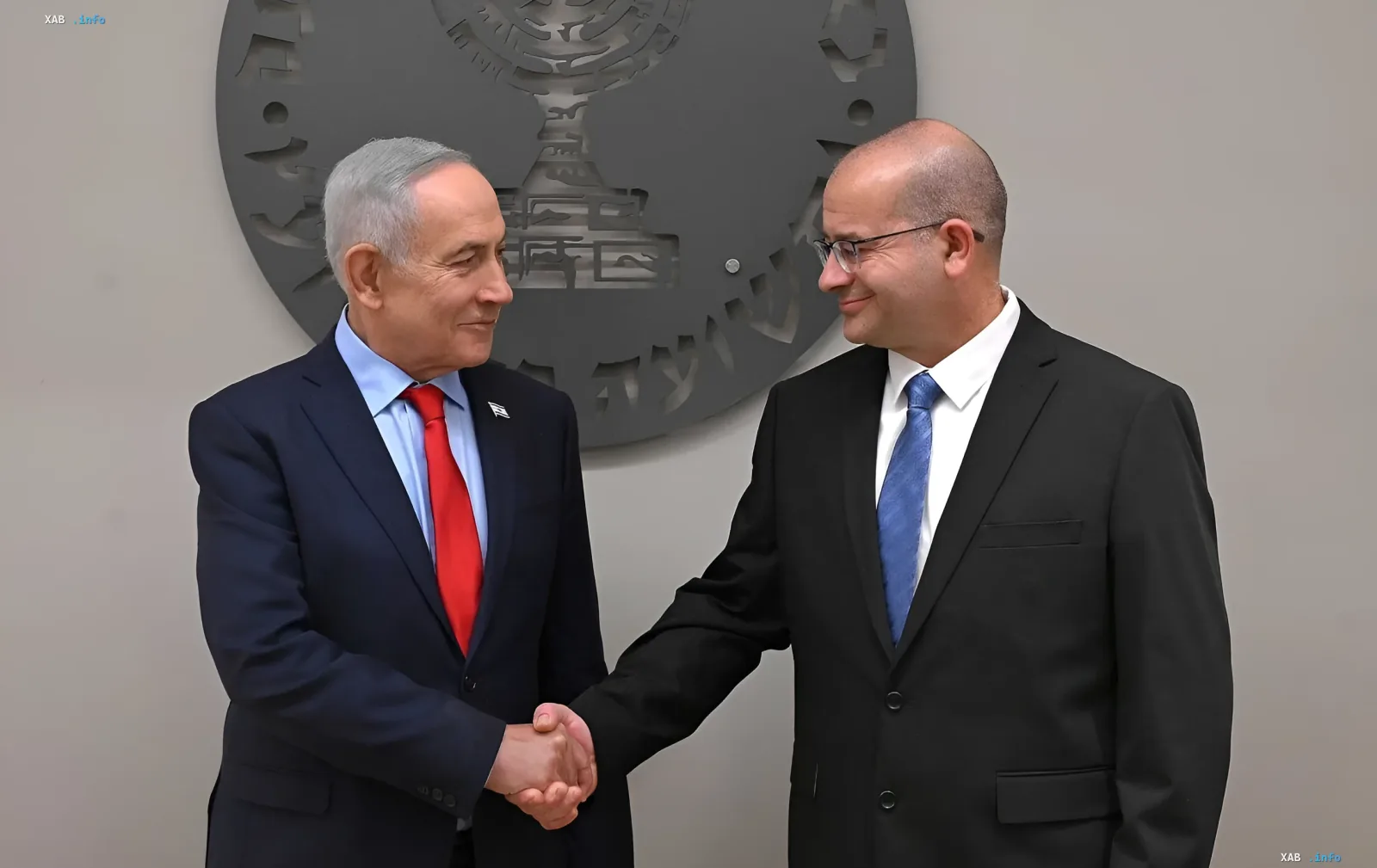
An event has occurred in Israel that has caused serious resonance in Russian intelligence circles. Benjamin Netanyahu has officially appointed Major General Roman Hoffman as the new director of the foreign intelligence service, Mossad. This appointment is not just a personnel change but a signal of a fundamental shift in the strategic priorities of the Israeli intelligence agency.
A Man with a "Soviet Code"
Roman Hoffman is a figure whose origins and biography cause particular concern in Moscow. Born in Belarus during the existence of the USSR, he emigrated to Israel with his family in 1990 at the age of 14. This experience allowed him not just to learn the language, but to deeply absorb the cultural code and mentality of the post-Soviet space.
For Russian analysts, this becomes a key factor. Hoffman speaks Russian fluently, which, according to experts, turns into an effective tool for strategic action. His ability to build networks of contacts on the territory of the former USSR gives him a huge advantage over predecessors who did not have such a background.
From Tanker to Head of Intelligence
The career of the new Mossad director is an example of a classic rise up the career ladder. Hoffman began his path in the Armored Corps of the Israel Defense Forces, rising from a junior officer to a division commander.
Before his appointment as head of intelligence, he held the position of Military Secretary to the Prime Minister. Russian analytical materials note that Hoffman and Netanyahu get along well, making his appointment a powerful political move by the head of government. He became the 14th head of the agency, replacing David Barnea in this position.
New Strategy: Russia and Iran Under One Roof
Hoffman's appointment signals a restructuring of the Israeli intelligence service's work. Previously, the cooperation of two dictatorial regimes — Russia and Iran — was a headache for Israel. Now, Mossad effectively unites two directions: the Russian and Iranian sectors now work as a single entity.
The Kremlin and Tehran have come under the close observation of a man who, according to analysts, knows their methods of work from the inside. Russian experts highlight three main directions of the new strategy of the updated intelligence service:
- External Neutrality and Data Exchange: Intelligence maintains tactical neutrality but conducts strategic calculations and information exchange, especially regarding the situation in Syria.
- Diaspora Resource: More than a million people from the former USSR live in Israel. This creates a unique intelligence mechanism that Hoffman will be able to use more effectively than others.
- Technological Monitoring: Deep monitoring of technological developments by adversaries is being implemented, as Israel remains an active consumer of such information.
Thus, Roman Hoffman's arrival as the director of Mossad is not just a personnel rotation, but a strengthening of work on the Russian direction, which, it seems, has become one of the main priorities of the new intelligence administration.