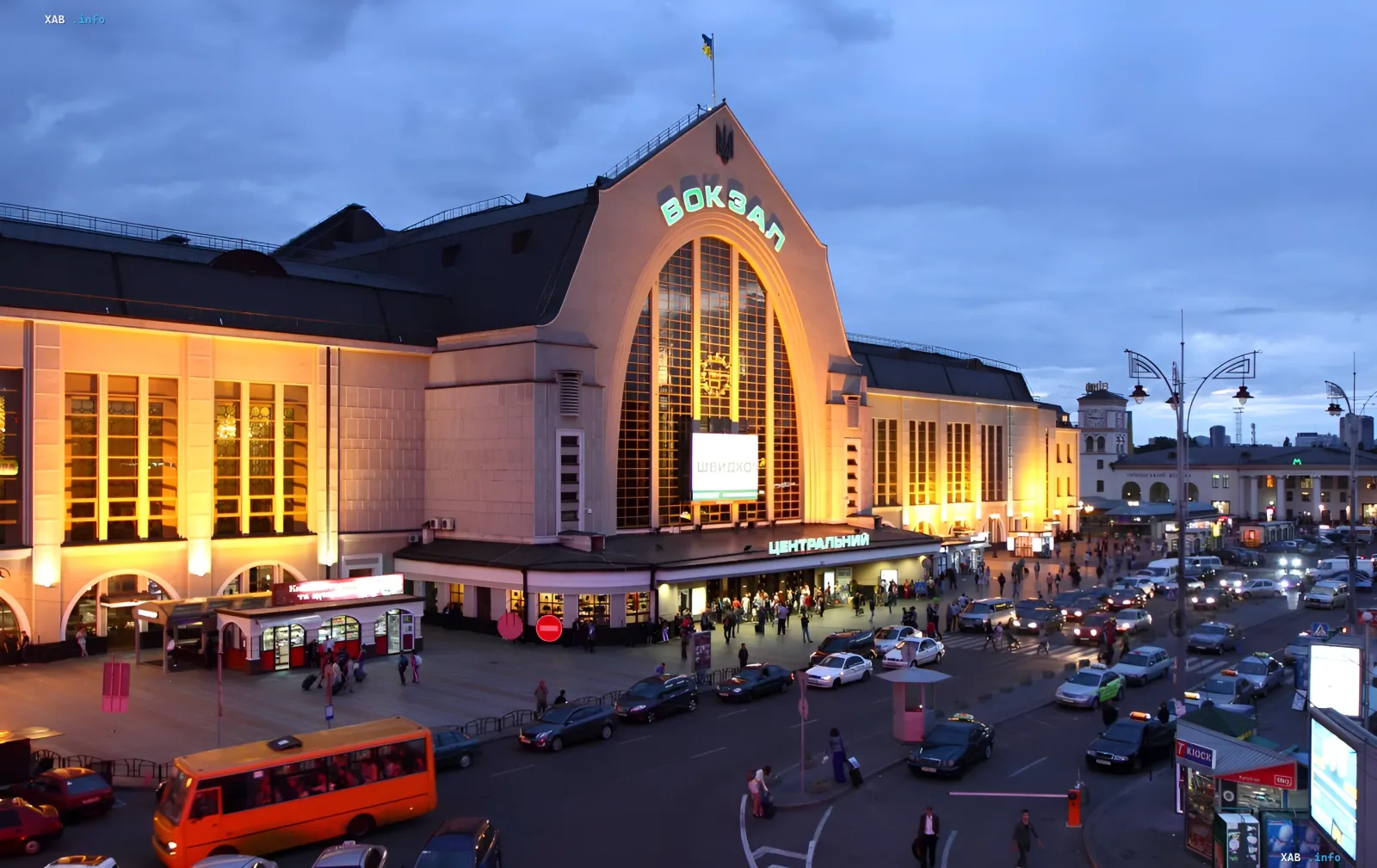
Ukraine has approved updated rules for the operation of rail transport and stations during air-raid alarms. As Prime Minister Serhiy Haidai (note: the source names Serhiy Koretsky) announced, from this point on the train schedule and the very procedure for boarding passengers will depend directly on the threat level declared in the region. The mechanism introduces a clear division of actions for railway staff and passengers depending on the degree of danger, which is intended to make the response to alarms more flexible and predictable for millions of passengers. The photo shows the facade of Kyiv's Central Station, one of the key hubs to which the new requirements apply.
A response tied to the threat level
The key innovation is that a single "emergency" mode is being replaced by a differentiated one: actions at the station and on the trains are now scaled to the specific level of danger. The public statement emphasizes that the air-raid alarm system is divided into levels (including "yellow" and "red"), and it is this division that determines decisions on delaying, cancelling, or continuing services, as well as on the order of boarding and alighting. This approach makes it possible not to halt all transport under a minimal threat and, conversely, to quickly switch hubs to a protective mode when there is a real danger.
Ukrzaliznytsia's powers and automation of decisions
Ukrzaliznytsia has been granted the right to promptly restrict movement and disperse both rolling stock and passengers on the spot, in order to avoid dangerous gatherings of people on platforms and in waiting halls. To ensure decisions are made instantly, automatic retrieval of threat-level data is being introduced: the relevant instructions have already been sent to the Ministry of Infrastructure and the State Emergency Service. This means that dispatch services will be able to respond to changes in alarm status without manual delays or bureaucratic approvals.
Shelters at stations and strengthened security
In parallel, Ukrzaliznytsia, together with local communities and regional military administrations, is obliged to expand access to shelters directly at the stations. The Ministry of Internal Affairs and the National Police will additionally strengthen the security of stations and take on the evacuation of people in case of threat. "Every community faces the top-priority task of accelerating the installation of mobile shelters as much as possible. This is critically necessary so that people can quickly take cover in case of danger. The safety of passengers and railway workers is, of course, the top priority," Haidai (Koretsky) emphasized.
Linkage with urban transport and the work of other agencies
Regions have been instructed to adapt urban transport schedules to the train timetable, with special attention to night services, so that passengers are not left without a connection between the station and home under restricted movement. Meanwhile, as the media remind, Ukrposhta stated that the division of alarms has not changed the operating schedules of its branches: postal, financial, and social services continue to be provided under the existing safety algorithms. The same logic applies to CNAPs (public service centers) and social institutions, which continue to operate in accordance with the new division of alarms into levels.