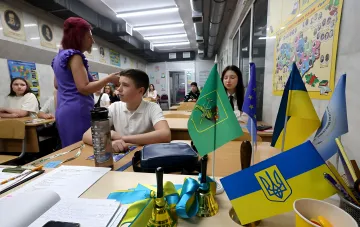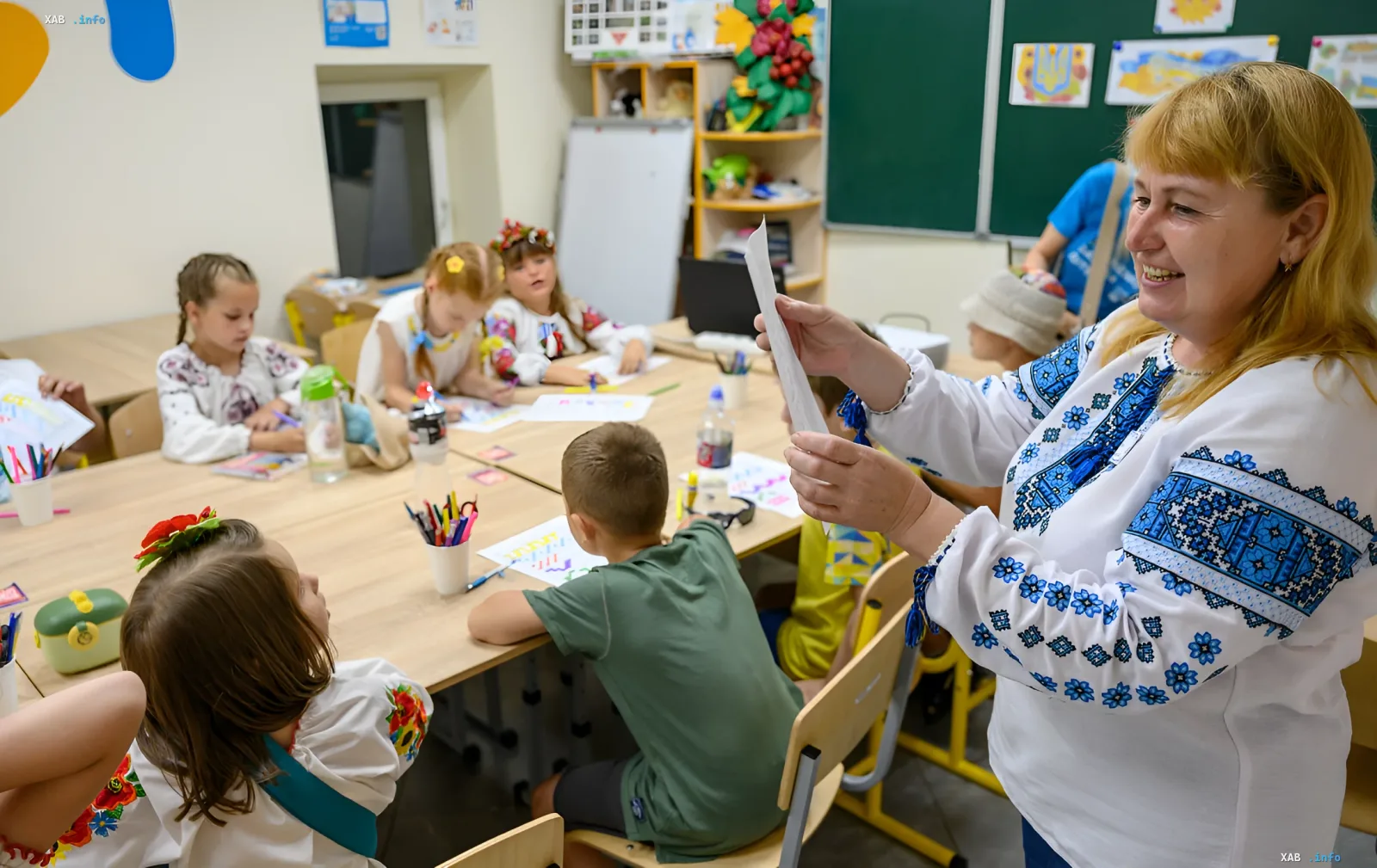
On September 1, a new school year begins in Ukraine, with more than 25,000 educational institutions preparing for it, according to the Ministry of Education and Science. As Minister of Education and Science Andrii Butenko stated, the key priority for the Ministry remains the maximum return of children to in-person learning wherever the security situation allows. At the same time, the minister emphasizes that decisions must not create additional risks for schoolchildren, preschoolers, and education workers, so the operating format of each institution will be determined first and foremost based on the local situation and the availability of safe space.
In-person format — the priority, but without risk
In those regions and communities where in-person learning is not yet possible, blended or distance formats will be applied. Children will be able to return to classroom lessons once adequate safety conditions are in place. Thus, the state is laying down a flexible model: there is no single "common" format for the whole country, and final decisions are made locally in line with the actual situation.
Shelters: 82% of children are already protected
By the start of the new school year, more than 82% of kindergarten children and school pupils have access to shelters of various types. This covers more than 9,000 preschool education institutions and more than 11,000 schools. Once the works planned for this year are completed, 87% of children will have access to shelters, and by the end of 2027 the Ministry of Education intends to raise this figure to 92%.
6 billion hryvnias and the first underground kindergartens
The state continues to invest in creating a safe educational environment: this year the government has allocated 6 billion hryvnias for the corresponding measures. Of this amount, 1 billion hryvnias has for the first time been directed to the construction of underground kindergartens — the first such institution is already operating in Kharkiv Oblast. In frontline regions, around 100 radiation shelters are in operation where a full educational process can be carried out, and another 131 such shelters are being built with state budget funds, including 18 underground kindergartens.
Kyiv and Kyiv Oblast: nearly 90% under shelter
In Kyiv, 528 preschool education institutions have shelters, and 435 shelters are operating in schools, which allows 91% of the capital's preschoolers and pupils to be covered. 23 kindergartens and 20 schools do not have their own shelters — for organizing the educational process there, rented safe spaces are used. In Kyiv Oblast, kindergartens have 507 shelters and schools have 658, which, according to the minister, provides shelter coverage for more than 90% of the oblast's preschoolers and pupils.
Frontline communities: no single decision
The situation remains most difficult in frontline communities, where, as Butenko emphasized, there cannot be one decision for everyone. In some communities children will study remotely, in others they will combine distance and in-person formats, including by using radiation shelters. Final decisions will be made locally in line with the actual security situation.
Meals and the logistics of the school year
Separately, the Ministry of Education has provided for a solution in case a full hot meal cannot be organized due to security threats: children must receive a full menu of ready-to-eat products. In parallel, various formats for the possible organization of the educational process in schools have been worked out in Kyiv, and parents are asked to discuss "simple but important things" with their children before lessons begin.