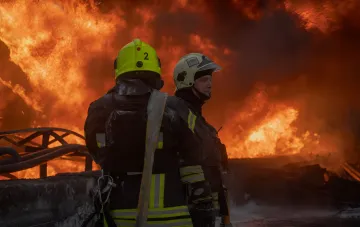
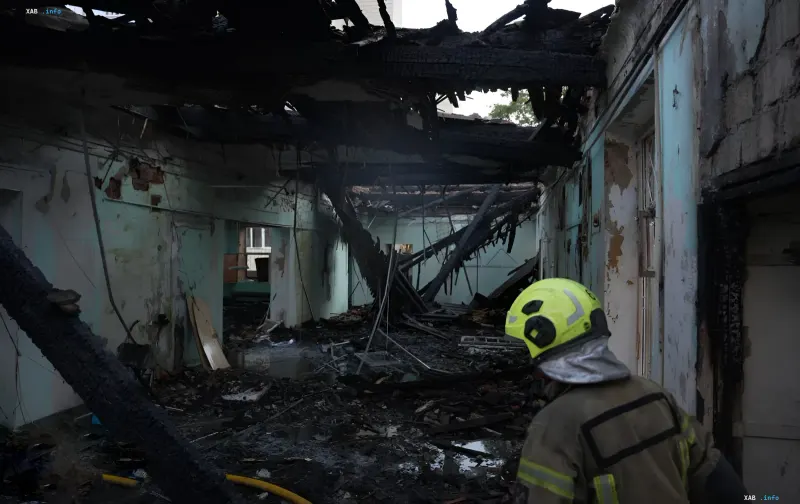
The massive night attack on Kyiv and the Kyiv region lasted almost nine hours. According to data cited by RBC-Ukraine, referencing a statement by Prime Minister Serhiy Horynskyi, the enemy used ballistic missiles, Kalibr cruise missiles, and drones, directing dozens of missiles and jet-powered drones at civilian facilities. The air alert in the capital remained in effect for almost the entire time. As a result of the strikes, residential buildings and a children's hospital were damaged, and infrastructure damage forced Ukrzaliznytsia to change the routes of several suburban trains.
Boryspil: strike on warehouses and Red Cross facilities
The head of government's statement paid particular attention to the consequences in the Boryspil district. There, according to Horynskyi, food warehouses and Red Cross facilities were hit. As of the time the reports were published, fires at these facilities had not been fully extinguished and were still ongoing. The strike on the warehouse and humanitarian infrastructure on the outskirts of the capital became one of the most resonant episodes of the night attack.
Casualties and consequences: at least 13 killed, 40 injured
According to official data, at least 13 people were killed as a result of the attack. Of these, 12 were in Kyiv and one in the Kyiv region. Another 40 people sustained injuries of varying severity; they are receiving the necessary medical care. The qualifier "at least" underscores that the final toll may be revised as the rubble is cleared and the injured are interviewed.
Consequences mitigation: 462 rescuers on site
As of the time of publication, 462 rescuers from the State Emergency Service and 116 units of special equipment were working to mitigate the consequences of the attack. Crews were engaged in extinguishing fire outbreaks, clearing rubble, and inspecting damaged buildings, including in the Boryspil district, where food warehouses and Red Cross facilities were burning.
Authorities' response: Day of mourning in Kyiv and disruptions to rail service
In connection with the massive attack, Kyiv Mayor Vitali Klitschko declared August 21 a Day of Mourning in the capital and banned the holding of entertainment events. In parallel, due to infrastructure damage, Ukrzaliznytsia adjusted the routes of several suburban trains to ensure passenger safety and bypass the damaged sections. Thus, the consequences of the night strike affected not only residential and medical facilities but also the region's logistics.