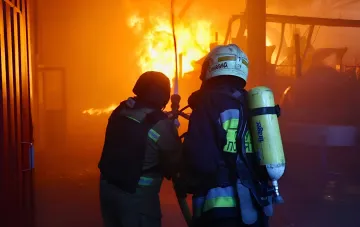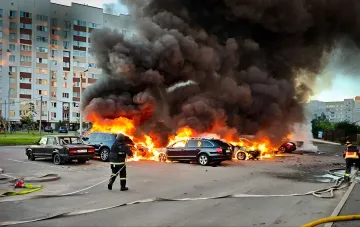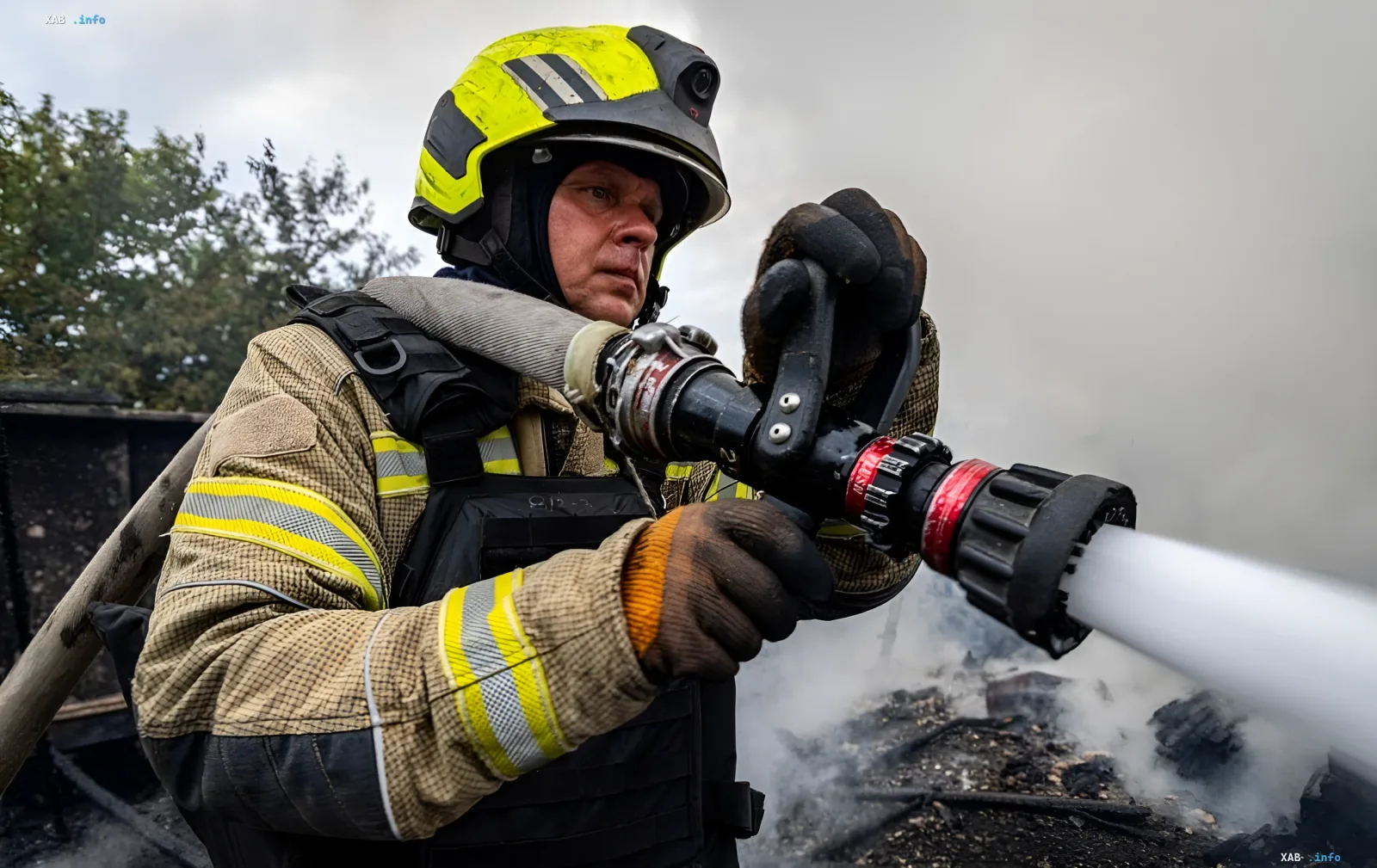
In the night of August 27, 2026, and into the morning hours, the armed forces of Russia carried out a combined strike on Kyiv Oblast using strike unmanned aerial vehicles and missiles. This was announced in his Telegram channel by Timur Tkachenko, head of the Kyiv Regional State Administration. According to his data, the enemy attacked the region throughout the night, while air defense forces worked to intercept the incoming munitions. As a result of the strikes and the fall of debris, large-scale fires broke out on the territories of warehouse and logistics complexes of private enterprises in two districts of the oblast.
Nature of the Attack and Air Defense Operations
According to official reports from the Kyiv Regional Administration and the State Emergency Service, the attack was of a combined nature: both unmanned systems and missile munitions were involved. Throughout the night and into the morning, air defense units operated over the region, intercepting part of the attacking munitions. It was as a result of hits and the fall of debris from intercepted objects that fire outbreaks emerged, concentrated primarily on industrial and warehouse territories rather than in residential areas.
Large-Scale Fires in Two Districts of the Oblast
The most serious damage was recorded in two districts of Kyiv Oblast, where warehouse facilities and logistics objects of private enterprises caught fire. Preliminary data indicates that some objects in other districts of the region were also damaged, including private homes. Unconfirmed messages appeared online in anonymous public pages about the ownership of the burning warehouses by specific commercial brands; however, as of the preparation of this material, no official data confirming these versions had been received. In connection with this, the official and editorial presentation uses the neutral formulation about the damage to warehouse and logistics facilities of private enterprises.
Elimination of Consequences by the State Emergency Service
Significant forces of the State Emergency Service units were deployed to extinguish the fires, including fire trains and special equipment. Emergency services continue to work at the fire sites, eliminating the consequences of the attack and containing the fire outbreaks. According to the Regional Administration, there is no threat of the flames spreading to residential areas. As of the morning of August 27, there are no deaths or injuries among the civilian population, which has been officially confirmed by the regional administration and the State Emergency Service.
Contradictory Data
In open sources, against the backdrop of the combined attack, conflicting information has emerged about the number of casualties. A number of Ukrainian media outlets in their morning reports indicated the presence of two injured people and a wounded child. At the same time, the official morning data from the Kyiv Regional Administration and the State Emergency Service directly state that there are no deaths or injuries among the civilian population in Kyiv Oblast. The explanation for this discrepancy is that the reports about the injured, including the child, related to other regional episodes of the same combined attack, not to Kyiv Oblast. Thus, the verified version for this region reduces to the official statement of the Regional Administration: there are no victims or wounded in Kyiv Oblast. Similarly, unconfirmed names of commercial companies whose warehouses are burning are not used in the official presentation.
Context: Strikes on Logistics Infrastructure
The attack on Kyiv Oblast fits into a broader context of strikes on logistics and warehouse infrastructure, which in recent times has accounted for a significant share of missile and drone attacks. In parallel, on August 27, a warehouse of the Russian marketplace Ozon caught fire in Blagoveshchensk, Republic of Bashkortostan; according to reports, the fire occurred after reports of incoming strikes, however, as of the preparation of this material, there was no official information about the cause of the fire. The totality of these episodes indicates that warehouse and logistics objects remain one of the key targets within the ongoing hostilities.