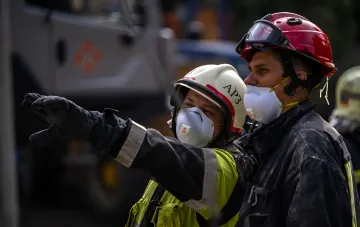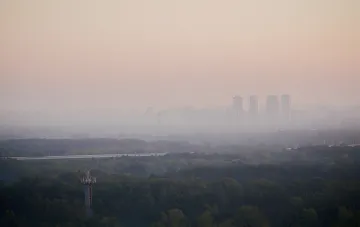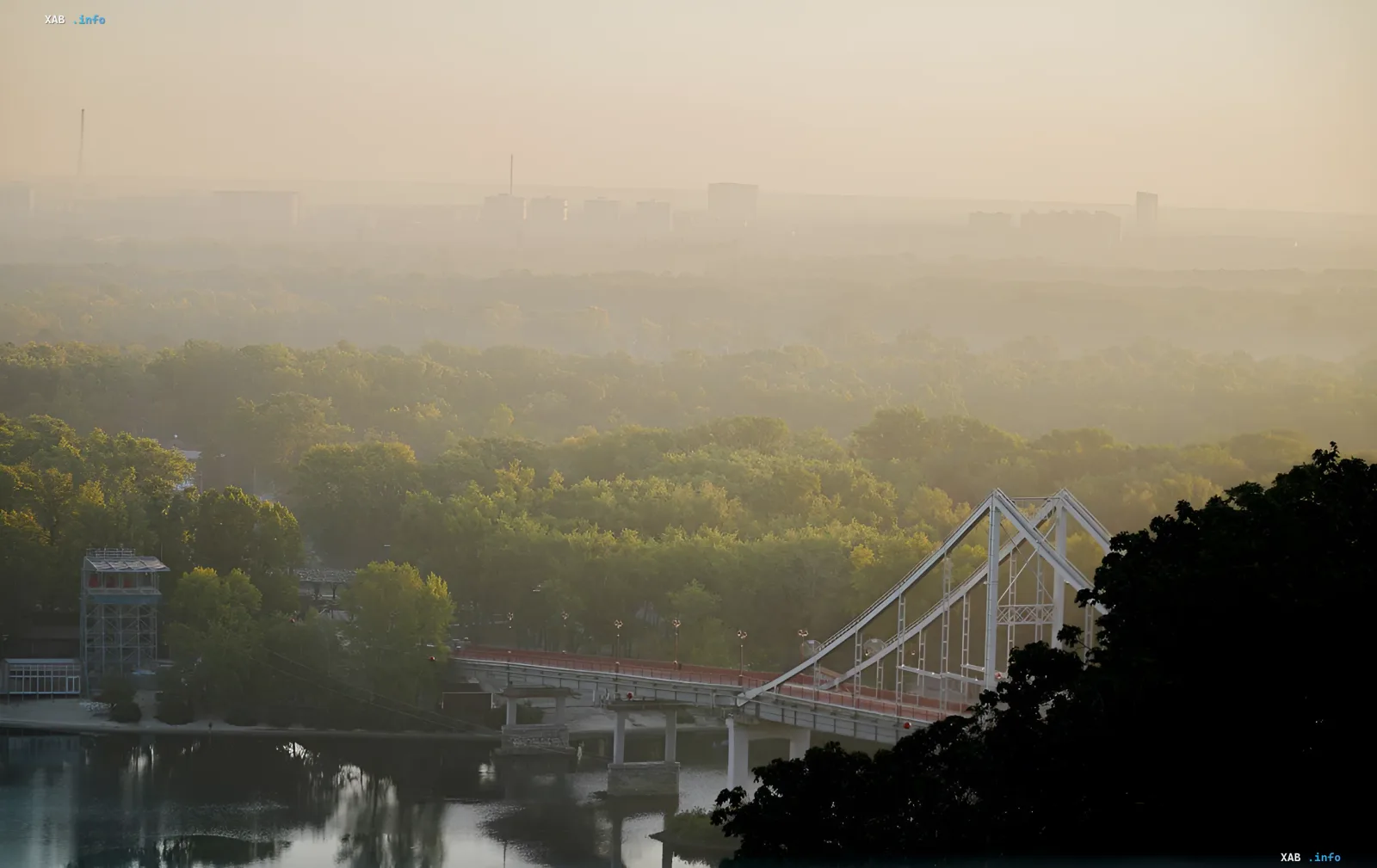
On the morning of August 27, 2026, deteriorating atmospheric air quality was recorded in several settlements of the Kyiv region. According to data from the Kyiv Regional Military Administration, cited by RBC-Ukraine, the main cause was fires that broke out as a result of an enemy attack. Daily average readings from monitoring posts showed that the most difficult environmental situation developed in Borispil, where ecologists recorded elevated levels of carbon dioxide (CO2) and fine particulate matter characteristic of burning sites.
Geography of the pollution
In addition to Borispil, the spread of fine particulate matter temporarily worsened air quality in Ivanke, Bila Tserkva, Vasylkiv, Obukhiv, and Boryspil's neighboring Broyary (Brovary). In the other settlements of the region where monitoring is carried out, no exceedances of permissible levels of chemical or biological substances were detected. Thus, the pollution is local and predominantly physical in nature, linked to combustion products rather than to the emission of toxic chemical compounds.
Recommendations for residents
Experts warn that the smoke may cause breathing discomfort, especially in children, the elderly, and people with heightened sensitivity of the airways. To reduce the negative impact on the body, residents of the affected areas are advised to keep windows closed, limit time spent outdoors where possible, drink an adequate amount of water, and, if available, run household air purifiers on the maximum setting.
Radiation background and monitoring system
Despite the smoke, the level of gamma radiation across the entire Kyiv region remains within normal limits and fully corresponds to the natural background. Air quality control is carried out on a 24-hour automated basis with stable power supply; continuous observations are conducted at 16 specialized monitoring points.
Contradictory data
When comparing publications from different outlets, a discrepancy arises in assessing the scale of the affected areas. The Kyiv Regional Military Administration, citing monitoring data, points to deteriorating air quality in six settlements at once — Borispil, Ivanke, Bila Tserkva, Vasylkiv, Obukhiv, and Brovary. At the same time, the headline of the TSN channel's report focuses only on "two cities in the Kyiv region" where air quality worsened. The difference is likely related to how each outlet interprets the distinction between a "most difficult situation" and a "temporary deterioration," although both sides confirm the fact of the smoke and its link to the fires following the attack.
Context: nighttime combined attack
The deterioration of the environmental situation occurred against the backdrop of a nighttime combined attack by the Russian Federation on Ukraine. On the night of August 27, Russian occupiers attacked Kyiv; the fall of debris was recorded in the Podilskyi and Shevchenkivskyi districts of the capital. It was the consequences of these strikes, according to the authorities, that led to the outbreak of fires and the subsequent smoke over the surrounding areas of the Kyiv region.