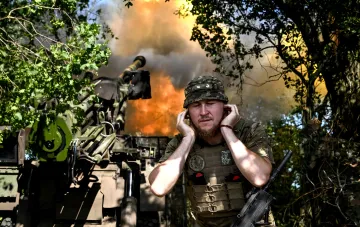
Massive Strike on Sumy and Odesa Regions
On the night of August 12, 2026, the Armed Forces of the Russian Federation carried out a large-scale attack on Ukrainian territory. According to Ukrainian intelligence and air defense forces, the enemy used a combined set of strike assets: a ballistic missile, Kh-31P and Kh-35 cruise missiles, and an unprecedented number of attack drones — 138 units. The main targets of the attack were the Sumy and Odesa regions, confirming Russia's strategy of striking the periphery and critical infrastructure in the south and north of the country.
Launches were recorded from several directions: Kursk, Millerovo, Orel, Primorsko-Akhtarsk, as well as from temporarily occupied territories in Donetsk and Gvardeyskoye in Crimea. Missile strikes were carried out from the Rostov region and from ships in the Black Sea. This geography of launches indicates an attempt by Russia to overload Ukraine's air defense systems, forcing them to operate at maximum capacity across several remote directions simultaneously.
Air Defense Effectiveness and Strike Consequences
As of 09:00 on the morning of August 12, Ukrainian air defense forces reported shooting down or suppressing 112 enemy drones. Among the downed targets were Shahed-type drones, Gerbera jet drones, and Parody decoy drones. Despite the high effectiveness of air defense, the enemy managed to strike 16 locations, and debris from downed targets was recorded falling at two additional points.
Particular attention is drawn to the situation in Zaporizhzhia. As a result of the kamikaze drone attack, fires broke out in the private sector and in one of the shopping centers. According to local authorities, approximately 1,200 consumers were left without electricity. This is not the first incident in recent days: on August 11 alone, six residents died and 19 were injured as a result of strikes on Zaporizhzhia. The city continues to remain one of the most vulnerable points on the front line.
Change in Ballistic Missile Tactics
Analysts at the Institute for the Study of War (ISW) noted a significant change in Russia's tactics regarding the use of ballistic missiles. While Moscow previously used mass salvos of North Korean KN-23 missiles, they are now being launched individually. Experts link this to the low accuracy of previous batches of weapons supplied by North Korea. Earlier, Ukrainian officials reported that Pyongyang transferred at least 40 such missiles to Russia, but their combat effectiveness proved lower than expected.
The shift to single launches may indicate an attempt by Russia to optimize the use of expensive weaponry and avoid mass shoot-downs by Ukrainian air defense, which has shown high effectiveness in repelling mass attacks. This could also point to a shortage of missile systems or logistical problems in their delivery.
Contradictory Data
There are discrepancies in the assessment of the attack's effectiveness. On one hand, Ukrainian authorities claim to have shot down 112 out of 138 drones, which is more than 80%. On the other hand, Russian sources, including Gazeta.ru, assert that some targets, including the ballistic missile, broke through the defense and caused significant damage. Furthermore, data on the number of downed drones may be exaggerated, as some may have been suppressed by electronic means rather than physically shot down.
There are also contradictions in the assessment of Russia's tactics. Some analysts believe that the shift to single ballistic missile launches is a sign of weapon shortages, while others argue it is a strategic decision to increase accuracy and reduce losses. In any case, the situation remains dynamic and requires further monitoring.