On the night of November 11, 2026, the Defense Forces of Ukraine carried out a massive attack on Russian territory, affecting 23 regions according to the Russian Ministry of Defense. This was reported by RBC-Ukraine, citing a summary from the Russian Ministry of Defense. The agency claims that air defense forces intercepted and destroyed 627 fixed-wing Ukrainian drones over various parts of the country. The attack became one of the largest this year in terms of the number of affected regions.
Strike on Ust-Luga Port: Fire and Casualties
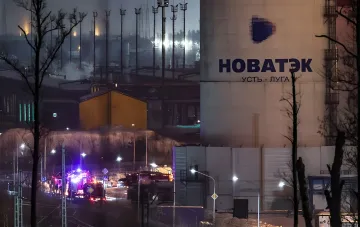
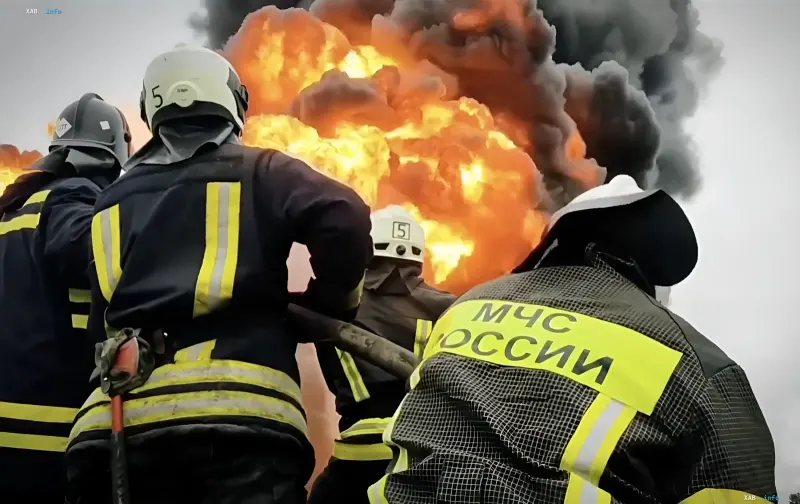
One of the key targets of the attack was the Ust-Luga port in the Leningrad Region. Regional Governor Alexander Rogalev confirmed that a fire broke out on the port territory as a result of multiple drone impacts. Three facility workers were injured, though according to the regional head, their lives are not in danger. Footage published online shows a massive blaze on the port territory. Meanwhile, eyewitnesses reported that new drones continued to approach the burning facility throughout the night, indicating the prolonged and intense nature of the attack.
Scale of the Attack According to Russian Agencies
The Governor of the Leningrad Region reported that 150 drones were shot down over the region during the night. According to TASS calculations, this is the largest-scale attack on the Leningrad Region since the beginning of 2026. In total, according to the Russian Ministry of Defense report, air defense forces claimed the interception of 627 drones across 23 regions. The Ukrainian side — the Defense Forces of Ukraine — did not comment on specific numbers of destroyed targets in the provided materials and neither confirmed nor denied the data from the Russian agency.
Why Ust-Luga is a Strategic Target
The Ust-Luga port is one of Russia's largest ports on the Baltic Sea and plays a critically important role in the country's export system. Through this terminal, Russia exports oil, petroleum products, and other raw material cargoes, making the facility one of the key sources for filling the state budget. Thus, the strike on port infrastructure aims to disrupt the supply chains of Russian commodity exports and limit revenues that form the basis of the military and state budget.
Broader Context: Refineries and Industrial Infrastructure Under Attack
The attack on Ust-Luga fits into a broader pattern of systematic strikes by the Ukrainian Defense Forces on Russia's energy and logistics infrastructure. Earlier, RBC-Ukraine reported that one of the country's largest oil refineries was also targeted by the Ukrainian Defense Forces. According to the publication, major Russian businesses have found themselves in a situation where they have to fend off Ukrainian Armed Forces attacks on their own, highlighting the growing pressure on civil and industrial infrastructure in port and border regions. Experts note that concentrating strikes on oil export and processing facilities increases pressure on an economic model tied to commodity revenues.