
In August 2026, the Chinese film market witnessed a unique cultural phenomenon. The animated film 'Niu Lai', which was initially met with failure and mass mockery on social media, unexpectedly transformed into one of the box office leaders. The film, on which director Xin Yumen and his mother Sun Lifan worked for over five years, demonstrated a paradoxical dynamic of success: the more the animation quality was criticized, the more audiences flocked to the cinemas.
From 200 Yuan to Millions: The Story of a Sharp Rise
The film premiered on August 5, 2026. The first ten days of the release could be characterized as catastrophic for independent cinema. The total gross for this period amounted to only about 10,000 yuan. On some days, theaters earned less than 200 yuan from screenings, making the film one of the most disastrous releases of the month. However, the situation changed radically when the negative reaction on the internet turned into a viral trend.
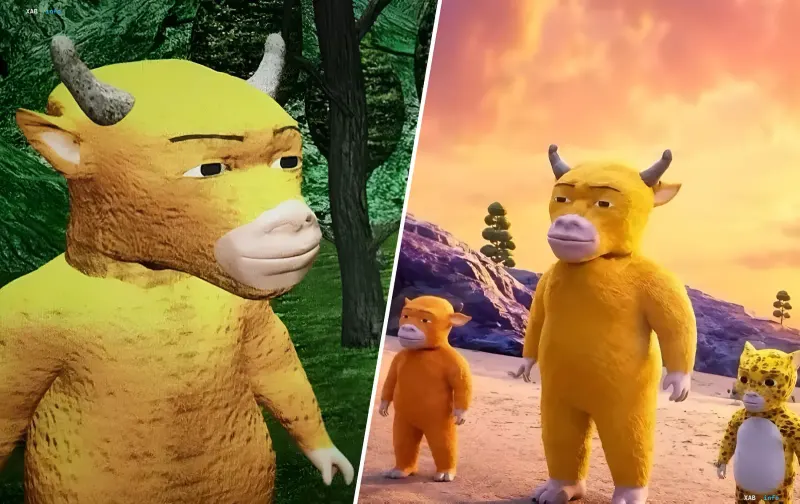
Audiences began to massively criticize the visuals, calling the animation 'creepy', 'primitive', and 'unprofessional'. Instead of scaring away the audience, these reviews triggered a wave of curiosity. On a single Monday, two weeks after the start, the film earned 8.2 million yuan (approximately $1.22 million). On that day, nearly 300,000 people watched the film, and the total box office reached 17.1 million yuan ($2.54 million).
The 'Challenge' Effect: Why Audiences Go to See Bad Movies
Paradoxically, it was the negative reaction on the internet that became the main driver of popularity. The sociological phenomenon observed in China resembles global 'post-truth' trends, where the perception of content is more important than its objective quality. Some young Chinese admit that they buy tickets not for the plot or characters, but for the desire to see the discussed film themselves and check if it is really as bad as described online.
Visiting a screening of 'Niu Lai' turned into a sort of challenge. Users share impressions, create memes, and discuss the most surprising moments of the cartoon. The visual style, reminiscent of amateur 3D models with low resolution, became an object of irony and creativity on TikTok and Weibo.
Financial Talisman: The Symbolism of the Title
The title of the film 'Niu Lai' translates as 'The Cow Comes', but in Chinese, it sounds similar to an expression associated with the wish for the stock market to rise. In the conditions of economic instability characteristic of 2026, netizens began to joke that the cartoon could become a sort of talisman for investors. This added an additional layer of cultural context to the film, turning it from just 'bad cinema' into an object of sacred humor for traders and economists.
Contradictory Data
Although most sources agree that the film's success is due to the viral effect, there are discrepancies in the assessment of the project's long-term prospects. According to some analysts, interest in the film may be short-term and fade after audiences satisfy their curiosity. Other experts, citing the success of similar projects in the past, suggest that 'Niu Lai' may stay in the box office for a long time, competing with blockbusters like Christopher Nolan's 'Odyssey' and the new 'Spider-Man' film. For now, accurate forecasts for box office collections by the end of the year remain a subject of debate.