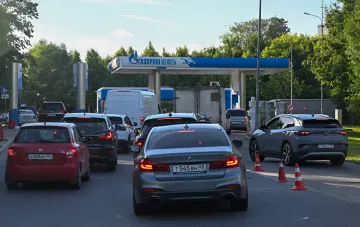
On the day of Russian President Vladimir Putin's visit to Nizhny Novgorod, where the "Strong Ideas for a New Era" forum is taking place, gasoline suddenly appeared at most of the city's gas stations, despite having been in acute shortage just recently. This is reported by local Russian-language Telegram channels, as cited by RBC-Ukraine. According to them, multi-hour queues formed at several stations — in particular at Lukoil and Gazprom Neft. The latter network, located near the "Tsvety" residential complex, offered all types of fuel for sale on the day of the head of state's visit, a notable event for a city experiencing a fuel crisis.
Fuel crisis: from export ban to gasoline imports
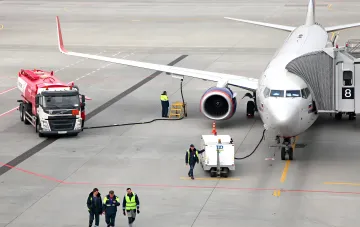
The context behind the appearance of fuel in Nizhny Novgorod is hard to overstate. Russia has been experiencing a deep fuel crisis over the past weeks, triggered by a series of Ukrainian drone attacks on oil refineries. According to RBC-Ukraine, by the end of August 2026, gasoline production in the Russian Federation had fallen to roughly 70% of domestic consumption levels. The situation is so critical that Moscow has not only cancelled gasoline exports to foreign markets but is also forced to import fuel for its own citizens. In particular, Belarus has come to Russia's aid, supplying oil products amid the shortage. For a country that for decades positioned itself as one of the world's largest exporters of oil and oil products, such a scenario has been unprecedented.
What is being sold at the pumps and where the queues are
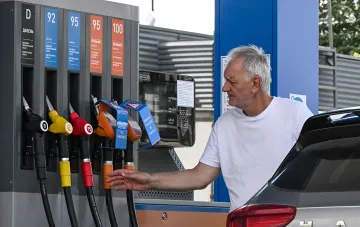
Despite the overall picture of a recovering product range, the situation at individual stations remains uneven. According to local channels, Lukoil at 232A Gagarin Avenue offered only AI-92 and diesel fuel on the day of the president's visit, while Gazprom Neft at 1A Yarooshenko Street offered AI-92, AI-95 and diesel. At some stations only diesel was available for sale, at a price of 77.50 rubles per liter. At the same time, a number of stations have yet to resume operations: for example, the Lukoil on Salganskaya Street remained closed on the day of the visit. Thus, even on the "presidential day" the city did not gain full access to its usual range of fuel.
The crisis's impact on the retail network and citizens
The fuel crisis is hitting not only drivers but the retail infrastructure itself. As analysts noted in August 2026, the shortage of oil products threatens an irreparable blow to small independent gas stations, which have no access to large wholesale supplies and are forced to operate on minimal margins or close down altogether. For ordinary Russians, the crisis means not only queues and a limited choice of octane ratings but also rising prices, and in some regions — a complete absence of gasoline for days on end. Deutsche Welle, in its review, recorded how the fuel crisis is changing citizens' daily lives: from adjusting routes to giving up personal cars in favor of public transport.
Contradictory data
Open sources contain no direct contradiction in figures and dates, but there is a significant inconsistency in the interpretation of why fuel appeared precisely on the day of the visit. Local channels and RBC-Ukraine state the fact: there is gasoline at most gas stations on the day the president arrives. At the same time, no official source — neither the Nizhny Novgorod administration, nor the Russian Ministry of Energy, nor the Lukoil and Gazprom Neft networks themselves — has confirmed that supplies were deliberately ramped up "for the arrival." On the other hand, a number of stations (including Lukoil on Salganskaya) have not resumed operations, which casts doubt on the claim of a full "recovery" of the city. Thus, the observed picture is, more likely, a local and uneven influx of fuel against the backdrop of a general shortage, rather than a systemic solution to the problem.
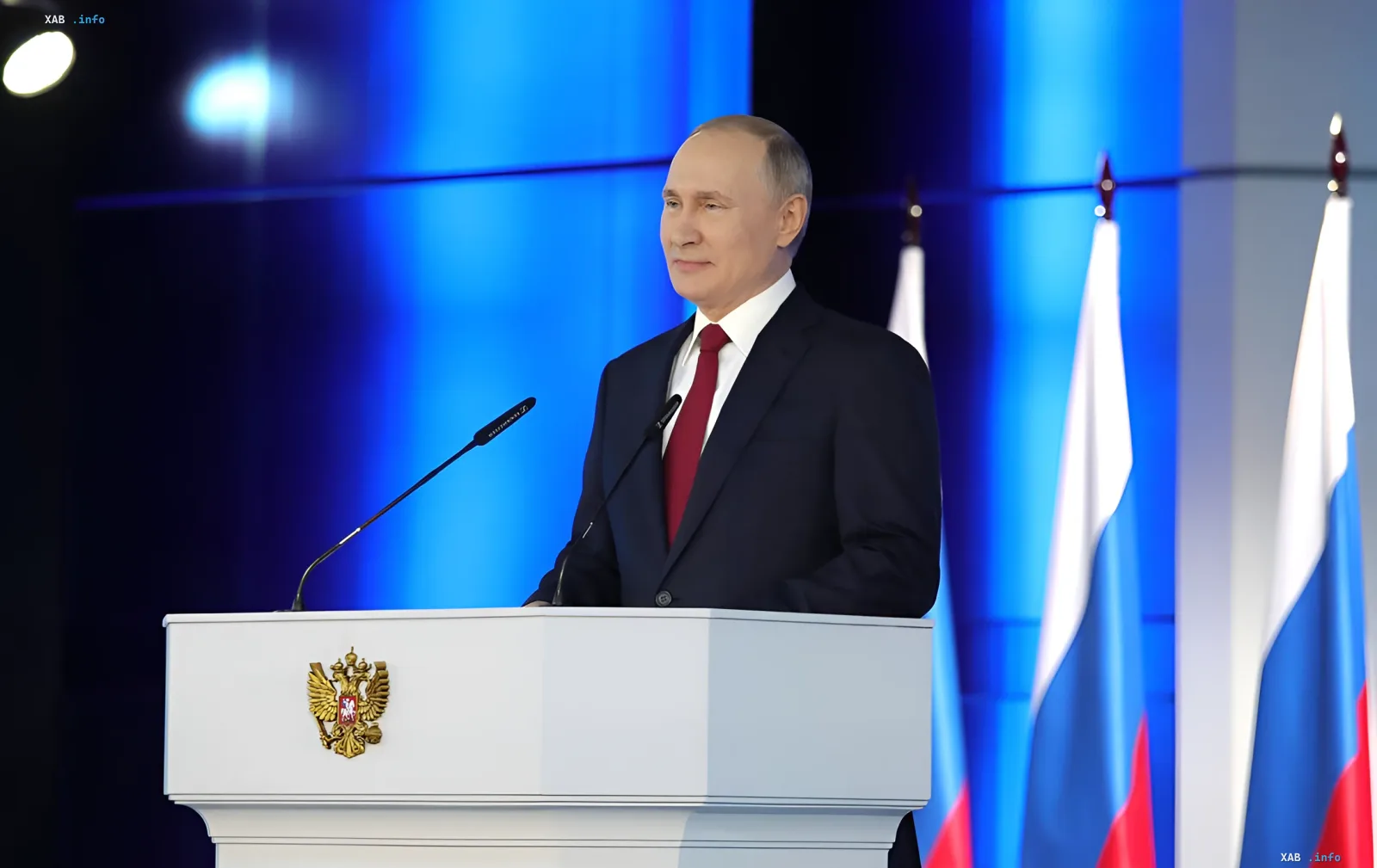
Vladimir Putin's visit to Nizhny Novgorod and his participation in the "Strong Ideas for a New Era" forum, set against the backdrop of a fuel crisis, carry a double subtext: on the one hand, it is a demonstration of the city's "normal" functioning and the availability of basic services; on the other — an obvious contrast between the scene at the podium with Russian flags and the queues at the fuel pumps, which just a week ago stood empty.