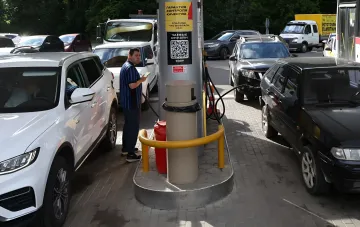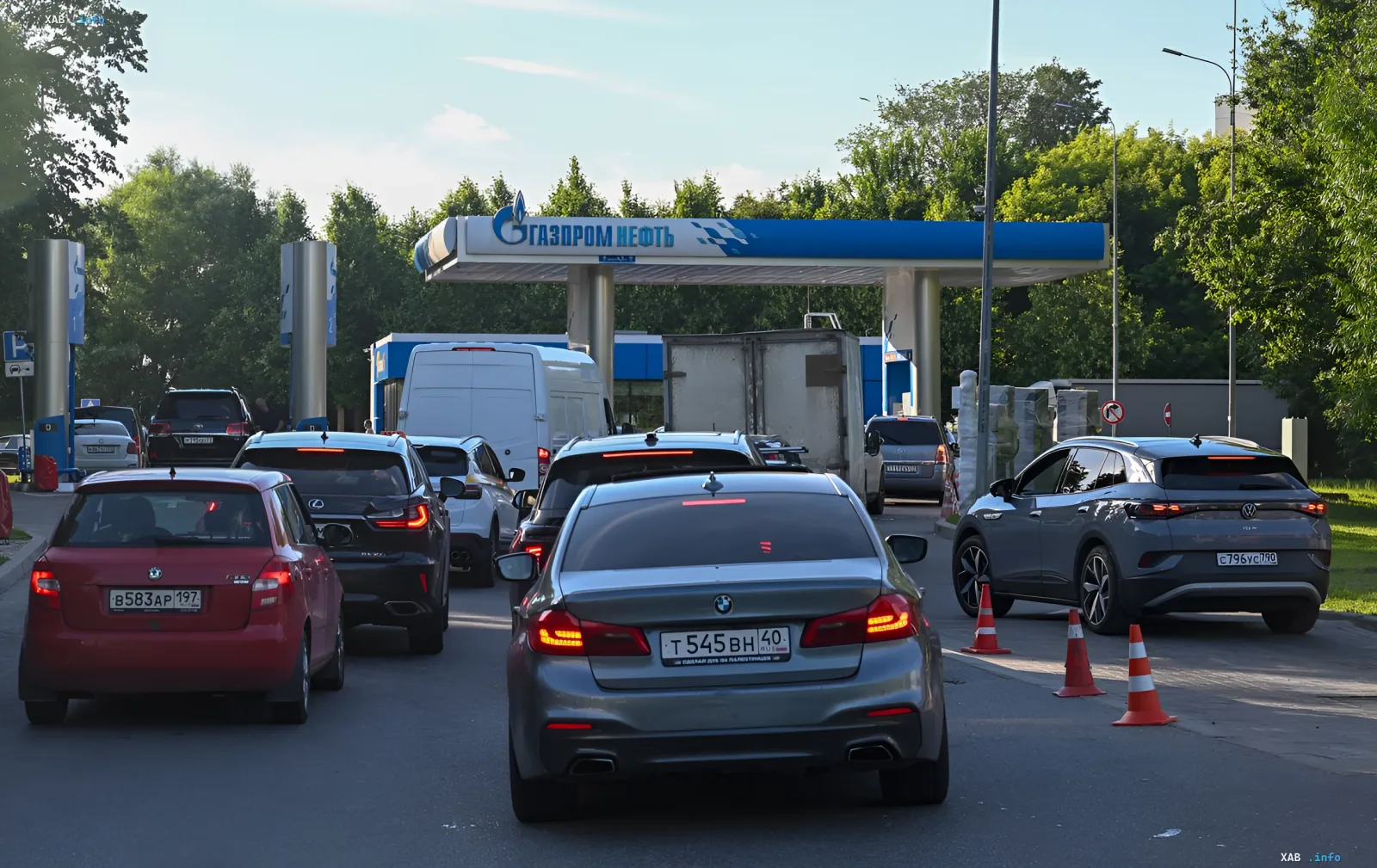
A second wave of the fuel crisis has begun in Russia, with average prices for AI-92 and AI-95 gasoline hitting record highs. RBC-Ukraine reports this, citing data from the Telegram channel "Agency Novosti." According to analysts, the new round of price increases is unfolding after a temporary easing of prices in early August: by September 14, the country-wide averages once again exceeded the peak values of the first wave, which occurred in early July.
Gasoline price dynamics: new records
By September 14, the country-wide average price of AI-92 gasoline rose to 74.60 rubles per liter. For comparison: during the first wave, the price climbed to 73.85 rubles before falling to 72.17 rubles. AI-95 followed a similar trajectory — after rising in the first wave to 79.94 rubles and then dropping to 78.21 rubles, by September 14 the average price reached 80.78 rubles per liter. In year-on-year terms, the price acceleration became noticeably sharper: from the start of the year to mid-September, AI-92 rose by 21.4%, and AI-95 by 21%. Last year, over the same period, growth was only 8% and 7.7% respectively.
Diesel fuel moves in the opposite direction
A different dynamic is observed in the diesel fuel segment. As of September 14, it cost an average of 88.05 rubles per liter, which is 5.49 rubles (5.9%) cheaper than the first-wave peak on July 20, when the price reached 93.54 rubles. Thus, unlike gasoline, diesel did not set a new maximum but retreated from the July peak, indicating that the crisis is uneven across fuel types.
Saint Petersburg — the epicenter of the shortage
One of the main centers of the new fuel crisis has become Saint Petersburg, which is facing the most severe shortage. As of September 14, AI-92 gasoline was available only at one in every fourth gas station in the city, while AI-95 was available at slightly more than one in every fifth. Fuel availability was even lower than at the peak of the first wave in early July, when AI-95 could be found at 20% of gas stations and AI-92 at roughly a third of stations. In Leningrad Oblast, a uniform limit on fuel sales at gas stations was introduced: drivers are given no more than 30 liters per refueling.
Causes of the new round: refinery shutdowns after strikes
The context for the renewed price spike was the situation at oil refining capacity. As RBC-Ukraine previously reported, oil refining at the Syzran and Saratov refineries halted after these facilities came under strikes from Ukraine several days earlier. The reduction in refining capacity against an already tense market became one of the factors driving the second wave of price increases and shortages at gas stations.