The Russian government has decided to extend the ban on diesel fuel exports for producers until September 30, 2026. According to the Cabinet of Ministers' website, the measure is aimed at "maintaining the stability of the domestic fuel market" and is driven by the increasing frequency of Ukrainian attacks on oil refining facilities. The decision comes against the backdrop of a record number of strikes on refineries recorded in August since the start of the war.
Timeline of restrictions: from a short-term measure to a multi-month ban
The ban on fuel exports for producers was first introduced in early July 2026 as a short-term measure, and was then extended until the end of August due to the continuation of attacks. The current extension until September 30 effectively makes the restriction a multi-month one. At the same time, as the government clarifies, the ban does not apply to supplies under intergovernmental agreements or to humanitarian aid.
Record series of strikes on oil refining
According to available data, in August alone Ukraine carried out at least 21 attacks on Russian refineries — the highest number of strikes since the start of the war launched by Russia in February 2022. The consequences for the domestic market have been noticeable: according to Reuters, gasoline production in late August fell to roughly 70% of the level of domestic consumption amid a series of Ukrainian drone strikes on oil refining plants.
Global consequences: from the US to Mexico
According to Bloomberg's assessment, extending the ban will intensify pressure on already limited global fuel supplies, squeezed by the conflict in the Middle East and Russia's war against Ukraine. Before the unprecedented series of attacks, Russia remained one of the major exporters of diesel fuel, accounting for about 10% of global supplies. Against the backdrop of a global shortage, US diesel fuel stocks, according to the Energy Information Administration, fell to the lowest seasonal level in recorded history, while Europe has for the first time in seven years been forced to turn to Mexico for fuel.
Domestic market: shortages and queues at gas stations
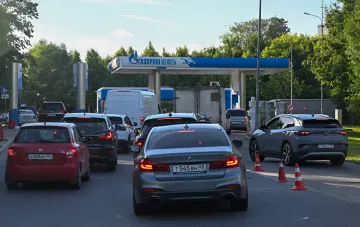
At the regional level, fuel shortages are already being felt in everyday life: in some areas, gasoline supply disruptions and queues at gas stations have been recorded. According to reports, in connection with the expected visit of Vladimir Putin to Nizhny Novgorod, gasoline suddenly appeared on sale at most local gas stations, which caused long queues of drivers. This detail is a local observation and has not been confirmed by official sources.