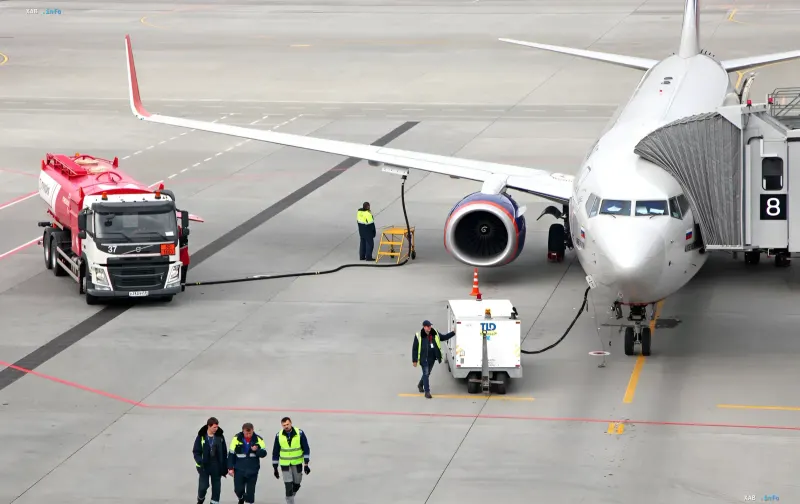
According to aeronautical information system data analyzed by the outlet "Verstka" and passed on to RBC-Ukraine with reference to The Moscow Times, refueling restrictions have been introduced at 26 Russian airports. The restrictive measures have affected air hubs across the country — from Kaliningrad to Petropavlovsk-Kamchatsky. The first limits were set back in June, with a second wave of restrictions coming in September 2026.
Scale and duration of the restrictions
The current limits range from one to seven months, depending on the specific airport. Thus, at St. Petersburg's Pulkovo, aircraft refueling until March 2027 is possible only in accordance with the flight plan, with no additional fuel volumes. A similar procedure has been established at Kaliningrad's Khrabrovo airport, where the restrictions are in effect until December. In 15 of the 26 airports, according to available data, the limits apply exclusively to foreign carriers, which are permitted to refuel for only one flight.
The most tense situation — in the south
The most critical situation has developed in southern Russia, where some airports are closed due to hostilities. Of the six operating southern airports, refueling restrictions for all carriers have been introduced at a number of them, although the full list is not disclosed in the available materials. This means that the southern aviation corridor has found itself in the most vulnerable position against the backdrop of a general jet fuel shortage.
Causes of the crisis: strikes on oil refining
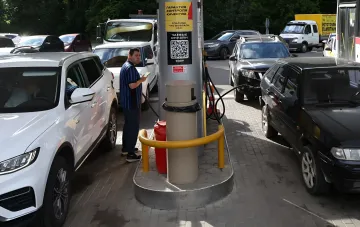
The fuel crisis, according to reports, is the result of Ukrainian drone strikes on Russian oil refineries. Since the beginning of the year, according to available data, Russian refineries have been hit more than 70 times, including the disabling of the largest facilities. As a result, oil refining volumes have fallen to their lowest level since 2002, and gasoline production in late August dropped to roughly 70% of domestic consumption levels. Against this backdrop, long queues for fuel have formed at gas stations in several regions, notably in the Yelets district of Lipetsk Oblast, and some stations have run out of fuel altogether.
Contradictory data
The available sources contain inconsistencies that are important to take into account. First, the full list of southern airports where restrictions have been introduced for all carriers is not provided in the transmitted materials — it breaks off at the stage of enumeration, so an exact list cannot be given. Second, the figure of "more than 70 strikes on refineries" is a cumulative estimate since the beginning of the year and may vary across publications depending on the counting methodology. Finally, the Russian government has imposed a ban on the export of aviation fuel until November 30; however, according to expert assessments, this decision has not eased the severity of the shortage: prices for jet fuel were forecast to rise until the completion of repairs at the damaged plants. Thus, while the fact of restrictions at 26 airports is confirmed by several sources, details for individual regions and exact quantitative indicators require additional verification.
Consequences for the industry
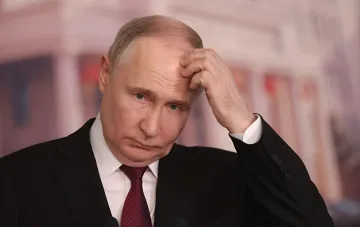
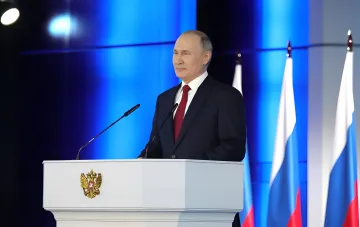
As Vladimir Putin previously acknowledged, the authorities were unprepared for the series of attacks on energy infrastructure, which intensified the fuel crisis. For civil aviation, the introduced limits mean a risk of schedule disruptions, especially for international flights and the southern direction, where fuel logistics is already complicated by the closure of some airports. Experts link the persistence of the restrictions to the pace of recovery of refining capacity and do not rule out extending the limits beyond the stated deadlines.