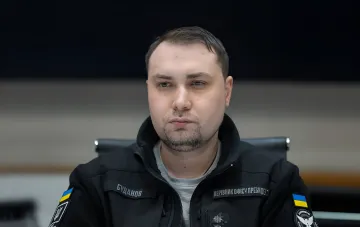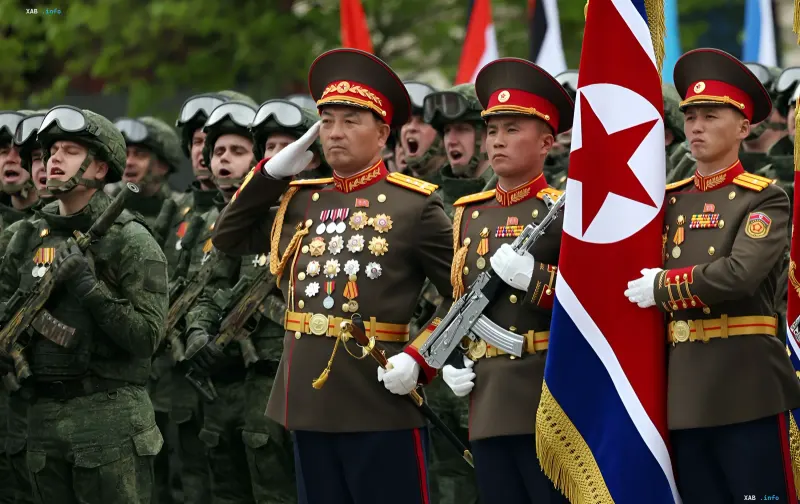
Ukrainian intelligence has recorded a new wave of military assistance from North Korea. According to Vadym Skibitsky, Deputy Head of the Main Directorate of Intelligence of the Ministry of Defense, in an interview with the American TV channel CNN, North Korea has sent an additional unit of unmanned systems to Russia. According to him, currently about 400 North Korean UAV operators are directly supporting the actions of the Russian army in the war against Ukraine.
New wave: drone unit
Skibitsky clarified that the arriving unit is capable of performing a dual task: conducting reconnaissance and striking targets on Ukrainian territory. This confirms a previously recorded trend — according to him, North Korean military personnel have been using strike drones against Ukrainian positions since October 2025. Thus, the drone component is becoming not an auxiliary, but a full-fledged element of the combat deployment of North Korean personnel on the side of the Russian Federation.
Scale of presence: 8,500 on the ground and 25,000 with rotation
According to the top intelligence officer's statement, the total number of North Korean military personnel currently in Russia is 8,500. According to his data, North Korean units are mainly scattered across the Kursk region of Russia and include about a thousand engineers and sappers. At the same time, Skibitsky added that taking into account the rotation, about 25,000 North Koreans have already been deployed to the Russian army, that is, the actual “throughput” flow of personnel significantly exceeds the current number on the ground.
Tactics: strengthening the rear instead of direct combat
Ukrainian intelligence believes that the main masses of North Korean troops will not fight directly on Ukrainian territory. Their role, as the GUR suggests, is to strengthen the rear positions of Russia, which will allow Moscow to release its own units for offensive operations within Ukraine. Such a scenario, according to intelligence estimates, increases the operational flexibility of Russian forces without drawing North Korean personnel into direct clashes on the front line.
Contradictory data
Publications in a number of media outlets feature the formulation “North Korea sent another 8,500 military personnel to Russia,” which can be mistakenly read as the size of the new batch. However, in Skibitsky's statement itself, the figure of 8,500 is presented as the total current number of North Korean military personnel in Russia, not as the volume of a fresh transfer; the new wave refers specifically to the drone unit of 400 operators. In addition, there is a gap between 8,500 (current presence) and 25,000 (accumulated volume taking into account rotation), which different media interpret differently. Exact dates of arrival of specific groups and their combat composition have not been independently verified and rely on a single statement from Ukrainian intelligence.
Context: mutual defense pact and missile strike on Kirovohrad region
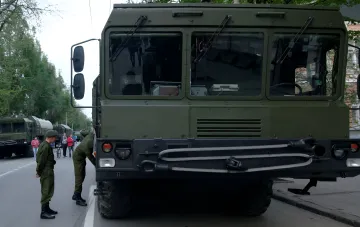
Military rapprochement fits into a broader context: two years ago, North Korea and Russia signed a mutual defense pact modeled on NATO, and since late 2024, North Korea began sending troops to assist Russia's war against Ukraine. It was previously reported that new launchers for North Korean missiles are being deployed in the Voronezh region, which increases the threat to seven regions of Ukraine, and that North Korea transferred a batch of more than 100 ballistic missiles and specialized missile units to Russia. On July 30, a ballistic missile from North Korea struck the village of Radushne near Kropyvnytskyi, resulting in the death of a large family — father, mother, seven children, and a small grandson.
Reaction and risks for the alliance
The deepening ties between North Korea and Russia are causing concern among some NATO members. Particular concern was caused by the statement of US President Donald Trump about reducing joint military exercises with South Korea, explained by the desire not to provoke Kim Jong-un, with whom the American leader intends to meet. According to Skibitsky, at the September meeting of the leaders of the two countries, Russia may request up to 50,000 more servicemen from North Korea, which could potentially qualitatively change the scale of foreign participation in the conflict.