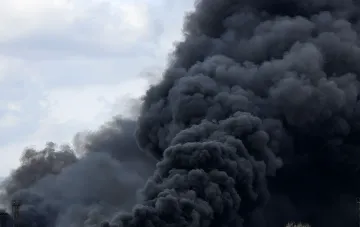
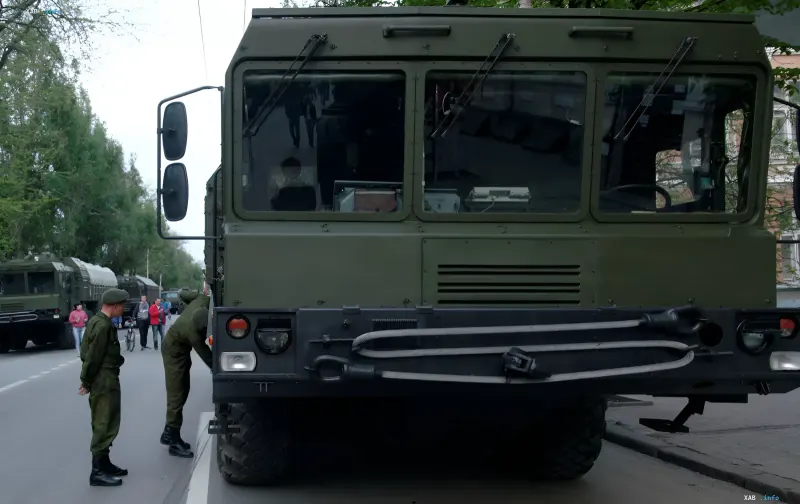
In temporarily occupied Crimea, according to the Main Directorate of Intelligence of the Ministry of Defence of Ukraine, fighters of the Group 13 special unit struck the Russian Bastion coastal missile complex — a system that, according to Kyiv's data, Moscow uses to deliver ballistic and hypersonic missile strikes on Ukrainian cities. RBC-Ukraine reports this, citing an official GUR statement. According to the Ukrainian side, the operation was carried out in August 2026, and its results and footage were released in early September.
The Group 13 Operation in Crimea
According to the GUR statement, in August 2026 the operators and fighters of the Group 13 unit carried out an operation on the territory of the temporarily occupied peninsula. The primary target was the Bastion coastal missile complex. The agency emphasises that, in addition to the launch complex, the operators also disabled the system's associated equipment, although the full list of struck objects is not fully disclosed in the released materials. The footage accompanying the statement shows heavy military equipment and servicemen in field uniform, which is consistent with the type of equipment associated with the deployment of such complexes.
Why the Bastion Was Considered a Threat to Ukraine
Kyiv's key argument is that it is precisely the Bastion that is capable of launching Zircon and Oniks missiles — types of weaponry with which, according to the Ukrainian side, the aggressor state carries out terrorist strikes on Ukrainian cities. Disabling such a carrier, by the GUR's logic, deprives the adversary of one of the channels for striking targets at long range and reduces the risk of repeated missile attacks on civilian infrastructure. Thus, the operation is positioned not as a pinpoint sabotage act, but as a blow to an element of the missile potential directly employed in hostilities against Ukraine.
Context: Strikes in the Sochi Area and at the Port
The release of information on the operation in Crimea coincided in time with a number of other claims about strikes on Russian objects in the south. In the night of 4 September, according to preliminary data, drones attacked an air defence regiment near Sochi: a fire broke out in the area of the Sirius settlement on the border with Abkhazia, where, reportedly, an S-300 or S-400 surface-to-air missile system is located. Recently, the Ukrainian Navy, in turn, claimed to have struck the NEFRIT support vessel in the port of Sochi using a maritime unmanned boat; according to the Navy, the vessel was used to service Russia's oil-and-gas and offshore facilities. The totality of these reports paints a picture of an extended campaign of strikes on rear and defensive objects along the Black Sea coast.
Contradictory Data
It is important to note that the fact of the Bastion being struck and the scale of the damage are claimed exclusively by the Ukrainian side — the GUR of the Ukrainian Ministry of Defence. Russian authorities and military, in the provided materials, have not confirmed the destruction of the complex and have given no public assessment of the incident, so independent verification of the damage is currently absent. Moreover, the original reports contain a chronological inconsistency: the operation itself is dated August 2026, whereas its public disclosure and the publication of footage fell in early September. In addition, the list of additionally disabled objects in the text of the statement is cut off and not fully disclosed. Thus, the version of the complete destruction of the carrier of Zircon and Oniks missiles so far relies on one-sided data and requires confirmation by independent sources.
Regardless of the degree of verification, the claimed operation demonstrates, by the assessment of Ukrainian military, the ability of special units to operate deep inside temporarily occupied territory and to strike high-tech missile systems. For Moscow, by contrast, such reports, even in one-sided form, create information pressure and raise questions about the protection of coastal missile weapons on the Black Sea coast.