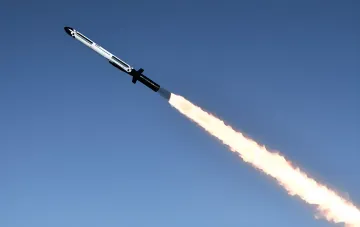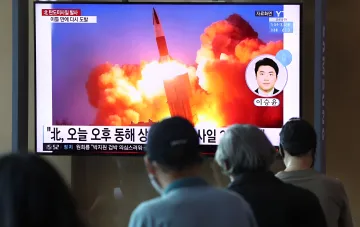
On November 3, the Korean Central News Agency (Yonhap) reported that North Korea had conducted a test of a dispersed cluster warhead designed for installation on a strategic cruise missile. According to the agency, the launch and evaluation of results took place on November 2, and official confirmation of the characteristics was provided by Pyongyang's departmental structures.
Who Led the Tests
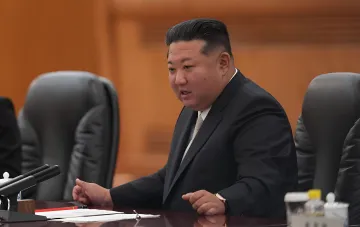
According to the KCNA report, the tests were overseen by Kim Jong Sik, a member of the Central Military Commission of the Workers' Party of Korea. The statement reads: «The Missile Administration's Warhead Institute confirmed that a medium-sized dispersed warhead mounted on a cruise missile is capable of turning a target area of 5–6 hectares into ashes thanks to its high destructive power density». Thus, Pyongyang focuses on the impact area rather than the range or mass of the munition.
Series of Tests: From Tactics to Strategy
The November 2 test was a continuation of a recent series of launches. On October 31, North Korea tested a cluster bomb mountable on tactical ballistic missiles and publicly announced its intention to adopt various types of cluster munitions before the end of the current year. The combination of these statements indicates systematic work on a lineup of dispersed warheads for various classes of missiles — from tactical ballistic to strategic cruise.
What This Means in Practice
A dispersed (cluster) warhead is designed to destroy area targets: concentrations of equipment, airfields, depots, and communication nodes. The claimed destruction density over a 5–6 hectare area indicates that Pyongyang views such munitions as a tool to increase strike efficiency against distributed objects. Transferring the cluster payload to a strategic cruise missile expands the range of tasks that, according to the developers' logic, this type of weapon can solve.
Reaction and Further Context
At the time of writing, independent international verification of the claimed warhead characteristics had not been conducted, and technical parameters are provided based on official data from North Korean agencies transmitted via KCNA. Nevertheless, the very fact of announcing the tests and plans to adopt cluster munitions before the end of the year is documented in open reports and forms a new stage in the dynamics of the DPRK missile program.