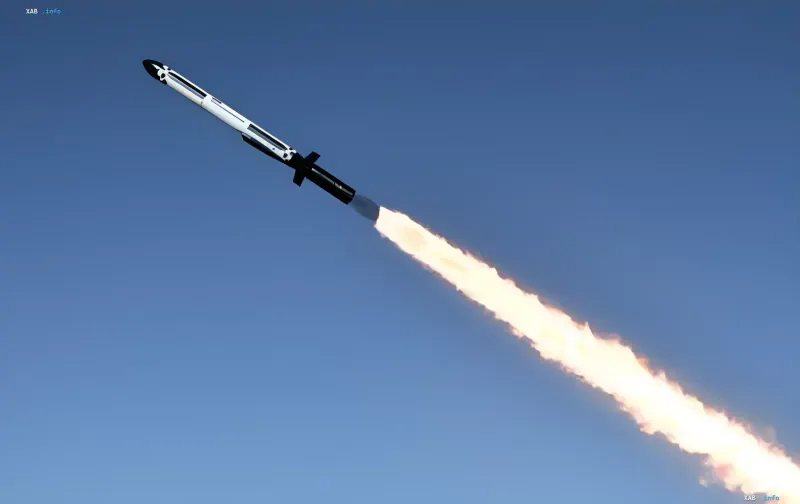
On November 2, 2026, the Missile Administration of North Korea conducted a test of a strategic cruise missile equipped with a medium-sized cluster warhead. According to RBC-Ukraine, citing Reuters and the North Korean state news agency KCNA, the launch also evaluated the missile's flight characteristics for executing a vertical strike on a target. The test took place on Monday, November 2, and, according to North Korean departments, confirmed the operability of the new type of combat equipment.
Statements from the North Korean Missile Administration
The Warhead Institute of the North Korean Missile Administration stated that it confirmed the cluster warhead's ability to "turn into ashes" an area of 5–6 hectares. The Cruise Missile Systems Institute reported on the improvement of vertical strike capabilities: for this, they said, the missile's terminal maneuverability was enhanced taking into account the natural and geographical features of the target area. The tests were supervised by General Kim Jong Sik, a member of the Central Military Commission of the Workers' Party of Korea. The Director of the Missile Administration, according to KCNA, stated that the need to develop various weapons systems is "urgent" because the armed forces must protect the country's security and deter threats, and the tests demonstrated "practical combat power."
Series of Launches: Autumn 2026
According to Yonhap, this launch followed Saturday's test of a cluster bomb for tactical ballistic missiles; Pyongyang promised to equip troops with various types of cluster warheads by the end of the year. The autumn of 2026 in North Korea was marked by missile launches: on September 20, Pyongyang carried out two short-range missile launches from the Wonsan area — according to the Japanese Ministry of Defense, the first missile flew 440 km, the second 590 km; Janes analysts suggested these were derivatives of the KN-23 family, although neither Japan nor South Korea officially named the missile type. On October 4, North Korea conducted a test launch of a medium-range missile under the supervision of Kim Jong Un — according to KCNA, the missile hit a target at approximately 1,000 km. On October 12, the country launched at least two ballistic missiles toward the Sea of Japan: according to Tokyo's assessment, the second flew more than 910 km.
Rising Tensions on the Korean Peninsula
In late October, tensions on the peninsula escalated: Reuters reported that North Korea demonstratively deployed howitzers near the border with South Korea, after which Kim Jong Un ordered the army to step up war preparations. Earlier, the head of Ukraine's HUR, Kyrylo Budanov, stated that North Korea is using the experience of Russia's war against Ukraine to improve its own weapons and army. Against this background, the new missile tests are seen as a continuation of the course to expand the arsenal and demonstrate deterrence.
Broader Context: Naval Missiles and AI Torpedoes
The cruise missile with a cluster warhead is just one element of a series of demonstrations. According to Associated Press reports, North Korea also announced tests of submarine-launched cruise missiles in waters off the east coast, with state media calling the weapon "strategic," indicating an intention to equip it with nuclear warheads, though it was not specified whether the missiles were launched from an actual submarine or a test platform. Separately, tests of the high-precision "Haeil-2.0" (Zam-2.0) torpedo system utilizing artificial intelligence were reported. As AP notes, the country continues to build up its military potential amid a prolonged absence of diplomatic dialogue with the US and South Korea.