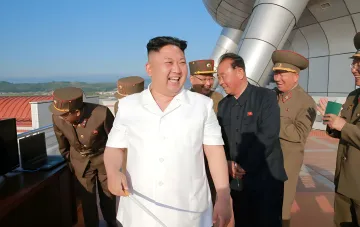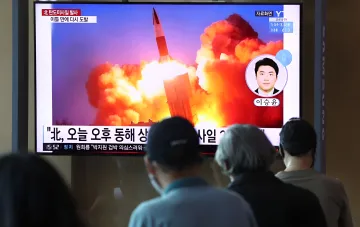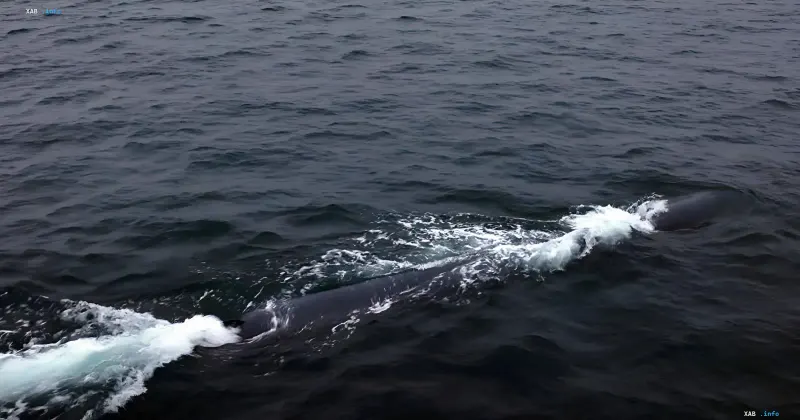
The Korean Central News Agency (KCNA) reported on October 17 about the successful test of a new type of high-speed, precision-guided torpedo system equipped with artificial intelligence technology. The system has been designated as 'Haeil-2.0'. According to the agency, the launch took place on October 15 through the joint efforts of the Academy of Defence Science, the General Missile Bureau, and the Torpedo Weapons Research Bureau of North Korea. The official purpose of the test was 'to confirm the achievements in the technical enhancement of a new type of torpedo weapon.' Footage published along with the report shows the dark fairing of the torpedo piercing the surface of the dark sea, leaving behind a characteristic white trail of foam.
AI Technology in Detection and Guidance Systems
A key element of the innovation, according to KCNA, was the application of artificial intelligence technology to target detection and guidance functions. The report emphasizes that the test successfully confirmed the efficiency of the propulsion system and core thrust-enhancing technologies, which defense officials said had been researched and refined over the course of more than 180 tests in the past five years. Defense officials observing the launch qualified the event as 'part of the routine activities of defense science research institutes to develop technologies for weapon systems,' while acknowledging it as 'a major achievement demonstrating significant changes in the practical development of the navy.'
Series of Operational Events: Submarine-Launched Missiles and New Destroyers
The announcement of the 'Haeil-2.0' torpedo test aligns with a series of operational military activities aimed, according to Pyongyang's assessment, at strengthening naval power. As early as October 14, a day before the torpedo launch, North Korea tested two types of strategic cruise missiles launched from submarines in the eastern region of the country. The official formulation was 'verifying the current combat readiness of underwater combat systems.' In addition, the North Korean fleet has recently been reinforced with two destroyers displacing around 5,000 tons, named 'Choe Hyon' and 'Kang Kon' and assigned to the Western and Eastern Sea fleets.
Kim Jong Un's Policy on AI Integration in Armaments
The appearance of a torpedo with built-in artificial intelligence reflects the strategic course outlined by North Korean leader Kim Jong Un. In September of this year, he publicly emphasized the need to raise the 'level of artificial intelligence' in the country's weapon systems. Thus, the testing of 'Haeil-2.0' can be viewed as a practical implementation of this policy at the level of tactical naval weapons. Experts note that integrating AI into torpedo systems is a trend actively pursued by other naval powers as well, yet public confirmation of such a step by North Korea remains rare and attracts the attention of analysts.
Verification Limitations
All technical parameters of the 'Haeil-2.0' system — including the characteristics of the AI module, speed, range, and the results of the 180 preceding tests — are cited exclusively from the state agency KCNA report. Independent international verification of the launch and claimed technical characteristics was not conducted at the time of publication. Nevertheless, the actual fact of the marine launch test is confirmed by visual materials accompanying the agency's report.