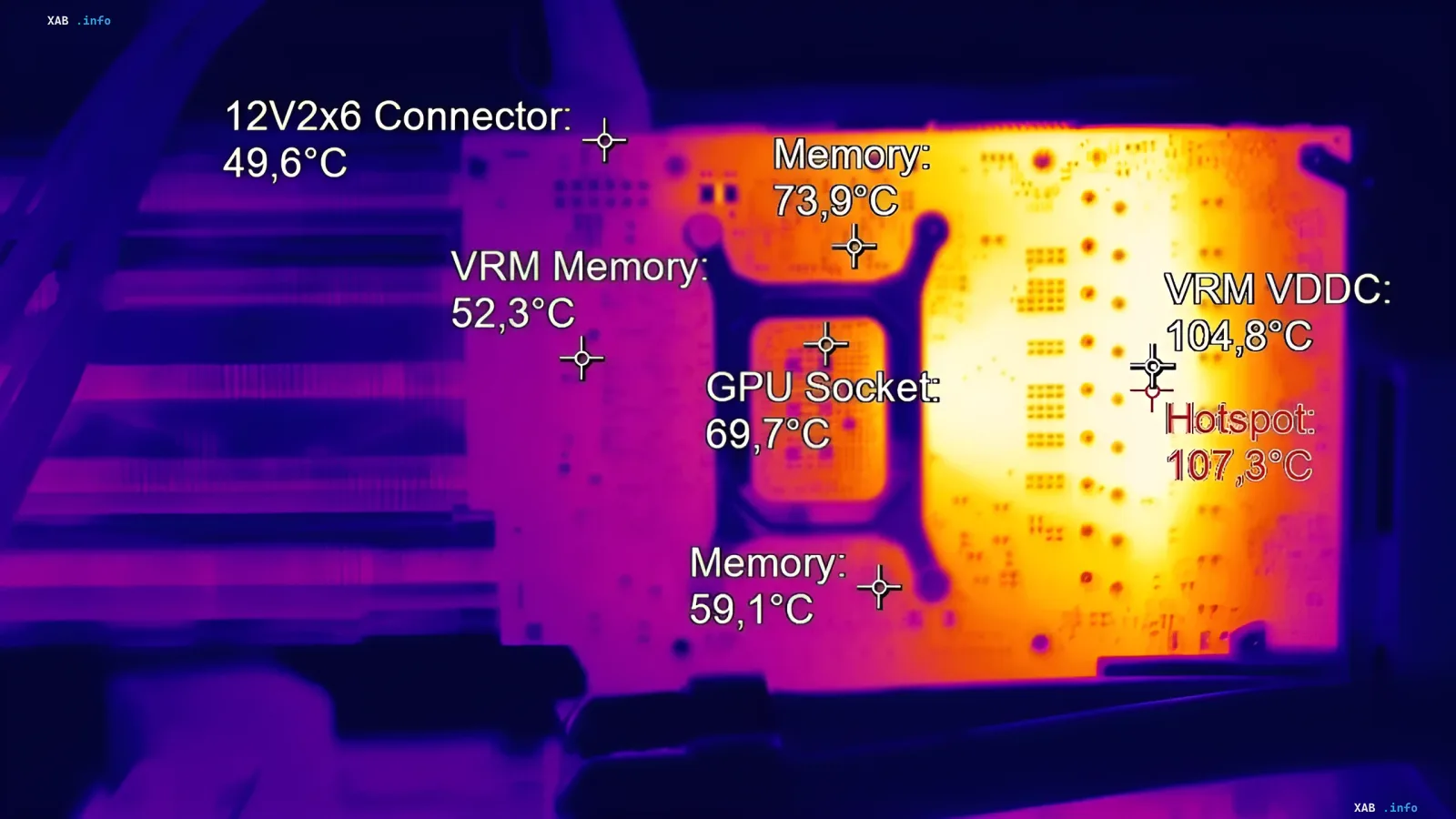
The release of the new generation of Blackwell graphics cards (GeForce RTX 50 series) brought enthusiasts and professionals not only a performance boost but also unexpected surprises in monitoring system operation. Users around the world encountered a situation where popular utilities such as GPU-Z, HWiNFO, and MSI Afterburner stopped correctly displaying the temperature of the hottest point on the die (Hotspot). Instead of real data, the programs showed either incorrect values of 255 °C or hid the field entirely.
Diagnostic software developers quickly identified the cause: NVIDIA completely blocked access to this data via the public driver API. However, as it turned out, the physical sensor did not disappear. The company simply hid it from the eyes of ordinary users, presumably to avoid alarming them with high readings.
Exposure via Factory Software
The truth was uncovered by a Brazilian repair team led by Paulo Gomes and Sidnelson. They conducted an independent investigation of a GeForce RTX 5070 Ti, which demonstrated strange behavior: under load, the device significantly dropped frequencies, although standard metrics in Windows appeared absolutely harmless.
Specialists connected the card to NVIDIA's proprietary internal diagnostic suite, MODS (Modular Diagnostic Software). This software is typically used in factories and authorized service centers to test for defects and check components. Unlike public programs, the MODS utility reads the hidden sensor perfectly.
Temperature Shock: 107 Degrees
The diagnostic results were shocking. According to MODS utility logs, the hidden Hotspot on the tested RTX 5070 Ti almost instantly soared to 107 °C. This threshold is set in the BIOS of Blackwell cards as the temperature limit. During one test, the card triggered throttling (performance reduction due to overheating) five times, while the standard overall GPU temperature sensor showed values far from critical.
The actual difference between the average chip temperature and the hottest point in this Gigabyte graphics card was about 30 degrees. This means that while the user sees comfortable numbers on the screen, the processor die is operating on the verge of its thermal limit.
Industry Double Standards
The situation with the RTX 5070 Ti evokes ironic associations with the community's past experience. Previously, NVIDIA fans actively mocked AMD for the 20-25 degree difference between average temperature and Hotspot in Radeon RX 9000 series cards. At that time, such a difference was considered relatively normal and was displayed directly in any monitoring tools without "dancing with a tambourine".
Now the situation has been inverted: NVIDIA not only has a high temperature difference but also hides it from the user, while the competitor openly displays real data. This calls into question the transparency of manufacturers and makes one wonder how accurately we assess the state of our "hardware" under new conditions.