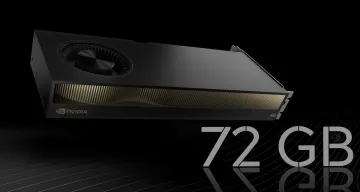
By the end of the first half of 2026, the balance of power in China's strategically vital artificial intelligence market underwent radical changes. According to fresh analytical data from research firm IDC, the market share of American giant Nvidia shrank to 34%. During the reporting period, the company shipped about 678,000 specialized accelerators to the Chinese market, demonstrating a significant 44% drop compared to the same period last year. This trend clearly illustrates the severe consequences of sanction pressure and geopolitical tension.
Factors of Market Transformation and Huawei's Rise
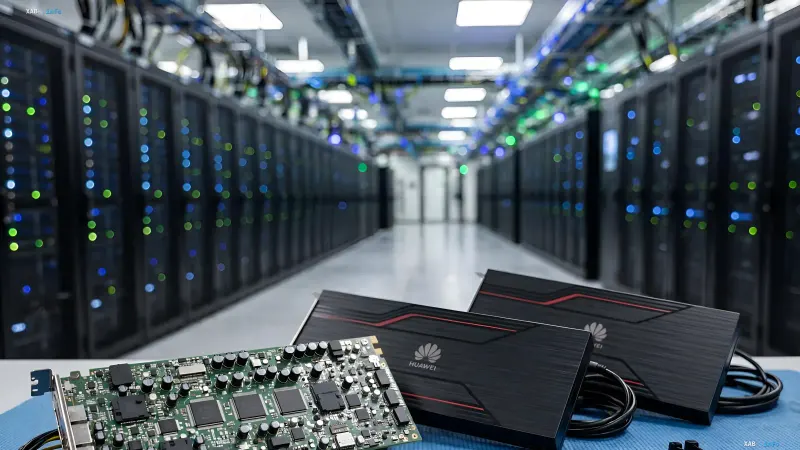
The main beneficiary of the market situation was the Chinese corporation Huawei, which is rapidly expanding the production and supply of its own high-tech products. Over the same timeframe, Huawei shipped 572,000 specialized chips, securing a 28% market share. The total volume of AI accelerator shipments to mainland China in the first half of 2026 reached 2.008 million units. Notably, nine out of eleven key Chinese semiconductor developers monitored by IDC showed positive year-on-year shipment growth dynamics.
Causes of the Shift and Technological Changes
Such a sharp tectonic shift is driven by two key factors: strict export restrictions from the US, which completely blocked supplies of advanced Nvidia B200 and B300 series chips to China, and Beijing's consistent course towards import substitution and support against Western technologies. Against this background, another important structural breakthrough occurred: non-GPU accelerators surpassed traditional graphics processors in shipment volumes for the first time, fundamentally changing the architectural approach to deploying large-scale language and neural network models.
Contradictory Data and Evaluation Features
Despite detailed shipment statistics, the expert community continues to debate the actual balance of power in the performance segment. The published IDC report lacks comparative chip performance tests under real workloads and total cost of ownership (TCO) calculations. While the American side emphasizes regulatory barriers, Nvidia's management, represented by CEO Jensen Huang, has repeatedly stated that sanctions strike a blow at Western companies' own positions in the world's largest infrastructure market.
Market Structure and Challenges for Developers
The current AI accelerator ecosystem in China maintains a high degree of fragmentation. In addition to market leaders Nvidia and Huawei, IDC analysts recorded notable shares from other players: Alibaba's T-Head unit controls 7% of the market, developer Cambricon holds 5%, Baidu's Kunlunxin has 4%, and Hygon accounts for 3%. For numerous machine learning teams operating in China, such hardware diversification creates new challenges, shifting the focus to compiler maturity, full framework coverage, and kernel support.
Implications for the Industry
The further development of the situation in the Chinese AI accelerator market will be determined by the ability of local semiconductor giants to scale production and the quality of software. Huawei's success shows that China's tech ecosystem is capable of compensating for the lack of American components. Nevertheless, the global race for dominance in artificial intelligence is entering a new phase of protectionism and regional supply chain fragmentation.