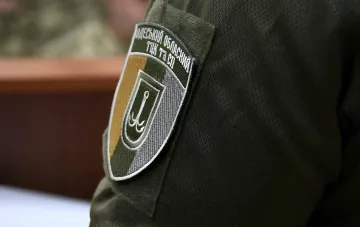
A critical situation regarding the observance of citizens' rights within mobilization processes has developed in the Odesa region. According to Dmytro Lubyntsi, the Commissioner of the Verkhovna Rada for Human Rights, the region holds a "sad first place" in Ukraine for the number of appeals concerning possible illegal actions by employees of Territorial Recruitment and Social Support Centers (TCC). Since the beginning of 2026, the Ombudsman's Office has received 453 complaints from residents of the Odesa region, indicating a systemic nature of the problems in the area.
Systemic Crisis and the Illusion of Impunity
Dmytro Lubyntsi emphasizes that the accumulated problems are the result of years of negligence. Instead of a transparent and civilized organization of mobilization, society is facing personnel that the ombudsman characterizes as shocking in their brutality. According to the human rights defender, violations were ignored for years, leading to the formation of a complete illusion of impunity at the local level. This, in turn, has resulted in a deep crisis of trust between the population and state institutions. Lubyntsi warns that if the rule of law is not restored today, the situation will worsen tomorrow, leading to increased mutual aggression and a rise in the number of victims.
Resonant Cases of Violence and Discrimination
Over the past month, several reports have appeared online that have attracted wide public attention. Among the most flagrant cases, the ombudsman highlighted the use of physical force against a 19-year-old youth, as well as the forced detention of a man who was subsequently hospitalized in intensive care after the incident. Lubyntsi paid special attention to the situation involving a person with a Group II disability. The citizen was unjustifiably recognized as liable for military service despite his health condition, forcing him to appeal to the court to restore his rights. According to the ombudsman, these cases are merely the tip of the iceberg, as only incidents that become public are recorded.
Corruption and Escalation of Violence
Problems in Odesa are not limited to physical violence. Recently, an incident was recorded in the region where a man opened fire at a TCC, resulting in injuries to people. The investigation also uncovered a corruption scheme: three TCC employees and a member of a public organization were arrested for attempting to extort a bribe of $6,000 for "resolving the issue" of mobilization. Lubyntsi asserts that the real scale of violations may be significantly larger than officially recorded. He calls for immediate changes, stating that a person ready for dialogue should not meet with the retaliatory use of tear gas, balaclavas, and blows.