On November 4, 2026, global oil prices showed a moderate increase amid ongoing geopolitical uncertainty. Brent crude futures rose by 82 cents, or 0.8%, reaching $104.42 per barrel. The American benchmark West Texas Intermediate (WTI) added 50 cents, or 0.5%, settling at $96.59 per barrel. This price movement occurred on the day when, amid the US midterm congressional elections, Democrats secured control of both chambers, adding an extra layer of political uncertainty to the market regarding Washington's next steps in the conflict with Iran.
Political Background: Democrats in Power and Trump's Mixed Signals
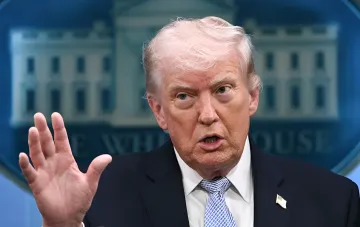
The key political event influencing investor sentiment was the Democratic Party's victory in the midterms. Democrats secured the necessary seats in the House of Representatives and also gained an advantage over Republicans in the Senate. US President Donald Trump publicly acknowledged the voting results and promised to work with the new Congress. However, shortly thereafter, he threatened to veto bills initiated by Democrats, creating a contradictory picture for traders: on the one hand, a formal transition to coalition interaction, and on the other, the retention of a confrontational tone. It is precisely these mixed signals — the continuation of military strikes against Iran against the backdrop of statements smoothing out the risk of further escalation — that have complicated market participants' ability to form a unified vision of price trajectories.
Analytics: Profit-Taking and Speculative Positions
Priyanka Sachdeva, head of market analytics at Phillip Nova, noted in a comment on current dynamics that profit-taking and the reduction of speculative long positions look entirely justified, especially after the market's rapid surge in October. According to her, following the sharp increase in prices the previous month, the logic of partial profit-taking has become the dominant strategy for a significant portion of participants. At the same time, the analyst emphasized that fundamental risks of oil supply disruptions in the Strait of Hormuz have not disappeared and continue to form a "floor" under current quotes. The Strait of Hormuz remains a critical artery of global oil transit, and any escalation around it can instantly reset the balance of supply and demand.
Fundamental Factors: US Inventories and Supply Structure
Additional support for prices came, according to data cited in Phillip Nova's analysis, from an unexpected decline in US crude oil inventories. A reduction in storage levels in the world's largest oil consumer is traditionally perceived by the market as a signal of strong demand and limited supply, creating a fundamental floor for price levels. At the same time, several industry publications, in particular Neftegaz, pointed in their reviews for the same period to data showing an increase in domestic oil inventories, and also assessed a potential US ban on diesel exports as an additional factor of pressure on the domestic fuel market. The discrepancy in the interpretation of inventory data between sources makes the picture of fundamental factors less unambiguous and requires investors to more thoroughly analyze official statistics from the American Petroleum Institute (API) and the US Department of Energy (EIA).
Trump's Shifting Rhetoric: Acknowledging the Impact of the Iran War on Gasoline Prices
Special attention should be paid to the unexpected shift in the US president's rhetoric regarding pricing in the domestic fuel market. Donald Trump publicly acknowledged that the war with Iran was the cause of rising gasoline prices in the US, stepping back from his previous narrative that blamed high fuel prices on Ukrainian strikes against Russian oil refineries. This admission, on the one hand, can be seen as an adjustment of his public stance under pressure from internal political reality after Republicans lost their majority in Congress, and on the other hand, it establishes a direct link for the markets between military actions in the Middle East and consumer prices in the US. For the oil market, this statement further confirms that the factor of the Iranian conflict remains central to pricing rather than a peripheral political narrative.